
 Tonight on From the Bench with Margaret Callahan
Silent Prayer Goes on Trial: Birmingham Judge Refuses to Toss Charges Against Isabel Vaughan-Spruce
A British court will try a Christian woman in January for praying without a word near an abortion clinic, a case her lawyers call a test of freedom of thought.
Filed November 25, 2026 · 📍 Washington, DC 20001
Were you there? Share your story
Key points
- A Birmingham judge rejected an abuse-of-process bid and set trial for Jan. 25-29, 2027
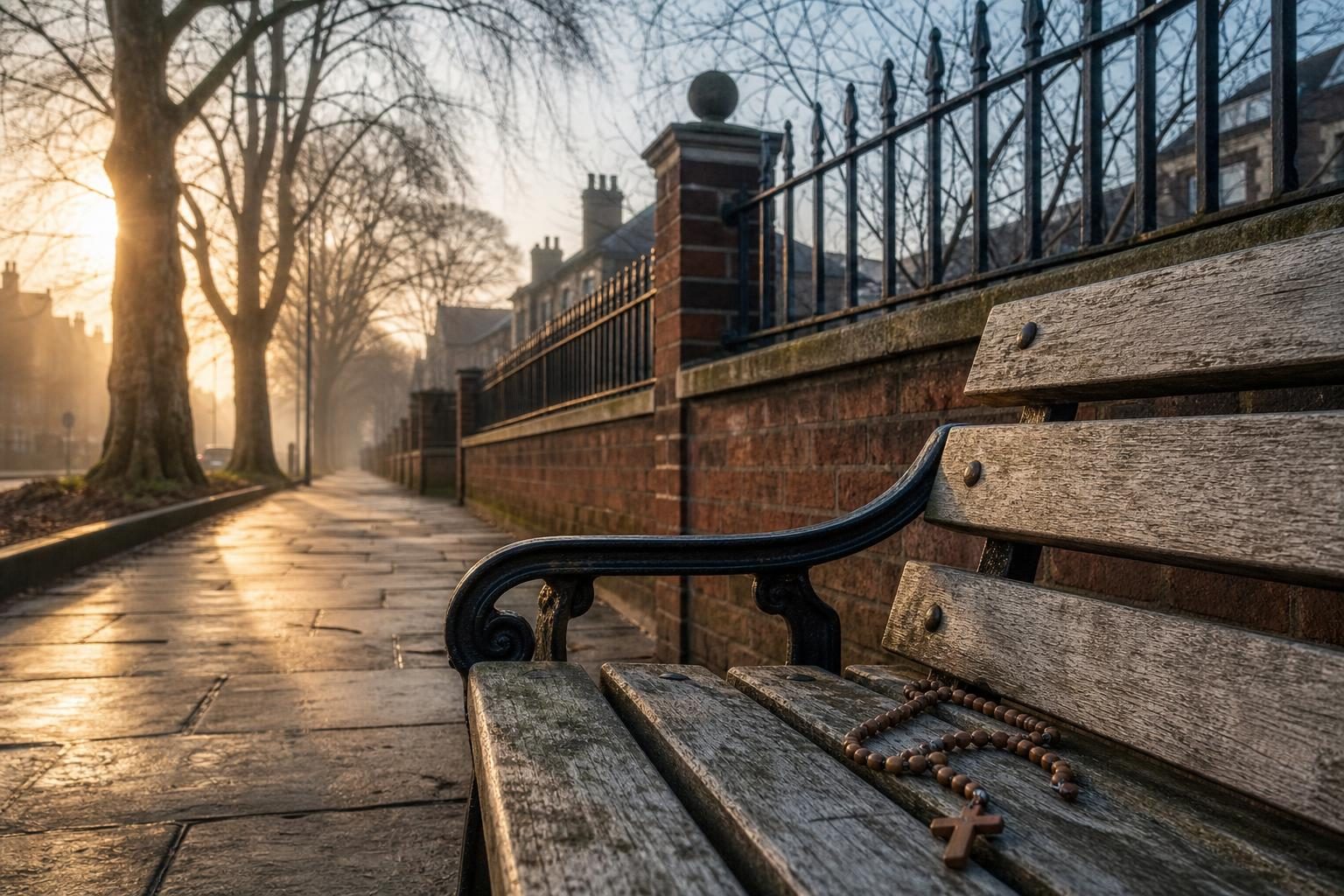
- Vaughan-Spruce faces five buffer-zone counts for allegedly praying silently within 150 meters of a clinic
- She was acquitted in a 2023 silent-prayer case and won a 13,000-pound police payout in 2024
- Her lawyers say the case violates freedom of thought and religion
A judge in Birmingham, England, has refused to throw out the case against Isabel Vaughan-Spruce, the Christian volunteer accused of breaking Britain's abortion clinic "buffer zone" law by standing near a clinic and praying silently, Catholic News Agency reported Wednesday [1]. Her trial is now set for Jan. 25-29, 2027, at Birmingham Magistrates' Court [2].
Deputy Senior District Judge Tan Ikram rejected her lawyers' argument that the prosecution amounted to an abuse of process, according to Premier Christian News [3]. Vaughan-Spruce has pleaded not guilty to five charges under Section 9 of the Public Order Act 2023, one for each of five occasions when she is accused of praying silently within 150 meters of the clinic [2][4].
What she is accused of, and what she says
According to her lawyers, the case rests on her presence and her silent prayer inside the zone, not on any words spoken, signs held or contact with anyone going in or out [2]. The court had earlier found the original charge was not properly drafted, and prosecutors were allowed to replace it with new counts [2][4].
Her legal team, backed by the religious liberty group ADF International, argues that silent prayer and mere presence fall outside what the law covers, that the prosecution violates her freedom of thought and religion, and that she has been singled out because of her pro-life beliefs [2]. Her lawyers also contend the case amounts to discrimination under Article 14 of the European Convention on Human Rights [2]. ADF International says she is the first person to be criminally charged and prosecuted under the national buffer-zone law in England and Wales [2].
Not her first time in court
Vaughan-Spruce has been here before. In February 2023, she and a Catholic priest were both acquitted after being charged over silent prayer near a Birmingham abortion facility, cases that critics had called prosecutions for "thought crime," Northwest Catholic reported at the time [5]. Those charges came under a local order, before Parliament wrote a national rule [5].
In August 2024, West Midlands Police paid her 13,000 pounds and apologized, conceding claims over two wrongful arrests, according to Catholic World Report [6]. "Silent prayer is not a crime," she said after the settlement [6].
Now, under the national law, prosecutors are trying again.
Why it matters beyond Britain
The case turns on a question every free country has to answer: can the state punish a person for what she is thinking when she says nothing and does nothing to anyone? Prayer offered in silence is about as private as a human act can be. Jesus taught His followers to pray to the Father in secret (Matthew 6:6), and generations of believers have done exactly that on street corners, in hospital hallways and outside courthouses.
Supporters of buffer zones argue that women going into clinics should not feel watched or pressured. That concern deserves a hearing, and British law already punishes harassment and intimidation. But a woman standing quietly with her head bowed is not harassing anyone. If her silent prayer can be a crime, the line between conduct and conscience has been crossed.
Americans have a stake in how this ends. The United States has its own long-running fights over protest limits near abortion facilities, and our Constitution's First Amendment protects both the free exercise of religion and freedom of speech. The Birmingham case is a reminder of how quickly those freedoms can erode when governments decide some beliefs are too uncomfortable to be held in public, even silently.
What comes next
The trial is scheduled for the last week of January [2]. Prosecutors will have to show that each of the five counts fits the law, while the defense argues that the law cannot reach a silent prayer and that her human rights protections forbid the prosecution [2][3]. For pro-life Christians in Britain and beyond, the verdict will signal whether a quiet prayer on a public sidewalk is still the free act it has been for centuries.
Sources
- [1]Catholic News Agency / EWTN NewsUK Christian pro-life advocate will stand trial for silently praying near abortion clinicOpens in a new tab ↗
- [2]ADF InternationalChristian woman criminally charged for silently praying on a public street to face trial in JanuaryOpens in a new tab ↗
- [3]Premier Christian NewsChristian woman to stand trial over silent prayer outside Birmingham abortion clinicOpens in a new tab ↗
- [4]Opens in a new tab ↗
- [5]Northwest CatholicU.K. priest, lay volunteer acquitted after being charged for silent prayer 'thought crime'Opens in a new tab ↗
- [6]Catholic World ReportUK police pay 13,000 pounds to Christian woman arrested for silent prayerOpens in a new tab ↗
Pope Leo XIV drew more than a million people in Argentina. Would you travel to see the pope?
- Absolutely
- Maybe, if he came to the U.S.
- No, but I'd watch on TV
- No
More in Faith & Religion
Watchdog Counts 2,465 Anti-Christian Incidents in Europe Last Year, With Attacks on Believers Up 44%
Tonight on Faith & Family with Ethan Calloway
An Alabama Library Shut Out a Christian Group. Now It Will Pay $45,905 and Close the Room to Everyone
Today on Sunshine State Report with Tomás Ortega
Liking a Tweet Isn't Misconduct: A Tribunal Tells a Manchester Council That Belief Is Protected
This morning on From the Bench with Margaret Callahan
Were you there?
If you were at the scene, or this story touched your life, tell us what you saw and what it was like.
Discussion 0
Sign in or create a free account to join the discussion.
No comments yet. Start the discussion.