
 Overnight on From the Bench with Margaret Callahan
A Maine Mother Asks the Supreme Court to Let Her Take Her Daughter to Church
Maine's highest court upheld a custody order that gives the girl's father sole say over her involvement with a Westbrook congregation. The mother's lawyers say a fit parent cannot be barred from church without proof of real harm.
Filed November 25, 2026 · 📍 Supreme Court, DC 20543
Were you there? Share your story
Key points
- A 2024 custody order bars Emily Bickford from bringing her daughter to Calvary Chapel in Westbrook
- Maine's Supreme Judicial Court unanimously upheld the order in September
- Liberty Counsel's petition says the ruling violates the First and Fourteenth Amendments
- The U.S. Supreme Court has not yet decided whether to hear the case
A Maine mother is asking the U.S. Supreme Court to hear her challenge to a custody order that bars her from taking her daughter to church, setting up a test of how far family courts can go in limiting a parent's religious life with a child [1][2].
Emily Bickford, represented by the religious liberty law firm Liberty Counsel, is appealing a decision by Maine's Supreme Judicial Court in her custody dispute with the girl's father, Matthew Bradeen [1][2]. The justices in Washington have not yet said whether they will take the case [1].
What the Order Says
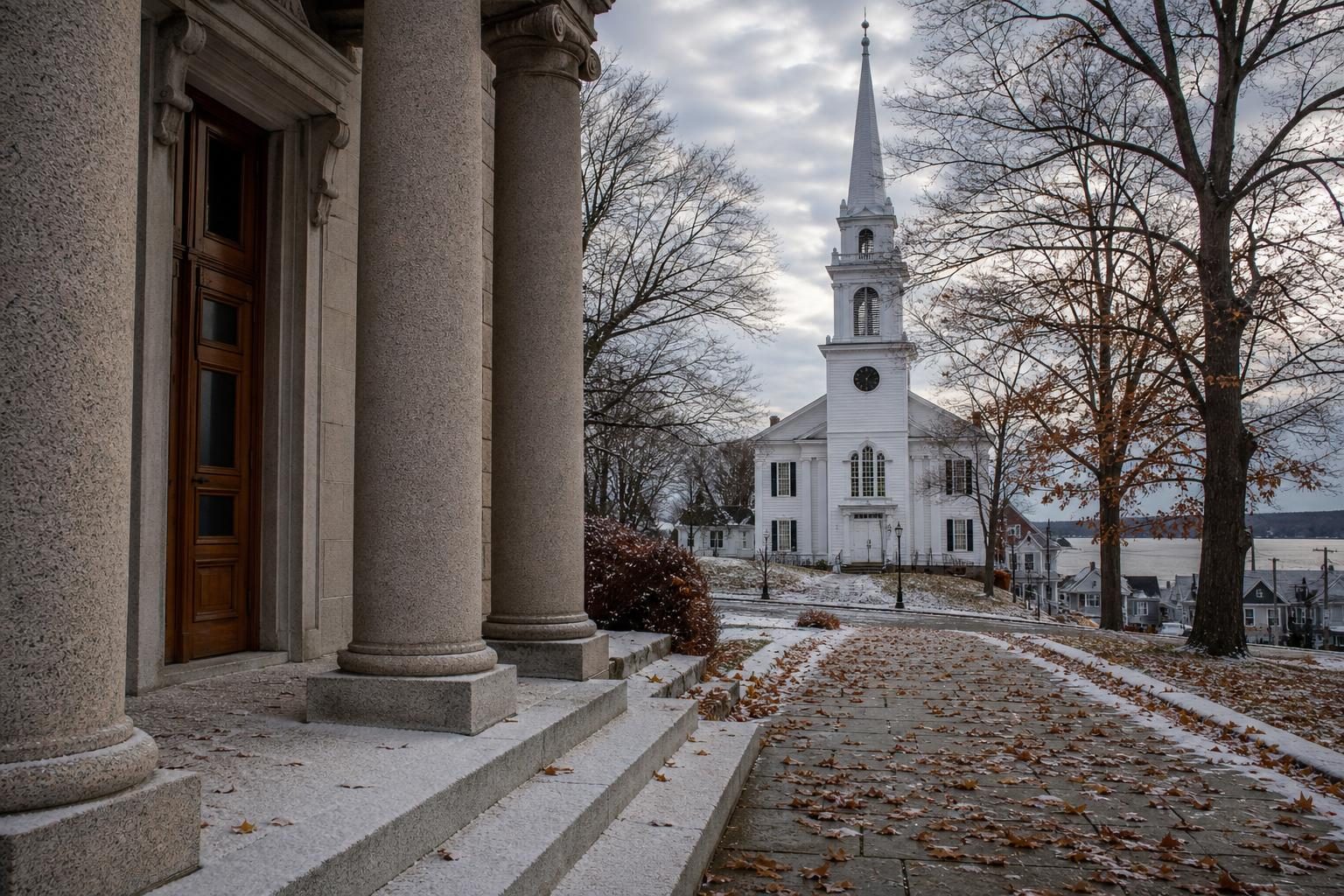
The dispute centers on a December 2024 custody order from a Maine district court. It prohibits Bickford from bringing her daughter to Calvary Chapel in Westbrook and gives Bradeen sole authority to decide the girl's involvement with the church [1].
According to coverage of the case, the trial judge found Bickford to be a fit parent but concluded that some of the church's biblical teachings could be psychologically harmful to the girl [4]. Critics of the ruling, including a commentary in The Christian Post, describe it as keeping a child out of church because of ordinary Bible teaching [4].
The Maine Supreme Judicial Court heard arguments in November 2025 and, in September 2026, unanimously affirmed the lower court's order [1][3]. The court said its decision rested on concerns about the child's well-being and her relationship with her father, not hostility toward religion [1].
Critics have pointed to the opinion's use of the word "cult" in connection with the church. The court said it used that word only in describing the testimony of Janja Lalich, an expert on cults whose qualifications both sides accepted [1].
Bradeen's attorney, Michelle King, called the high court's decision "well thought-out and reasoned" [3].
The Constitutional Question
Liberty Counsel announced in September that it would take the case to the U.S. Supreme Court [5]. Its petition argues that the order violates Bickford's rights under the First Amendment, which protects the free exercise of religion, and the Fourteenth Amendment, which applies those protections to the states [1][2].
The petition also argues that Maine's high court ignored its own precedent, which Liberty Counsel says requires proof of an immediate and substantial threat to a child before a court may restrict a parent's religious practice [1][2]. And it contends the decision conflicts with earlier U.S. Supreme Court rulings [1].
The Supreme Court has long recognized that parents hold a fundamental right to direct the upbringing of their children. In Troxel v. Granville in 2000, the Court's plurality opinion described the interest of parents in the care, custody and control of their children as perhaps the oldest of the fundamental liberty interests it has recognized [6].
Why It Matters to Families
Custody fights are painful, and judges in them have a hard job. They must weigh what is best for a child when two parents who once agreed on almost everything no longer agree on much. Nobody outside the courtroom knows every detail of this family's story, and the father's side deserves to be heard as fully as the mother's.
But the legal question reaches far beyond one family. If a court can find a mother fit to raise her daughter and still forbid her to bring that daughter to a Bible-teaching church, every divorced or separated parent of faith has reason to pay attention. Millions of American children are raised by parents who live apart. Many of those parents worship differently from each other, or not at all.
A standard that lets judges weigh the content of a church's teaching, rather than asking whether a child faces a concrete and serious threat, would put family courts in the business of grading sermons. That is exactly the kind of entanglement the First Amendment was written to prevent. Respecting a parent's faith does not mean ignoring a child's welfare; it means requiring real evidence of harm before the state steps between a mother, her daughter and the church door.
The Supreme Court has not said when it will decide whether to take up Bickford v. Bradeen [1]. The justices grant review in only a small share of the petitions they receive, but cases that raise unsettled constitutional questions about parents' rights and religious liberty have drawn the Court's attention in recent years.
Until then, the Maine order stands, and the father keeps sole authority over his daughter's involvement with Calvary Chapel [1].
Sources
- [1]Opens in a new tab ↗
- [2]The Maine WireMaine Mother Takes Church Custody Case to U.S. Supreme Court After State High Court Sides With FatherOpens in a new tab ↗
- [3]Opens in a new tab ↗
- [4]The Christian PostMaine court bars child from church over 'scary' Bible teachingOpens in a new tab ↗
- [5]Liberty CounselLC Will Ask U.S. Supreme Court To Hear "No Church" CaseOpens in a new tab ↗
- [6]Opens in a new tab ↗
Pope Leo XIV drew more than a million people in Argentina. Would you travel to see the pope?
- Absolutely
- Maybe, if he came to the U.S.
- No, but I'd watch on TV
- No
More in Faith & Religion

From Prison to City Hall: The Christmas Ministry a Former Kansas Mayor Credits
Last night on Faith & Family with Ethan Calloway
Rollins Vows to Take Her Faith Fight to the Supreme Court
Last night on From the Bench with Margaret Callahan

The School That Won Carson v. Makin Asks the Supreme Court to Step In Again
Yesterday on From the Bench with Margaret Callahan
Were you there?
If you were at the scene, or this story touched your life, tell us what you saw and what it was like.
Discussion 0
Sign in or create a free account to join the discussion.
No comments yet. Start the discussion.