
 Today on From the Bench with Margaret Callahan
Remember Those in Chains: Lawmakers Put 388 Million Persecuted Christians Back on Washington's Agenda
A House human rights hearing, a desecrated chapel in Kaduna and a federal watchdog's warning on Pakistan show how far the pressure on believers has spread, and where Washington can still act.
Filed November 20, 2026 · 📍 Washington, DC 20001
Were you there? Share your story
Key points
- A House human rights commission hearing heard a witness compare global Christian persecution to a 'powder keg.'
- Open Doors estimates 388 million Christians face high levels of persecution or discrimination, up 8 million in a year.
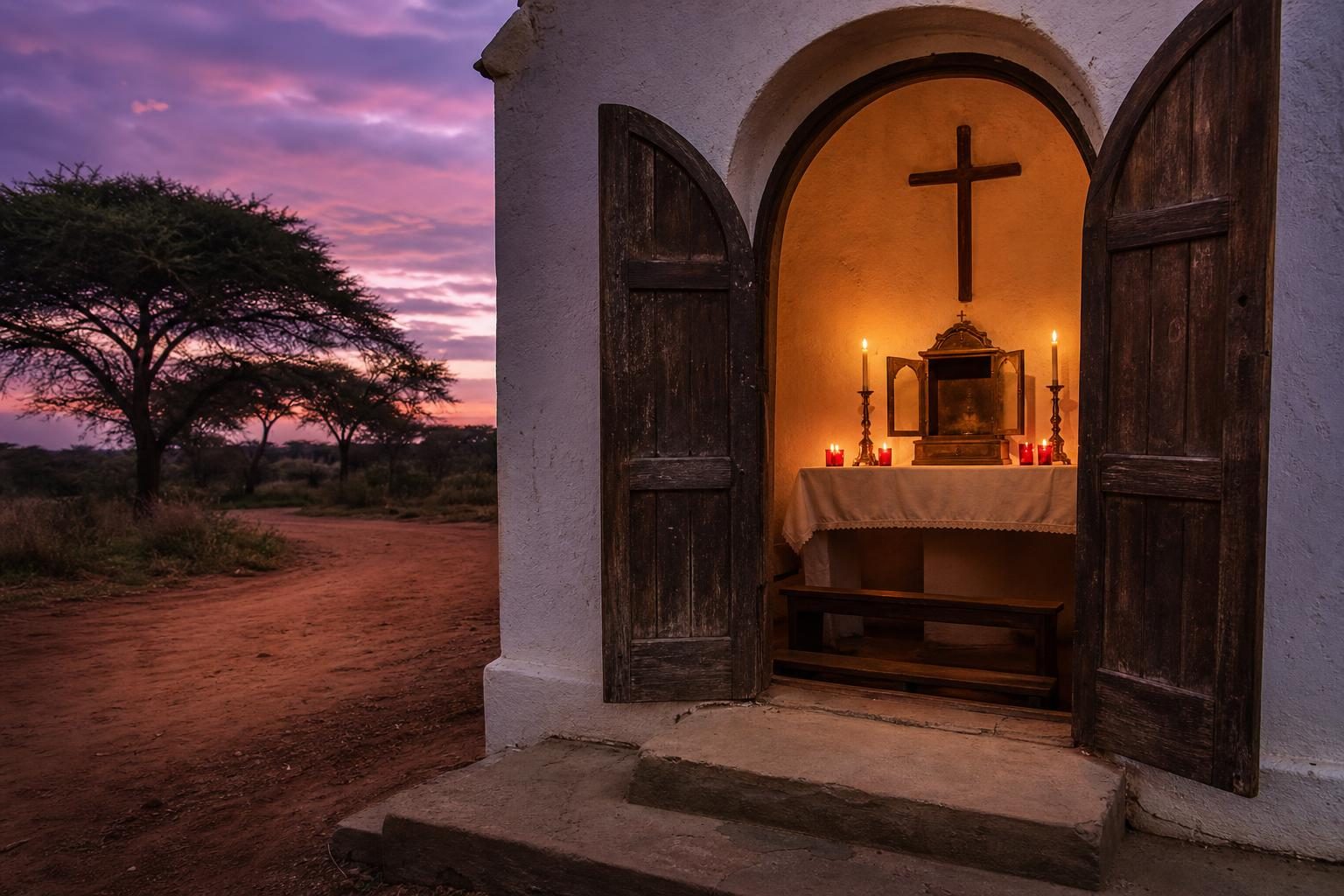
- Thieves took the Blessed Sacrament from a chapel in Nigeria's Kaduna State; the archbishop called for fasting and reparation.
- USCIRF says Pakistan's religious minorities still bear the brunt of blasphemy laws and forced conversions.
When members of Congress gathered this week to take stock of what Christians are enduring around the world, the image that stuck was a blunt one. A witness at the House hearing likened the global situation to a "powder keg," CBN News reported, and Rep. Chris Smith, R-N.J., warned that the crisis is growing more severe in several regions [1].
The hearing was held Wednesday by the House's Tom Lantos Human Rights Commission, The Christian Post reported, and witnesses pressed lawmakers to act, not merely to sympathize [1][2]. In the days around it, two more reports filled in the picture lawmakers painted: thieves desecrated a Catholic chapel in northern Nigeria, and a federal watchdog's latest update on Pakistan described a country where blasphemy accusations and forced conversions still hang over religious minorities [4][5].
Taken together, they tell a story that should trouble every American who prizes the freedom to worship. The pressure on believers is not easing. It is reaching into chapels, courtrooms and family homes, and the people living under it are asking whether the free world is paying attention.
What Lawmakers Heard
Smith used the hearing to sound the alarm about how far the problem has spread, CBN reported [1]. The witnesses included David Trimble, whose powder-keg warning described tensions he said are already blowing up in parts of the world [1].
Some of the most pointed testimony concerned America's own front door. Matthew Soerens of World Relief, an evangelical humanitarian group, told the commission that the United States resettled zero Christian refugees in fiscal year 2026 from any of the 50 countries where Christians face the most severe persecution, according to CBN and The Christian Post [1][2]. Soerens urged members of Congress to press the Trump administration to reopen the refugee resettlement program [2].
That is a hard word for conservatives to hear, and it deserves an honest answer rather than a defensive one. A secure border and a generous welcome for the persecuted faithful are not opposites. A nation can control who enters and still keep a door open for the pastor whose church was burned, or the widow who fled with her children and her Bible. Scripture does not ask us to choose between order and mercy. It asks us to practice both.
The Numbers Behind the Alarm
The figure at the center of the hearing comes from Open Doors, the ministry that tracks persecution country by country. CBN reported that Open Doors estimates 388 million Christians now face high levels of persecution or discrimination for their faith, an increase of 8 million from the year before [1].
The Christian Post reported that Open Doors also counted nearly 225,000 Christians who were forced to leave their homes to escape persecution in a single year [2]. They were uprooted not by storm or famine but by hostility to their faith.
Numbers this large can numb as easily as they move. Behind each one is a family that kept praying when it would have been safer to stop, a pastor who kept preaching, a mother who kept teaching her children the Lord's Prayer behind closed doors. The God who numbers the hairs on our heads knows every one of them by name, and the church in freer lands is called to know them too.
Where the Pressure Is Heaviest
Open Doors' latest World Watch List ranks North Korea as the hardest place on earth to follow Christ, followed by Somalia, Yemen, Sudan and Eritrea [3]. Syria, Nigeria, Pakistan, Libya and Iran round out the top 10 [3].
Syria's rise is the most striking change. The country climbed from 18th to sixth, the only newcomer to the top 10, and Open Doors ties the worsening conditions there to the fall of the Assad government in December 2024 [3]. It is the land where Saul of Tarsus met Christ on the road to Damascus, and its ancient Christian communities now face an uncertain future under new rulers.
Nigeria sits seventh on the list, and Pakistan, at eighth, has held a place in the top 10 for many years, according to Open Doors [3]. Those two countries, very different in history and government, share something this week's reports made plain: Christians there can be targeted in their churches and in the very legal system that is supposed to protect them.
A Desecrated Chapel in Kaduna
The Nigerian newspaper Leadership reported that thieves broke into Christ the King Chapel at the Federal Training Centre in Malali, in Kaduna State, vandalized the tabernacle and carried off the consecrated Hosts along with other valuables [4]. An Augustinian priest told the paper that the ciborium holding the Blessed Sacrament had been taken [4].
For Catholics, this is no ordinary burglary. The Church teaches that the consecrated Host is the Body of Christ, and the tabernacle is the most sacred place in any chapel. To break it open and carry away its contents is, in the Church's understanding, a sacrilege, whatever the thieves intended.
The response from the Church's shepherd was telling. Archbishop Matthew Man-Oso Ndagoso of Kaduna called on Catholics across the archdiocese to observe fasting and prayers in reparation for the desecration, and his statement said the incident had left the Catholic community in great distress, Leadership reported [4]. His answer was penance, an old and fitting Catholic response to sacrilege.
Whatever the motive behind this particular theft, it happened in a country Open Doors ranks among the 10 most dangerous in the world for Christians [3][4]. For believers there, an attack on the tabernacle lands as one more reminder of how exposed their worship has become.
Pakistan's Blasphemy Trap
PJ Media this week highlighted the U.S. Commission on International Religious Freedom's update last month on blasphemy and forced-conversion cases, and on ongoing attacks against religious minority communities in Pakistan [5]. The commission's October country brief says religious minorities bore the brunt of Pakistan's blasphemy law in the first half of 2026 and were the victims of several targeted attacks by individuals [6]. It also describes a stratified social system that confines Christians, Hindus and other minorities to low-wage and dangerous jobs [6].
Forced conversions remain an open wound. The brief reports that authorities continued to uphold forced-conversion cases involving Sikh, Hindu and Christian girls during 2026, and that in March a Federal Constitutional Court ruling let stand a 2020 marriage in one such case [6]. Punjab's new Child Marriage Restraint Ordinance sets the marriage age at 18, the brief notes, but it contains no provisions to address forced conversion [6].
There was a measure of mercy in the record. The brief notes that Pakistan's Supreme Court acquitted Amoon Ayub, while his brother Qaiser Ayub remains on death row [6]. One brother free and one still awaiting the gallows is a fair summary of how unevenly justice reaches the accused in blasphemy cases.
USCIRF has again recommended that the State Department designate Pakistan a Country of Particular Concern, the label reserved for the most severe violators of religious freedom [6].
How Believers Are Answering, and What Comes Next
In Kaduna, the answer has been fasting and prayer [4]. In Washington, it has been testimony and pressure, with Soerens asking lawmakers to push the administration to reopen refugee resettlement [2] and Smith putting the scale of the crisis on the congressional record [1].
What comes next will be decided in a few concrete places. One is the refugee program, where the next test is whether the door Soerens described as closed to persecuted Christians opens again [1][2]. Another is the State Department's religious-freedom designations, where USCIRF's recommendation on Pakistan awaits action [6]. A third is Nigeria, where the faithful are watching whether outside attention brings real protection to their villages and parishes [3][4].
The rest belongs to ordinary believers. Churches can pray for the persecuted by name, support ministries that serve them, and tell their members of Congress that religious freedom abroad is not a niche issue. It is the first freedom, and the people losing it are our brothers and sisters.
The Book of Hebrews gives the standing order plainly: "Remember them that are in bonds, as bound with them." This week, at least, Washington remembered. The task now is to make sure it does not forget.
Sources
- [1]CBN News'Powder Keg' of Persecution: 388 Million Christians Under Fire Worldwide as Lawmakers Sound AlarmOpens in a new tab ↗
- [2]The Christian PostChristian leader urges lawmakers to pressure Trump on refugeesOpens in a new tab ↗
- [3]Open Doors USTop 10 Most Dangerous Places for ChristiansOpens in a new tab ↗
- [4]Opens in a new tab ↗
- [5]Opens in a new tab ↗
- [6]U.S. Commission on International Religious FreedomPakistan Country Brief (October 2026)Opens in a new tab ↗
Pope Leo XIV drew more than a million people in Argentina. Would you travel to see the pope?
- Absolutely
- Maybe, if he came to the U.S.
- No, but I'd watch on TV
- No
More in Faith & Religion
Mocking the Pope Isn't Banter: UEFA Punishes England Over Fans' Anti-Catholic Chants in Spain
Last night on From the Bench with Margaret Callahan
Syria's Christian Leaders Warn of 'Grave' Threat to Their Future After Archbishop Is Bound and Robbed in Homs
Yesterday on From the Bench with Margaret Callahan
Watford Pastor Steve Maile Cleared as Police Drop Case Seven Months After Street-Preaching Arrest
Yesterday on From the Bench with Margaret Callahan
Were you there?
If you were at the scene, or this story touched your life, tell us what you saw and what it was like.
Discussion 0
Sign in or create a free account to join the discussion.
No comments yet. Start the discussion.