
 Last night on The Power Grid with Priya Desai
Hours in Line for Gasoline: Iran's Fuel Crisis Boils Over on the Eve of the 'Bloody November' Anniversary
Taxi strikes, road blockades and empty pumps spread across Iran as the regime admits a supply problem it cannot fix and dares not solve with a price hike.
Filed November 14, 2026 · 📍 NY 12207
Were you there? Share your story
Key points
- Hours-long fuel lines and scattered protests were reported across Iran, including a taxi protest in Ardabil.
- A senior energy official admitted the country has a gasoline supply problem.
- The regime caps purchases at 160 liters a month per vehicle and pulled backup fuel cards in 11 provinces.
- Sunday marks seven years since the deadly 2019 fuel-price protests known as Bloody November.
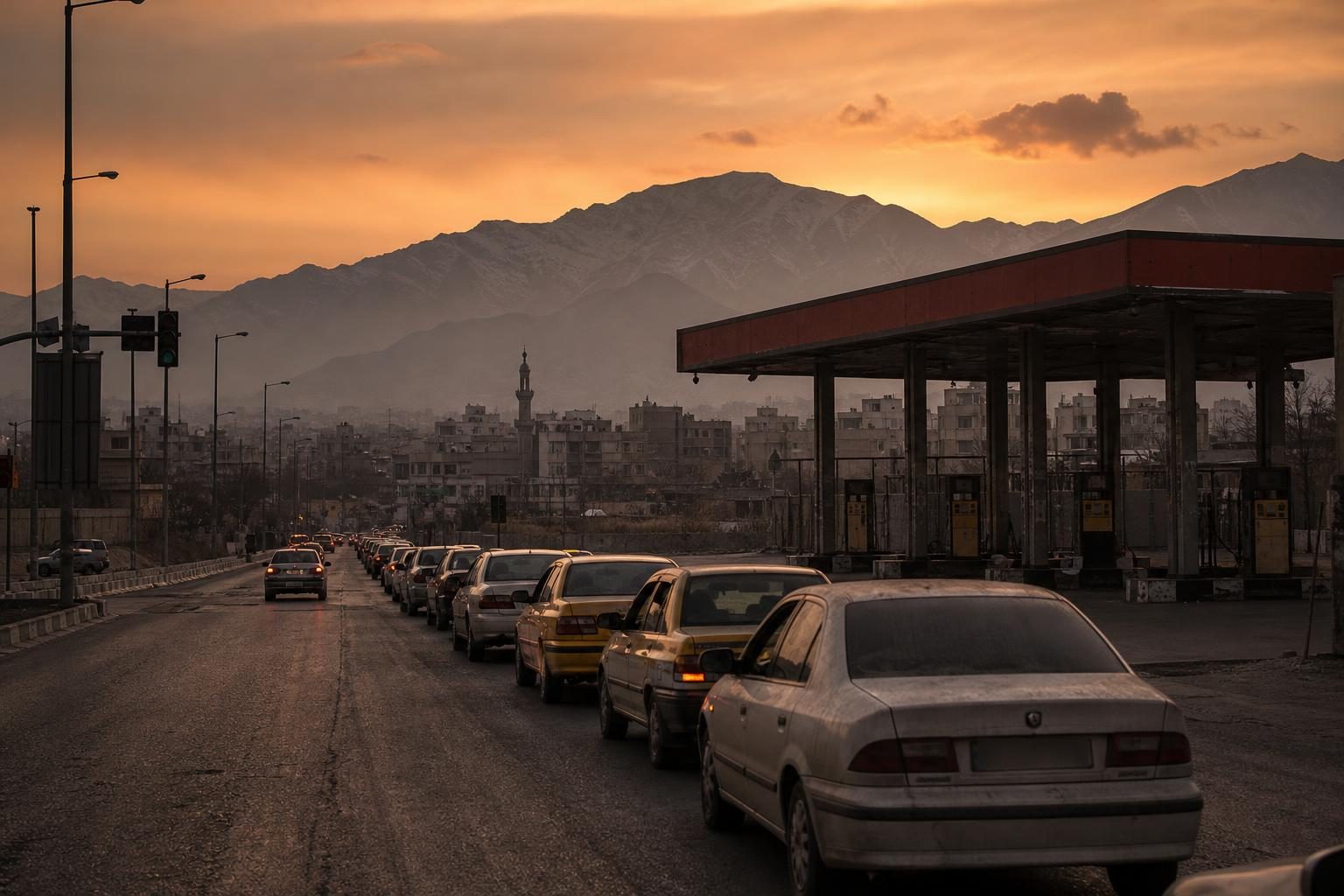
Iran sits on some of the largest oil reserves on earth, yet its drivers are spending hours in line for gasoline. On the eve of the seventh anniversary of the deadly 2019 fuel protests that Iranians call "Bloody November," the regime's rationing system is buckling, with long queues, empty pumps and scattered protests reported across the country, the New York Post reported Saturday [1].
In the northern city of Ardabil, footage showed taxi drivers parking their cars in protest and refusing to pick up passengers, leaving riders stranded, the Post reported [1]. In the southern port of Bandar Abbas, residents used their cars to block a road near a fuel station on Thursday night to protest the lines and dry pumps, Shabtabnews reported, citing footage that also showed long waits in Kazeroun, Evaz and Lordegan [2].
A Supply Problem the Regime Admits
Even officials in Tehran are no longer pretending. Esmail Sagheb Esfahani, a vice president who heads the state energy efficiency agency, admitted this week that "we really have a supply problem," and told Iranians they could no longer count on fuel stations and should save part of their monthly ration before traveling, according to Shabtabnews [2]. He insisted that nothing was being held back from the public [2].
The government has avoided raising prices again and has instead capped purchases at 160 liters a month per vehicle [2]. Since Nov. 1, it has also withdrawn the station fuel cards that motorists relied on as a backup in 11 provinces, nearly all of them along Iran's borders and the Persian Gulf coast, where officials say subsidized fuel is smuggled out of the country [2].
The shortages did not start this month. Iran International reported in May that rationing and shortages were pushing Iranians onto a black market for gasoline [3]. In September, Iranian officials warned of gas shortages as the national currency hit a record low under the U.S. blockade, Breitbart reported [4], and the Jerusalem Post reported that the rial had collapsed to record lows as the economic fallout of the war took hold [5].
The War and the Blockade
According to Shabtabnews, a senior regime official said Iran still imports about seven million liters of gasoline a day, but that the U.S. naval blockade of Iran's ports, in place since April, has made those imports harder and more expensive, and that refineries and fuel depots were damaged in the war [2]. The same official said the country has neither the capacity nor the money to import more [2].
That is what pressure looks like when it works. For years the regime poured its oil wealth into missiles, drones and proxy militias across the Middle East instead of refineries and pipelines for its own people. Now the bill has come due, and ordinary Iranians are the ones waiting in line.
Why 'Bloody November' Still Haunts Tehran
The anniversary explains why the regime is so afraid to touch the price. In November 2019, a sudden gasoline price hike set off protests across Iran, and security forces answered with deadly force. Amnesty International later documented at least 304 people killed, and warned the true toll was likely far higher, PBS NewsHour reported [6]. Iran's rulers have not forgotten how quickly anger over fuel turned into anger at the system itself.
That is the trap the regime has built. Raising prices risks another uprising. Keeping prices low while supplies shrink means rationing, smuggling and lines that grow longer by the week. Neither path addresses the real problem, which is a government that has spent decades exporting revolution instead of serving its people.
What Comes Next
Sunday's anniversary will be watched closely, both inside Iran and by Iranians abroad. Winter is coming, and with it rising demand for fuel. The regime can withdraw more fuel cards, tighten rations further or gamble on another price increase, but each choice carries risk. Americans should keep the Iranian people in their prayers. They have shown again and again that they want a government that serves them, and they deserve one.
Sources
- [1]New York PostHours-long lines, protests at Iranian gas stations reach breaking point on eve of 'Bloody November'Opens in a new tab ↗
- [2]Opens in a new tab ↗
- [3]Iran InternationalFuel shortages and rationing push Iranians into gasoline black marketOpens in a new tab ↗
- [4]Opens in a new tab ↗
- [5]Opens in a new tab ↗
- [6]Opens in a new tab ↗
Should Congress speed up permits for pipelines and power plants?
- Yes, build more American energy
- Yes, but respect tribal and local input
- No, keep environmental reviews
More in Energy & Environment
Keep the Northwest's Power Independent: Most Westerners in a New Poll Reject Tying Their Utilities to California's Market
Overnight on Kitchen Table with Megan O’Brien
The AI Power Bill Comes Due: After the Midterms, Big Tech Faces New Pressure to Pay Its Own Way
Yesterday on The Power Grid with Priya Desai
Energy Department Closes First Oil and Gas Production Loan: $480 Million to Revive Gulf of America Platforms
On Friday on The Power Grid with Priya Desai
Were you there?
If you were at the scene, or this story touched your life, tell us what you saw and what it was like.
Discussion 0
Sign in or create a free account to join the discussion.
No comments yet. Start the discussion.