
 Last night on Report Card with Rebecca Hartman
Lock Up the Phones, Lift the Scores: A Harvard Study of 3.3 Million Students Finds Strict School Bans Pay Off
All-day bans with locked pouches added the equivalent of one to two weeks of learning a year, researchers report, and parents who pushed for them have new evidence on their side.
Filed November 17, 2026 · 📍 Washington, DC 20001
Were you there? Share your story
Key points
- Harvard researchers found strict, all-day phone bans with locked pouches raised math and reading gains.
- The effect equals about one to two extra weeks of instruction a year, across about 3.3 million students.
- A May study led by Stanford's Thomas Dee found little test-score effect but a steep drop in phone use in class.
- More than 40 states now restrict phones in schools.
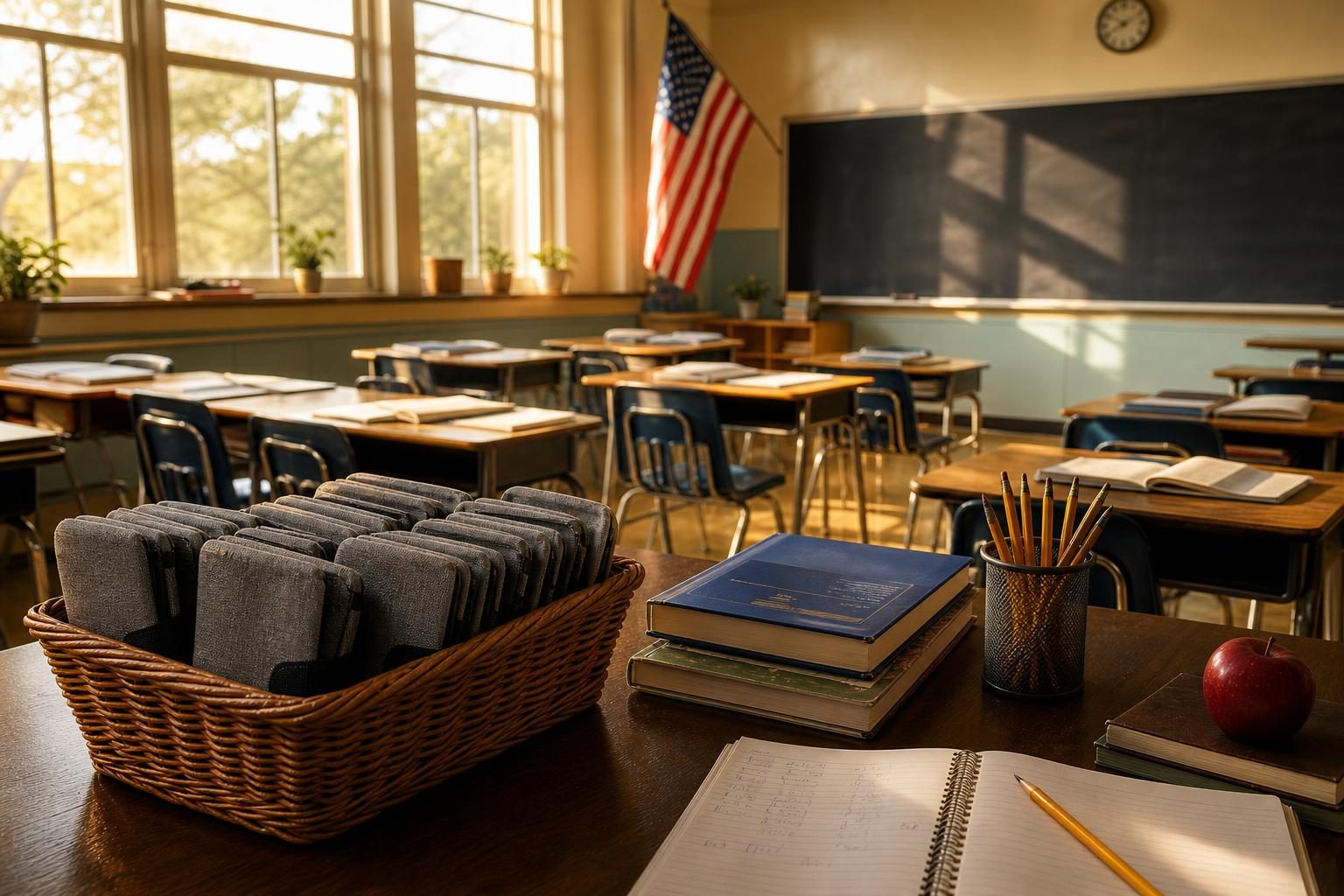
Parents who have been telling school boards to lock up the phones finally have a large new study on their side. Researchers at Harvard's Center for Education Policy Research reported on Tuesday that strict cellphone bans, the kind that require students to seal their phones in lockable pouches for the whole school day, produced measurable gains in math and reading [1][2].
The gains are not dramatic. The researchers estimate them at the equivalent of one to two extra weeks of instruction a year, and they describe the bans as a cost-effective way to get there [1][3]. But for a reform that costs little, asks nothing of taxpayers beyond a pouch and a policy, and gives teachers back their classrooms, modest and positive is a result worth taking seriously.
What the Harvard Study Found
The Harvard team examined the achievement growth of about 3.3 million students [3]. The study focused on bell-to-bell bans that use locked pouches, not looser rules that let students keep phones in their backpacks or check them at lunch [2].
The headline finding: students in schools with strict bans gained more in math and reading over the year than similar students elsewhere [1][2]. Co-author Thomas Kane said the effect may look small in a single year but could add up to something more significant over time as students spend more years in phone-free classrooms [3][4].
Phones have been blamed for lost learning time going back to about 2013, and the researchers found the strict restrictions "seem to plug about half of that leak," NTD News reported [6].
The Earlier Study That Found Less
The new results arrive six months after a different national study reached a more cautious conclusion. That research, released in May by a team led by Stanford's Thomas Dee and colleagues from other universities, examined about 4,600 schools that use Yondr phone pouches and found test-score effects "consistently close to zero" over the first three years [5].
That study found other changes worth noting. Teacher surveys showed the share of students using phones in class for personal reasons fell from 61% to 13% [5]. Suspensions jumped by about 16% in the first year as schools enforced the new rules, but returned to normal levels by the third year [5]. Student well-being dipped at first and then turned positive by the second year [5].
The two studies used different data. The May study looked at a different set of test scores, along with phone location data, teacher surveys and records from the pouch company, according to coverage of the research [3][5]. Researchers on both sides agree on the most basic point: when phones are locked away, students use them far less during class.
Why It Matters to Families
More than 40 states have now passed laws restricting phones in schools, according to The Guardian [2]. For many parents, that push was never only about test scores.
The new study gives them evidence that the instinct was right, at least on learning. And children need time to talk to one another face to face, to struggle with a hard problem without a shortcut in their pocket, and to be fully present with a teacher. A school day without a constant stream of notifications is good for the mind and good for the soul.
There is also a lesson in the first-year bump in suspensions. Rules only work if adults enforce them consistently, and the early months of a ban can be rocky. Schools that stick with it appear to come out the other side, with discipline returning to normal and students adjusting [5].
What Parents Can Do Now
For families, the practical takeaways are simple. Ask your school whether its phone policy is bell-to-bell or only during class, since the strongest results in the new study came from all-day restrictions with locked storage [1][2]. Ask how the school will reach parents in an emergency. And consider setting the same expectations at home, with phones out of bedrooms at night and off the dinner table.
What Comes Next
The Harvard researchers' own caution is the right one: one or two years of data cannot show the full effect of growing up in phone-free classrooms [3][4]. As more states' laws take effect and more students spend several years under strict rules, researchers will be able to measure whether the small gains grow, as Kane expects, or stay flat.
Either way, the burden of proof has shifted. School boards that still allow phones in every classroom now have to explain why, when a study of more than three million students points to gains and the cost is little more than a pouch and the will to enforce the rule.
Sources
- [1]Harvard Center for Education Policy ResearchPhone-Free Schools and Achievement Growth: A Student-Level AnalysisOpens in a new tab ↗
- [2]Opens in a new tab ↗
- [3]Opens in a new tab ↗
- [4]Opens in a new tab ↗
- [5]University of Michigan Youth Policy LabFive Things to Know About Largest Cell Phone Ban StudyOpens in a new tab ↗
- [6]Opens in a new tab ↗
Should school money follow the child, including to religious schools?
- Yes, for every family
- Yes, for families who need it most
- No
More in Education

$900 Million From China, Russia and North Korea: Washington Puts Colleges on Notice Over Foreign Money on Campus
This morning on Report Card with Rebecca Hartman
A Crucifix in a Teacher's Corner Is Not a State Religion: Why 19 States and the Justice Department Are Backing a Connecticut Teacher
On Monday on Faith & Family with Ethan Calloway

From Space Junk to French Painting: Meet the 32 Americans Headed to Oxford as 2027 Rhodes Scholars
Sunday night on Faith & Family with Ethan Calloway
Were you there?
If you were at the scene, or this story touched your life, tell us what you saw and what it was like.
Discussion 0
Sign in or create a free account to join the discussion.
No comments yet. Start the discussion.