
 On Monday on Kitchen Table with Megan O’Brien
Why Americans Are Eating Less Turkey, and What Thanksgiving Dinner Will Cost Your Family This Year
Per-person turkey eating has fallen by a quarter since the 1990s, yet flocks are rebounding and a Thanksgiving dinner for 10 costs about what it did last year.
Filed November 16, 2026 · 📍 Boston, MA 02108
Were you there? Share your story
Story tracker
Key points
- Americans eat about 13.2 pounds of turkey a year, down from 17.7 pounds in 1995.
- U.S. flocks grew about 3% in 2026 after two years of bird flu and aMPV losses.
- Retail turkey averaged $1.26 a pound in early November, with more specials expected.
- Wells Fargo puts a Thanksgiving dinner for 10 at $78.93, down 0.4% from last year.
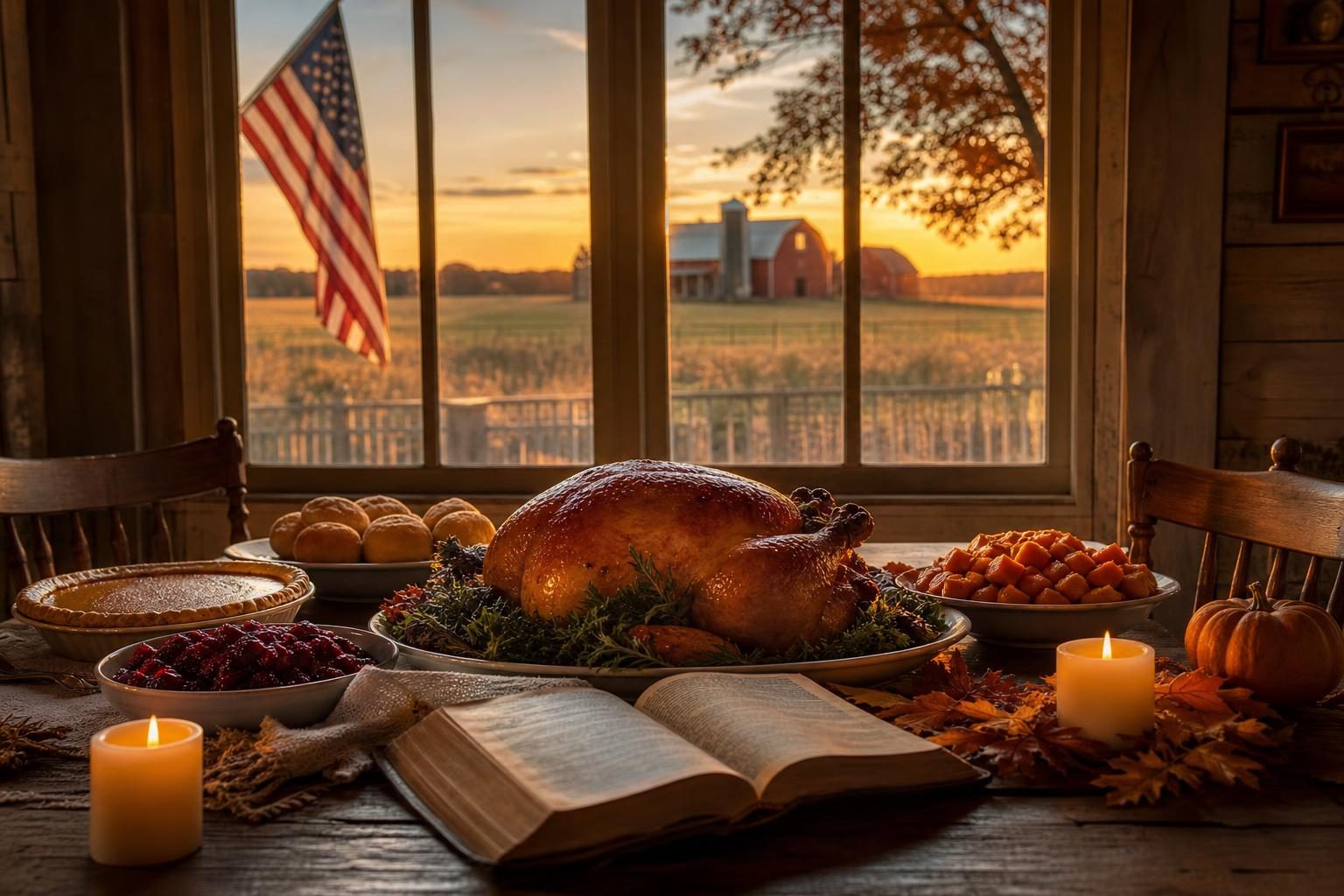
The turkey still owns the center of the American Thanksgiving table, but for the rest of the year it has been steadily losing ground. The average American now eats about 13.2 pounds of turkey a year, down from 17.7 pounds in 1995, Boston University business professor Jay Zagorsky wrote in an analysis of U.S. government data published by The Conversation [1]. That is a decline of more than a quarter over three decades [1].
With Thanksgiving falling on Nov. 26 this year, here is what is behind that slide, what the bird and the rest of the feast will cost, and how families can keep the holiday within reach without losing what makes it special.
A Long, Slow Slide on the Dinner Plate
The biggest winner of the last 30 years has been chicken. Americans ate about 69 pounds of chicken per person in 1995 and about 104 pounds in 2025, according to the figures Zagorsky cited [1]. While turkey consumption shrank, chicken became the default protein of the weeknight dinner.
Price explains a good deal of it. Over the past 25 years, wholesale turkey has averaged roughly 10 percent more per pound than chicken, Zagorsky found in government data, and turkey generally stays the pricier bird except in the weeks right before Thanksgiving, when stores put it on sale [1].
Size and convenience matter too. A whole chicken can feed a household for a meal or two, while a whole turkey is built for a crowd, and American households have grown smaller over time, Zagorsky noted [1]. Fewer big family dinners on ordinary weeknights means fewer reasons to roast a big bird, which leaves turkey more and more as a once-a-year guest of honor.
Bird Flu, a Second Virus and a Flock That Is Growing Again
Supply has had its own troubles. Two straight years of disease losses, from highly pathogenic avian influenza and a respiratory illness known as avian metapneumovirus, cut into the nation's flocks, American Farm Bureau Federation economist Bernt Nelson wrote in a Nov. 5 market analysis [2]. Turkey production fell more than 8 percent last year, Farm Progress reported [3].
This year the flock is growing again. U.S. farmers raised an estimated 198.5 million turkeys in 2026, about 5 million more birds than last year, an increase of roughly 3 percent, according to the Farm Bureau analysis [2]. Because the birds are also coming to market heavier, total pounds of turkey produced are up nearly 6 percent, Farm Progress reported [3]. Even so, the Farm Bureau noted that output remains below the 5.46 billion pounds the industry produced in 2023 [2].
Bird flu has not disappeared, but Texas A&M AgriLife Extension economist David Anderson said the few recent outbreaks are not large enough to seriously affect holiday supplies [3]. Farmers face other pressures. Feed costs remain elevated compared with last year, and higher turkey prices do not automatically mean bigger profits for growers, Nelson wrote [2]. For the families who raise the nation's turkeys, the recovery is real but hard-won.
What Turkey Costs This Year
For shoppers, the answer depends on where you look. Wholesale whole turkeys averaged about $1.80 a pound in late October, compared with $1.69 the same week last year, Anderson said, though the gap with 2025 prices has narrowed [3]. At the grocery store, the national average for a frozen, conventionally raised whole turkey was $1.26 a pound in early November, up from $1.03 a year earlier [3].
That is not the final word for this season. Grocers are featuring turkeys more often than they were at this point last year, and Anderson expects more specials as Thanksgiving gets closer, while cautioning that local prices can differ from the national average [3]. Looking further ahead, the U.S. Department of Agriculture projects wholesale turkey prices to ease in 2027 to about $1.45 a pound, roughly 18 percent below this year's level, the Farm Bureau reported [2].
What's on the Table, and What It Costs Families
The broader feast is holding steady. The Wells Fargo Agri-Food Institute estimates a Thanksgiving meal for 10, dessert included, at $78.93 this year, about 0.4 percent less than last year, Taste of Home reported [4]. Six of the 10 food items in the institute's basket cost less than a year ago, led by fresh cranberries, down 6.6 percent, and frozen vegetables, down 4.2 percent, while turkey slipped 0.5 percent [4]. Pumpkin pie, gravy mix and prepared mashed potatoes moved the other way [4]. For the first time, the institute also priced drinks; adding beer, wine and sparkling water lifts the total to $127.54, about 0.5 percent above last year [4]. The estimate is built on NIQ retail data for the 52 weeks ending Sept. 19 [4].
The American Farm Bureau Federation's long-running survey is the other benchmark families watch. It has priced the same classic menu since 1986 so that years can be compared fairly, using volunteer shoppers who look for the best available prices without special coupons or combination deals [5]. Last year's edition put a classic dinner for 10 at $55.18, down 5 percent, with a 16-pound turkey averaging $21.50, a drop of 16 percent [5]. Turkey made up 39 percent of that meal's cost, the smallest share since 2000, the Farm Bureau said [5]. Because the two surveys use different menus and methods, their totals should not be compared directly.
Families are adjusting all the same. Just over half of Americans, 51 percent, plan to host Thanksgiving, and hosts expect to spend about $427 on food, drink and housewares, up from $414 last year, according to a LendingTree survey reported by NewsNation [6]. A quarter of hosts say they are swapping in cheaper alternatives to their traditional family dishes [6].
Stretching the Holiday Budget
The good news for budget-minded families is that the holiday rewards planning. Start with the bird. With Anderson expecting more grocery specials as the holiday approaches [3], it pays to compare weekly circulars before buying, and a frozen turkey is usually the most economical choice for families with room in the refrigerator and a few days to thaw it safely there. At a national average of about $1.26 a pound [3], a whole turkey remains one of the more affordable ways to feed a crowd, and the leftovers become sandwiches, soups and casseroles that carry a family through the weekend.
Buy for the table you actually have. A smaller household may be better served by a turkey breast or a smaller bird than by a 20-pounder that ends up in the trash. Larger gatherings can share the load the old-fashioned way: ask each family to bring a side dish or a dessert, which spreads the cost and gives everyone a part in the meal.
Watch the items that rose. Pumpkin pie, gravy mix and prepared mashed potatoes cost more this year [4], and homemade versions from flour, potatoes and canned pumpkin are often cheaper and better. Cranberries and frozen vegetables are down [4], and store brands of stuffing, rolls and canned goods can trim the bill further without anyone noticing.
More Than a Meal
The numbers show Americans eat less turkey than they once did, but they also show something more encouraging: on one Thursday a year, families still gather around the same bird their grandparents served, and only a quarter of hosts say they are trading down from their traditional dishes [6].
That tradition runs deep. George Washington proclaimed a national day of thanksgiving in 1789, and in 1863, in the middle of the Civil War, Abraham Lincoln called on Americans to set apart the last Thursday of November as a day of thanksgiving and praise to God. The psalmist calls the faithful to enter God's gates with thanksgiving, and for millions of American households the holiday still begins with a prayer said over the food before the first plate is passed.
Whether the centerpiece is a 20-pound turkey, a roast chicken or a potluck of family recipes, the heart of the day has never been the price of the meal. It is the grandparents at the head of the table, the children at the folding table in the next room, the empty chair set for a neighbor or a widow who would otherwise eat alone, and the habit of counting blessings out loud. A family on a tight budget that gathers, gives thanks and shares what it has is keeping Thanksgiving exactly as it was meant to be kept.
Sources
- [1]The ConversationAmericans are eating way less turkey than we used toOpens in a new tab ↗
- [2]American Farm Bureau FederationTurkey Farmers Recovering From Two Years of LossesOpens in a new tab ↗
- [3]Opens in a new tab ↗
- [4]Opens in a new tab ↗
- [5]Ohio Farm BureauCost of Thanksgiving dinner declinesOpens in a new tab ↗
- [6]Opens in a new tab ↗
What bill squeezes your budget most?
- Groceries
- Gas and energy
- Rent or mortgage
- Insurance and health care
More in Consumer News
Farm Bureau Prices Thanksgiving for 10 at $58.63, Up 6%, as the Turkey Leads the Way but a Third of the Menu Gets Cheaper
Today on Kitchen Table with Megan O’Brien

Shoppers Tap the Brakes in October: Retail Sales Rise Just 0.2% as High Prices Shadow the Holiday Season
Yesterday on Kitchen Table with Megan O’Brien

81.5 Million Americans Will Still Travel for Thanksgiving, AAA Says: When to Drive and What Gas Will Cost
On Monday on Kitchen Table with Megan O’Brien
Were you there?
If you were at the scene, or this story touched your life, tell us what you saw and what it was like.
Discussion 0
Sign in or create a free account to join the discussion.
No comments yet. Start the discussion.