
 Overnight on The Hart of the Economy with Evelyn Hart
'Look at India': Trump Presses the Fed to Cut Rates, Saying Cheaper Money Could Unleash Double-Digit Growth
Back from Asia, the President told reporters the central bank is acting politically and pointed to India's fast growth as proof that lower rates pay off. The Fed's next decision comes Dec. 9, and some officials are talking about raising rates, not cutting them.
Filed November 21, 2026 · 📍 White House, DC 20500
Were you there? Share your story
Key points
- Trump cited India's roughly 7% growth and low rates to argue the Fed should cut.
- He said U.S. growth could reach 14% to 20% with lower rates and called the Fed political.
- The Fed raised rates a quarter point in September and held in October at 3.75%-4%.
- Governor Waller has argued for a half-point hike at the Dec. 8-9 meeting.
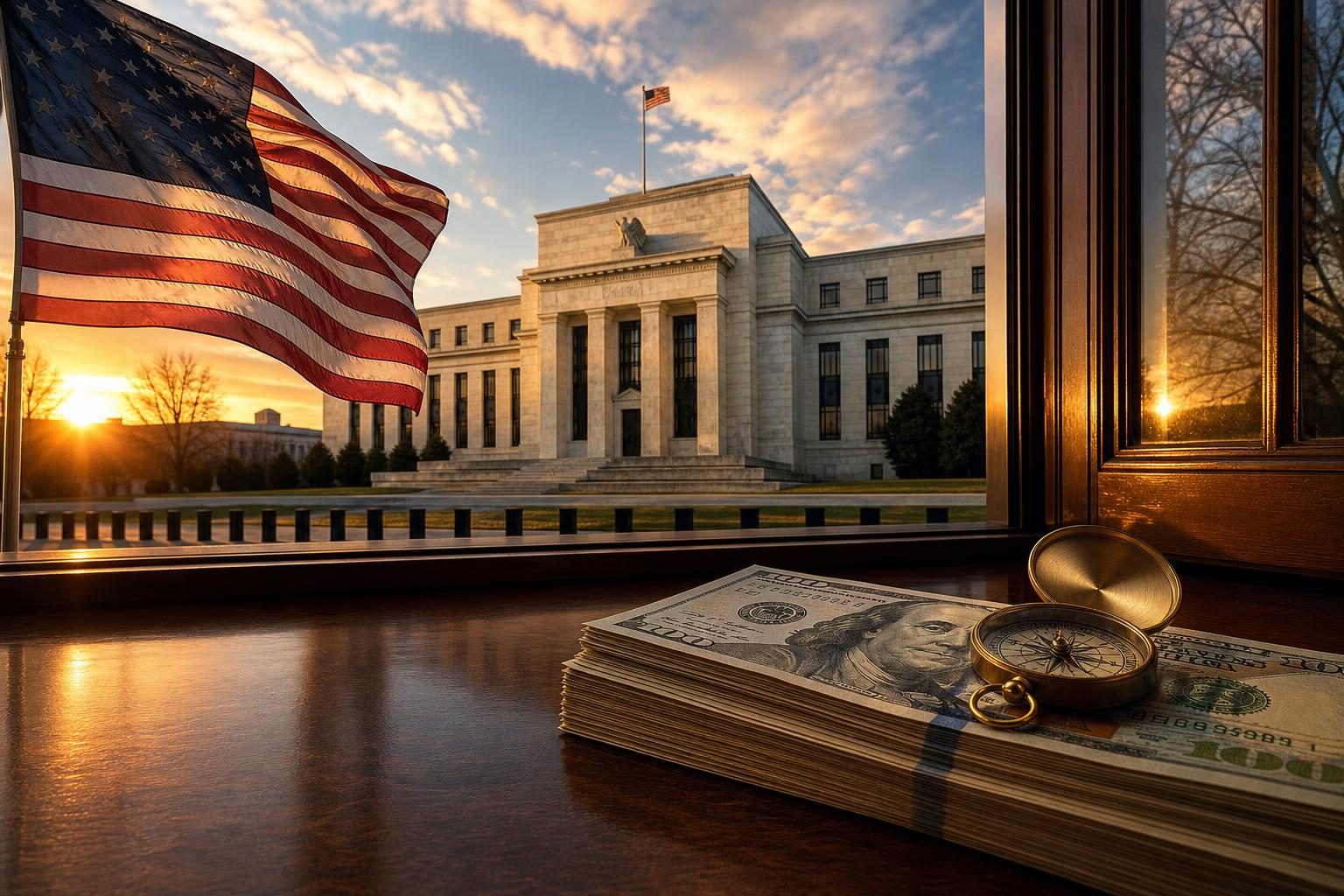
President Trump renewed his campaign for lower interest rates on Friday, telling reporters at the White House that the Federal Reserve is acting politically and that the United States could grow far faster if borrowing were cheaper. His example was India, which he said combines low rates with economic growth of about 7% [1][4].
The President spoke at a news conference after returning from a four-day trip to Asia, where he said he met more than 20 world leaders, secured two new trade deals and has about 10 more on the way [4]. Indian outlets gave his comments heavy play, and the line that drew the headlines was simple: look at India [1][2].
What the President Said
Mr. Trump argued that the American economy could reach growth of 14%, 15% or even 20% if the Fed brought rates down, according to Business Today, which reported that he put current U.S. growth at about 4% [2]. He did not say over what period those figures would be measured or how deep a cut he had in mind [2].
He called the Fed political and complained that when the administration announces good economic numbers, the central bank answers by raising rates, according to The Tribune [1][3]. He also said he was not blaming the Fed's chairman personally, aiming his criticism at the institution as a whole [1].
The President tied the rate fight to the national debt. Reports on the news conference said he put the savings from a one-point cut in rates at $650 billion and argued that faster growth would let the government pay down what it owes more quickly [1][2].
Where the Fed Stands
The remarks come just months into Chairman Kevin Warsh's term, and after the Fed raised its benchmark rate by a quarter point in September, lifting the top of its target range to 4%, Just the News noted [3]. At its October meeting the Fed held that range steady at 3.75% to 4%, and Mr. Warsh offered no clear signal about what comes next, FXStreet reported [6].
Inside the central bank, the talk this week has been about going higher, not lower. Fed Governor Christopher Waller said a half-point increase is probably needed when policymakers meet Dec. 8-9, warning that stubborn inflation is spreading through the economy, CNBC reported [5]. His view is one voice on a committee that decides together [5].
That sets up a clear contrast. The White House wants cheaper money to fuel growth and ease the cost of the debt. Several Fed officials believe inflation has not been tamed and that rates may need to rise again before they can fall [5][6].
Why It Matters to Your Family
For households, this is not an abstract argument. The Fed's benchmark rate ripples into credit card bills, car loans, small-business lines of credit and, over time, mortgages. Families who have watched grocery and housing costs climb for years feel both sides of this debate: prices are still too high, and the cost of borrowing to cope with them is high, too.
The President's comparison with India will draw pushback from economists who note that a developing country building out roads, factories and power plants from a lower starting point can grow faster than a mature economy like ours. But his larger point is one many Americans share: a central bank that answers to no voter should be careful not to choke off a recovery that working families are only beginning to feel.
Conservatives have long argued for a Fed that is independent but also humble, focused on stable prices rather than on managing the whole economy. Mr. Trump's frustration is a reminder that the Fed's choices carry real costs, and that its leaders owe the public clear explanations.
What Comes Next
All eyes now turn to the Dec. 8-9 meeting, when the Fed will announce its decision and Mr. Warsh will face questions about inflation, growth and the pressure coming from the White House [5]. If the committee raises rates, expect the President to say so loudly. If it holds, both camps will claim a partial win.
Liberty Bell Report will follow the decision and what it means for your mortgage, your savings and your paycheck.
Sources
- [1]The Tribune'Look at India...': Trump cites India's 7% GDP growth to slam US Fed over high interest ratesOpens in a new tab ↗
- [2]Opens in a new tab ↗
- [3]Opens in a new tab ↗
- [4]The Hindu'Look at India, they have low interest rates': Trump says U.S. could achieve 14-15% economic growthOpens in a new tab ↗
- [5]Opens in a new tab ↗
- [6]Opens in a new tab ↗
Should towns welcome AI data centers?
- Yes, they bring jobs and tax money
- Only if they pay their own power costs
- No, they strain water and the grid
More in Business & Economy

CrowdStrike in Talks to Buy Zscaler, Aiming to Build a Fuller U.S. Cyber Defense Platform
Last night on Main Street Money with Marcus Hale
Bitcoin Breaks Below Its July Low to Hit Its Weakest Level in More Than Two Years as ETF Money Heads for the Exits
Last night on Code & Coin with Kendall Price

The SEC Reportedly Examines Nvidia's Accounting, and the Chipmaker's Stock Suffers Its Worst Day Since DeepSeek
Last night on Ray’s Trading Desk with Ray Castellano
Were you there?
If you were at the scene, or this story touched your life, tell us what you saw and what it was like.
Discussion 0
Sign in or create a free account to join the discussion.
No comments yet. Start the discussion.