
 Overnight on Open Road with Frank Kowalski
Canada Threatens to Sue Stellantis as Jeep Work Heads to Illinois
Ottawa declared the automaker in default on a Brampton funding deal and wants hundreds of millions of dollars back, while Belvidere, Illinois, lines up thousands of American jobs.
Filed November 13, 2026 · 📍 IL 62701
Were you there? Share your story
Key points
- Canada says it may sue Stellantis to recover hundreds of millions in public funding.
- Industry Minister Mélanie Joly declared the company in default after it sold its idled Brampton, Ontario, plant to Roshel.
- Stellantis' $13 billion U.S. plan reopens the Belvidere, Illinois, plant to build the Jeep Cherokee and Compass.
- Conservative Leader Pierre Poilievre wants Joly fired as Prime Minister Mark Carney calls the sale a betrayal.
Canada is threatening to take one of the world's biggest automakers to court, and the fight says a great deal about where North American car jobs are heading.
The Canadian government said Thursday it may sue Stellantis, the parent of Jeep, Ram, Dodge and Chrysler, to recover hundreds of millions of dollars in public funding, after the company shifted planned vehicle production to the United States during President Trump's trade war and agreed to sell its idled assembly plant in Brampton, Ontario, the Associated Press reported [1]. Industry Minister Mélanie Joly has formally notified Stellantis that it is in default of the funding agreement it signed to retool the Brampton plant, The Globe and Mail reported [2].
Joly did not mince words. She said she was "fed up" and that Stellantis must repay Ottawa or face a lawsuit, according to Global News [3]. Her warning came around a high-stakes meeting with the company that also involved Ontario's government and the Unifor autoworkers' union [3].
How Brampton Got Here
The dispute traces back to a decision Stellantis announced in October 2025. That month, the company unveiled a $13 billion, four-year investment plan in the United States that it said would create more than 5,000 American jobs across Illinois, Ohio, Michigan and Indiana [6]. The centerpiece was a plan to reopen the long-idled assembly plant in Belvidere, Illinois, to build the Jeep Cherokee and Jeep Compass, adding about 3,300 jobs there [6].
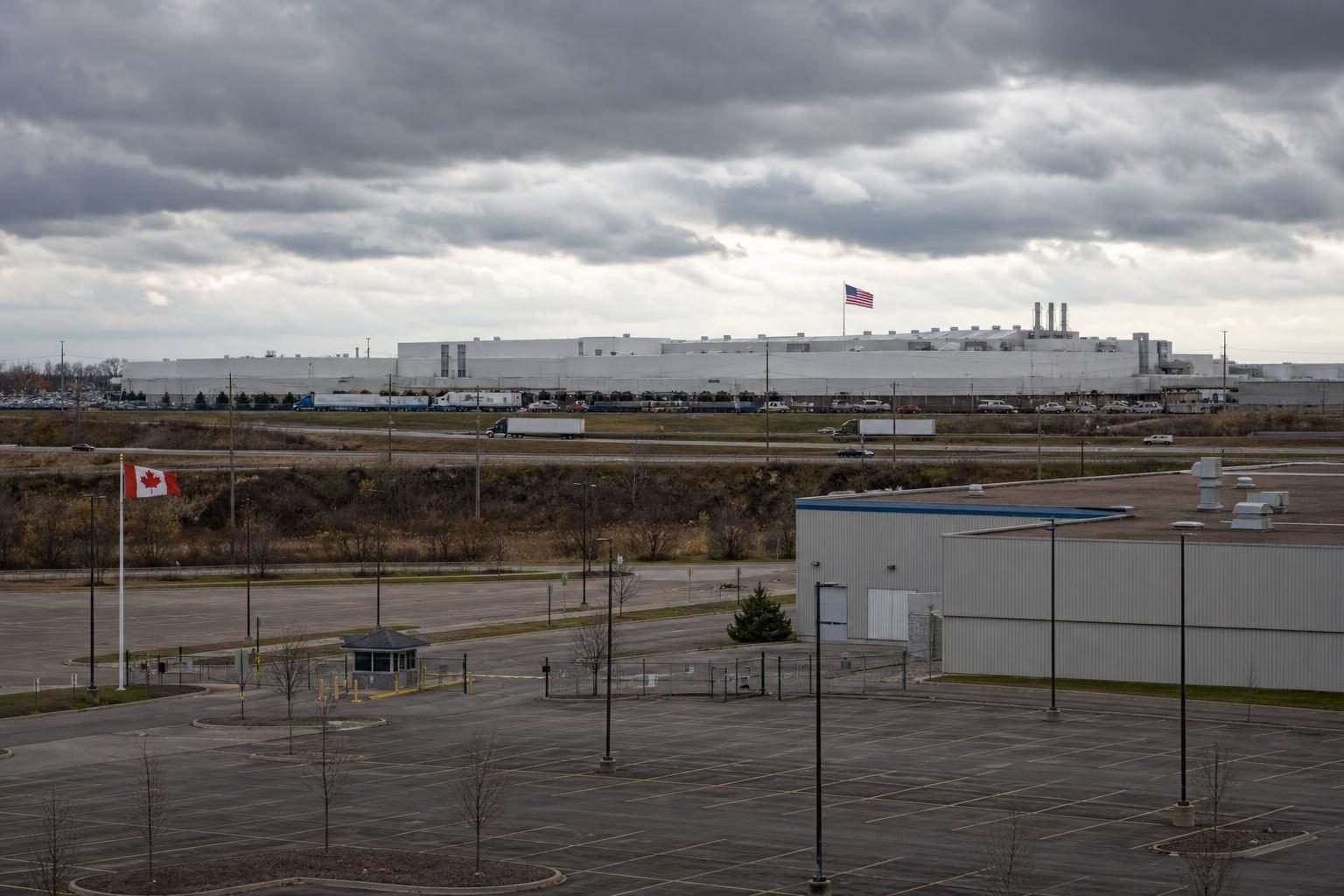
The Compass had been slated for Brampton, where Canadian taxpayers had helped pay to retool the factory [1]. Instead, the Ontario plant sat idle, and Stellantis has now agreed to sell it to Roshel, a Canadian defense contractor that builds armored vehicles, according to The Globe and Mail [2]. Joly's default notice followed that sale [2].
Prime Minister Mark Carney has again called the sale a "betrayal," the Toronto Sun reported [4]. The Sun added that reports suggest the Liberal government knew talks were underway to sell the plant before the deal became public, a point that has put Carney's team on the defensive at home [4].
The political heat in Ottawa is coming from the right. Carney accused Stellantis of betraying Canadian autoworkers and threatened to enforce the company's contractual obligations only hours after Conservative Leader Pierre Poilievre called for Joly to be fired over the Brampton sale, the Western Standard reported [5]. Poilievre's demand keeps the spotlight on how the Liberal government handled Brampton from the start, and on whether Ottawa saw the sale coming [4][5].
That criticism lands because the money is real. The AP described the funding Canada wants back as hundreds of millions of dollars [1]. For a country whose auto industry has long been tied to the American market, losing a major assembly line to Illinois is a painful symbol of how much leverage has shifted south of the border.
What It Means for American Workers
For Americans, the other side of the ledger is easier to read. Belvidere, a factory town northwest of Chicago, is in line for thousands of jobs that had once seemed lost for good [6]. Stellantis' broader plan also includes new work in Toledo, Ohio, Kokomo, Indiana, and Warren, Michigan, as the company builds more of what it sells in America inside America [6].
That is exactly the outcome the president's trade policy was designed to produce. For decades, automakers chased lower costs across the northern and southern borders, and American factory towns paid the price. The AP noted that the production shift came during Mr. Trump's trade war [1], and the Belvidere decision shows tariffs can change where companies choose to build.
Canada's frustration is understandable. Governments that hand public money to private companies expect something in return, and Ottawa says it is owed. But the lesson many American workers will draw is a simple one: when the United States insists on a fair deal, investment follows.
What Comes Next
The next move belongs to Stellantis and Ottawa. Joly has made clear that the company must repay the government or face a lawsuit [3], and the formal default notice gives Canada a legal footing to press its claim [2]. Carney, under fire from Poilievre's Conservatives, has every political reason to keep the pressure on [4][5].
Any legal fight could take months or longer. In the meantime, the Brampton plant is headed to Roshel [2], and Belvidere prepares for Jeep production under Stellantis' U.S. plan [6]. Car shoppers on both sides of the border will be watching to see whether the dispute affects prices or timing for the Compass, while autoworkers in Illinois and Ontario will be watching for something more personal: where the paychecks land.
Sources
- [1]The Washington TimesCanada threatens to sue Stellantis over auto plant sale as Trump's trade war shifts production southOpens in a new tab ↗
- [2]The Globe and MailStellantis in default of funding agreement to retool Brampton plant, Joly notifies automakerOpens in a new tab ↗
- [3]Opens in a new tab ↗
- [4]Opens in a new tab ↗
- [5]Western StandardCarney threatens Stellantis as Poilievre demands Joly's firingOpens in a new tab ↗
- [6]Opens in a new tab ↗
Would you buy an electric vehicle?
- Yes
- Maybe a hybrid
- No
- Only if prices come way down
More in Autos & Transportation
Mercedes-Benz Freezes All Investment in Germany and Weighs Plant Closures as Labor Talks Stall
Last night on Open Road with Frank Kowalski
Bomb Alert at Calais-Fréthun Station Halts Eurostar Trains Between London and Paris
Yesterday on Open Road with Frank Kowalski
Musk Extends Cybertruck Production Through Summer 2027 as Buyers Rush to Claim the Last Trucks
Yesterday on Open Road with Frank Kowalski
Were you there?
If you were at the scene, or this story touched your life, tell us what you saw and what it was like.
Discussion 0
Sign in or create a free account to join the discussion.
No comments yet. Start the discussion.