
 Overnight on World Watch with Grace Whitfield
Solomons Set to Ditch China Security Pact for Australia
Honiara has told Beijing it won't renew the 2022 deal that alarmed Washington, as Prime Minister Matthew Wale heads to Canberra to sign a new treaty.
Filed November 24, 2026 · 📍 Washington, DC 20001
Were you there? Share your story
Key points
- Solomon Islands told China it will not renew the 2022 security pact, due to expire in April, ABC News reported.
- Prime Minister Matthew Wale is expected to sign a broad security treaty with Australia in Canberra on Wednesday.
- A Lowy Institute analyst called the move a 'massive win' for Australia.
- Opposition leader Manasseh Sogavare, who signed the China deal, demanded the government explain its reasons.
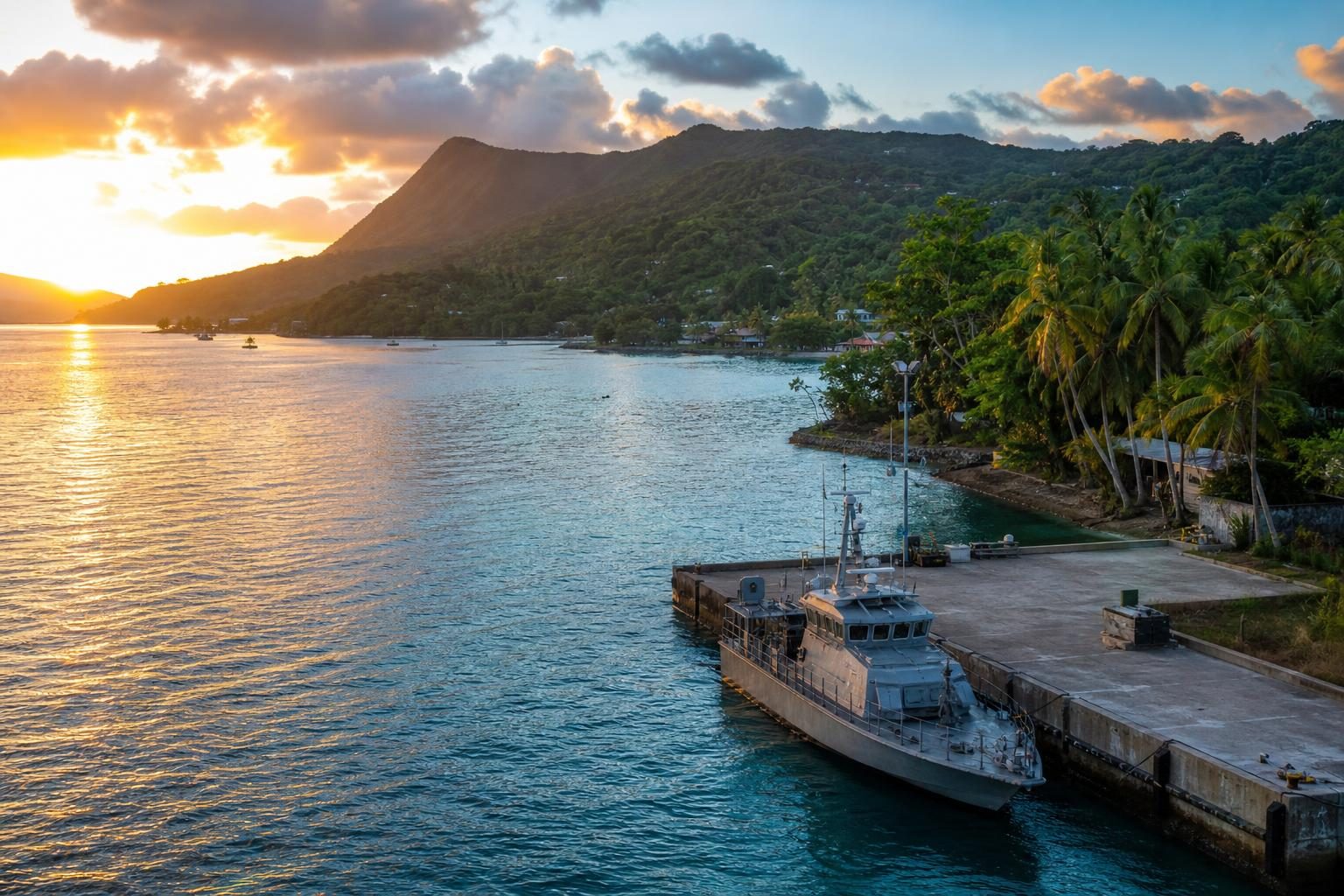
The Solomon Islands has told China it will not renew the security agreement that let Beijing send police into the South Pacific nation and gave Chinese warships a place to call, Australia's ABC News reported Tuesday. The move would hand one of Beijing's most prized footholds in the Pacific back to America's closest ally in the region [1].
The decision comes as Prime Minister Matthew Wale travels to Canberra, where he is expected to sign a wide-ranging treaty on Wednesday that would make Australia the island nation's main security partner, according to the ABC and Reuters [1][2]. The Solomon Star, a newspaper in the capital, Honiara, reported that Wale was bound for Canberra to sign the treaty with Prime Minister Anthony Albanese's government [3].
What the China Deal Allowed
The 2022 pact, signed under then-Prime Minister Manasseh Sogavare, allows Honiara to ask China to send police and military personnel to help keep social order, and it permits Chinese naval vessels to make stopovers, the ABC reported [1]. Under a rotating training arrangement, about two dozen Chinese police officers have been stationed in the country at any one time, the broadcaster said [1]. The agreement is due to expire in April [1].
The agreement has been contentious since the day it was signed, as the ABC's coverage noted [4], and Sogavare, its architect, has stood by it [1]. The China Global South Project, which follows Beijing's ties with developing nations, also reported that Honiara plans to replace the pact with the Australian treaty [5].
A 'Massive Win' and a Pointed Reply
Oliver Nobetau of Australia's Lowy Institute called the decision a "massive win" for Australia, according to the ABC [1].
Sogavare, now the opposition leader, said that if the government had decided to drop the agreement, it owed the public an explanation of its reasons, the assessment behind the decision and the arrangements that would replace the help China had provided [1]. He also argued that the people of the Solomon Islands, not China or Australia, would live with the consequences [1].
The ABC's political coverage from Canberra noted that negotiations over the treaty's final terms were expected to continue, and that nothing is settled until the documents are signed [4].
Why It Matters
For Americans, this is not a faraway footnote. The 2022 deal was one of Beijing's most visible security inroads in the Pacific, and the island chains north and east of Australia sit along the sea lanes that connect the United States to its allies in Asia.
A small nation choosing a democratic neighbor over a communist superpower is a reminder that steady friendship and honest partnership still count for something. If Wednesday's signing goes ahead as planned, it will be one of the clearest setbacks yet for China's security ambitions in the Pacific, and a welcome win for the free nations that have worked to keep the region open. All eyes now turn to Canberra, where Wale and Albanese are set to meet [1][2].
Sources
- [1]ABC News (Australia)Solomons Islands scraps China security pact in 'massive win' for AustraliaOpens in a new tab ↗
- [2]Reuters via U.S. News & World ReportSolomon Islands Plans to Replace China Security Pact With Australia Treaty, Report SaysOpens in a new tab ↗
- [3]Solomon Star NewsPM Wale Canberra-bound to sign Aust-SI treatyOpens in a new tab ↗
- [4]ABC News (Australia)Federal politics: Solomon Islands poised to end contentious security agreement with ChinaOpens in a new tab ↗
- [5]China Global South ProjectSolomon Islands Plans to Replace China Security Pact With Australia Treaty, Report SaysOpens in a new tab ↗
Israel's new parliament is sworn in. Who would you rather see lead Israel?
- Benjamin Netanyahu
- Gadi Eisenkot
- Someone new
- That's for Israelis to decide
More in World News

Bus-Truck Crash Kills 11 in UAE's Ras Al Khaimah
Overnight on Breaking Now with Nathan Brooks

Dozens Killed in Nigeria Revenge Raids After Village Chief's Murder
Overnight on Breaking Now with Nathan Brooks
Medvedev: Russia Could Strike First With Nukes
Overnight on World Watch with Grace Whitfield
Were you there?
If you were at the scene, or this story touched your life, tell us what you saw and what it was like.
Discussion 0
Sign in or create a free account to join the discussion.
No comments yet. Start the discussion.