
 Overnight on World Watch with Grace Whitfield
One Seat Short: New Zealand's Final Count Puts Luxon's Coalition in a Newcomer's Hands
The official tally left the center-right bloc with 65 of 130 seats, handing a seven-seat centrist party the power to decide who governs, or whether voters go back to the polls.
Filed November 27, 2026 · 📍 World desk · Washington, DC
Were you there? Share your story
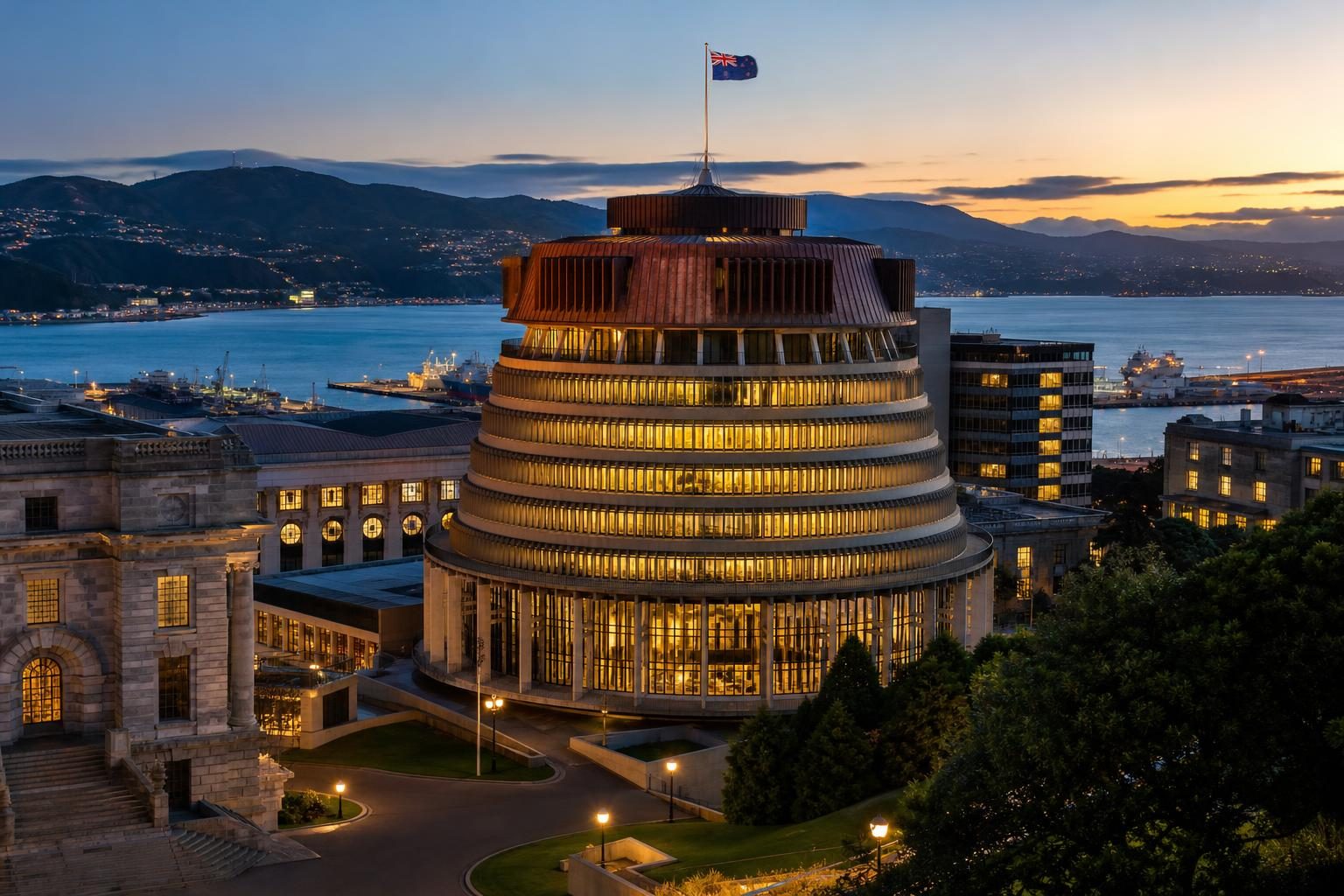
Key points
- Final count gives National, ACT and NZ First 65 of 130 seats, one short of a majority
- Centrist newcomer Opportunity won seven seats and now holds the balance of power
- Luxon says National is ready to negotiate; Opportunity's leader won't rule out a new election
- The right-leaning bloc still finished seven seats ahead of the left
New Zealand's center-right government came up one seat short on Friday. The official count of the Nov. 7 general election left Prime Minister Christopher Luxon's three-party coalition of National, ACT and New Zealand First with 65 of Parliament's 130 seats, one fewer than it needs to keep governing on its own, The Guardian reported [1]. Election-night results had handed the coalition a narrow majority, but the special votes counted over the past three weeks erased it, according to The Jerusalem Post [2].
That leaves the balance of power with a centrist newcomer to Parliament, the Opportunity party, which won seven seats [1][4]. Without its backing, or some other arrangement that produces a working majority, New Zealanders could be sent back to the polls [1].
The Numbers Behind the Deadlock
On the Electoral Commission's official count, National holds 40 seats, ACT 13 and New Zealand First 12 [4]. On the other side, Labour has 36, the Greens 17 and Te Pāti Māori 5, a left-leaning bloc of 58 [4]. Labour narrowly edged National on the party vote, about 29.9 percent to 28.4 percent, but the three parties of the right still finished seven seats ahead of the three parties of the left [4].
In other words, voters did not swing to the left. They split their support among more parties, and the arithmetic of a proportional system did the rest. A party that has never sat in Parliament before now decides whether the coalition that has governed since 2023 gets a second term [1].
Luxon, who repeatedly ruled out working with Opportunity during the campaign, now says National is ready to sit down with it, RNZ reported [3]. He warned that the negotiations would be challenging and would take some time [3]. Opportunity's leader, Qiulae Wong, told RNZ her party will talk with National first but will turn to Labour if those talks stall, and she would not rule out forcing another election [3]. She also acknowledged she is feeling a great deal of pressure [3].
What the Kingmaker Wants
Opportunity went into the campaign with five conditions it called non-negotiable for any deal, and two of them are climate measures, including restoring New Zealand's commitment under the Paris Agreement, Interest.co.nz reported [5]. The party's best-known ideas, a land tax and a "citizens' income" paid to residents, were left off that list, 1News reported [6]. Wong said at the time that her bottom lines were meant to be realistic goals for a three-year term [6].
That matters for the kind of government New Zealand gets. A center-right coalition that campaigned on its own agenda may now have to buy the support of a small party whose top demands lean toward the green end of politics [5]. Every concession on climate or spending would be made by a government that the voters, seat for seat, still preferred to the opposition [4].
Our Take: A Hard Bargain, and a Test of Steadiness
Here is the honest picture. Christopher Luxon did not lose this election; his side won more seats than the left. But he lost the cushion that let his coalition govern without asking anyone else's permission, and he lost it on the late count [2]. The temptation in moments like this is to promise whatever it takes to hold power. The wiser course is the one Luxon has signaled so far: talk in good faith, admit the talks will be hard, and refuse to rush [3].
For Americans, there is a lesson worth remembering. Small margins shape big outcomes. A single seat in Wellington now stands between a conservative-leaning government and a fresh campaign, just as a handful of seats so often decides who sets the agenda in Washington. Elections are won in the final count, not on election night, and patience with that process is part of respecting voters.
There is also a word of caution for the kingmaker. Opportunity has seven seats, roughly one in every 19 in the chamber [4]. Its leverage is real, but the voters who sent the right-leaning parties 65 seats gave a clear signal about the direction most of them wanted [4]. A deal that honors that signal, while giving Opportunity room on the issues it campaigned on, is the kind of compromise that serves a country well. A deal that turns a center-right mandate inside out would not.
What Comes Next
Formal negotiations between National and Opportunity are expected to begin first, with Labour waiting in the wings if they falter [3]. If no party can assemble a majority or a confidence agreement, New Zealand faces the prospect of a second election [1]. Liberty Bell Report will follow the talks as they unfold.
Sources
Israel's new parliament is sworn in. Who would you rather see lead Israel?
- Benjamin Netanyahu
- Gadi Eisenkot
- Someone new
- That's for Israelis to decide
More in World News
Australia Sanctions the Two Men It Says Ran Iran's Arson Attacks on Jews
Overnight on Border Watch with Cole Brennan
Costa Rica Turns Away the UN's Albanese at the Airport
Overnight on World Watch with Grace Whitfield

Houthi Strike Kills a Worker and Halts Units at Saudi Arabia's Jazan Refinery
Yesterday on The Power Grid with Priya Desai
Were you there?
If you were at the scene, or this story touched your life, tell us what you saw and what it was like.
Discussion 0
Sign in or create a free account to join the discussion.
No comments yet. Start the discussion.