
 Yesterday on World Watch with Grace Whitfield
Nearly 50 Years, Hezbollah Still Armed: The U.N.'s Lebanon Force Heads for the Exit
UNIFIL's mandate ends Dec. 31 with no plan for what comes next. Lebanon wants a French lifeline; Israel says it trusts only its own soldiers.
Filed November 27, 2026 · 📍 Washington, DC 20001
Were you there? Share your story
Key points
- The U.N. peacekeeping force in southern Lebanon, UNIFIL, reaches the end of its mandate on Dec. 31.
- The Security Council voted to end it after the U.S. and Israel said it failed to stop Hezbollah's buildup.
- Lebanon's prime minister says France is drafting a plan to keep some UNIFIL tasks going for a time.
- Israel rejects any new international force and will not withdraw before Hezbollah is disarmed.
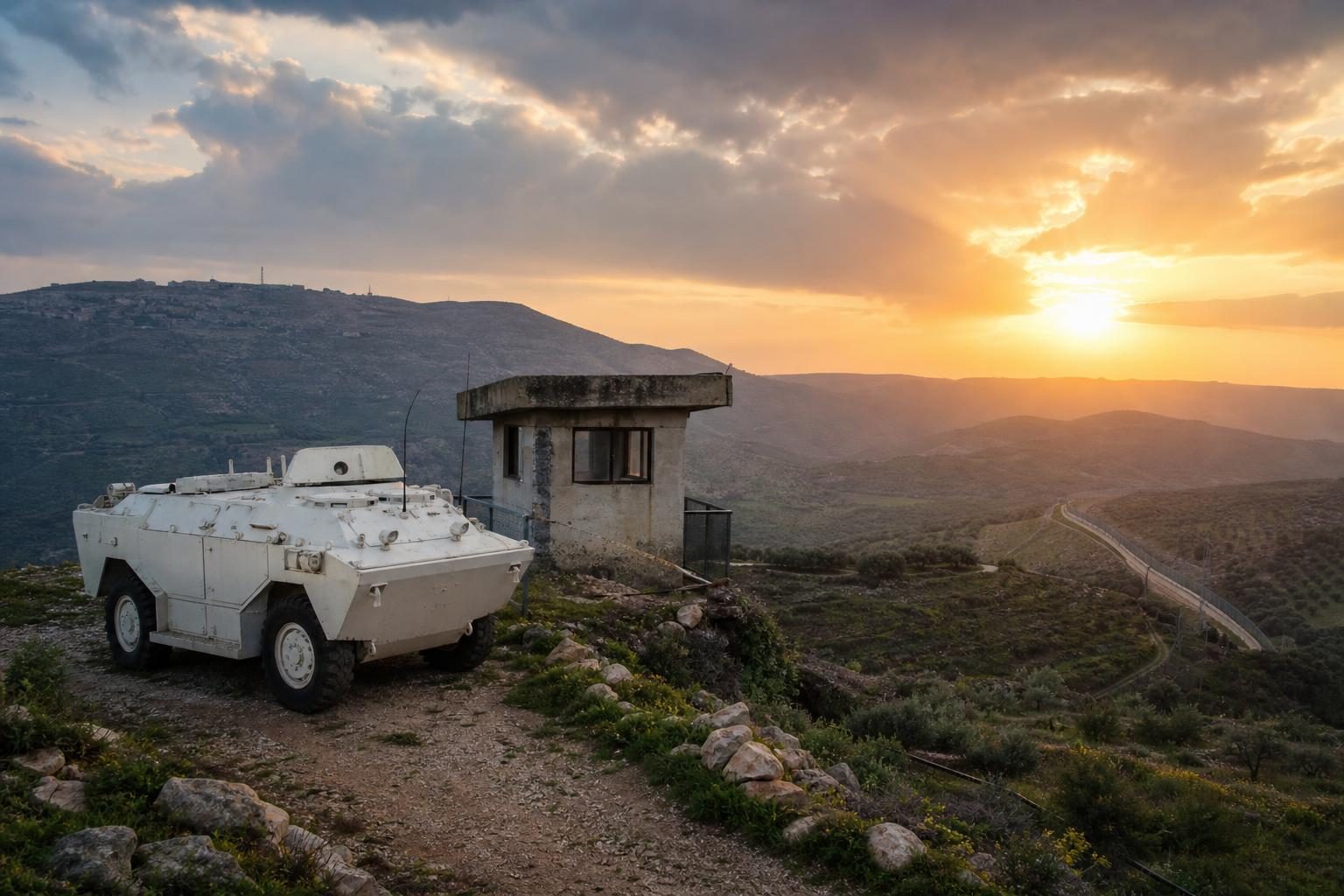
The United Nations force that has patrolled southern Lebanon for nearly half a century is getting ready to leave, and no one has settled what will take its place, the Associated Press reported Friday in a story carried by NBC News [1].
The peacekeeping mission, known as UNIFIL, reaches the end of its mandate at the close of this year [1]. The Security Council voted last year to wind it down, yielding to the United States and Israel, which argued the force had failed to stop Hezbollah's military buildup along Israel's northern border, according to the AP [1]. About 7,500 peacekeepers now in the south are expected to pull out gradually after the mandate runs out, the AP reported [1].
A Last-Minute Lifeline From Paris
Lebanon's government is trying to buy time. Prime Minister Nawaf Salam told the AP in an exclusive interview that France is preparing a Security Council resolution that would let UNIFIL keep some of its jobs after the mandate expires, such as clearing mines, escorting humanitarian convoys and monitoring violations [2]. France has not publicly commented on the plan Salam described [2].
Salam was candid that the idea would not solve the larger problem. He told the AP it would only give Lebanon extra time to agree on a new security arrangement for the south [2]. He also said formal negotiations were on hold because of Israel's elections and uncertainty over who will form its next government [2].
According to Salam, U.S. officials have signaled they could be open to considering such an arrangement, the AP reported [2]. The New Arab, which also carried the interview, noted that it remains unclear whether Washington will back anything that keeps the existing force in place [3].
Israel: We Trust Our Own Soldiers
Israel has made its position plain. Its ambassador to the U.N., Danny Danon, has publicly rejected any new international force in the south, saying Israel relies only on its own troops, according to the AP [2]. Hezbollah has refused to give up its weapons, and Israel says it will not withdraw before the group is disarmed, the AP reported [2].
Meanwhile, The National reported that the looming gap has opened the door to talk of private companies filling part of the role [4]. In Ireland, one of the mission's longtime contributors, the return of the country's peacekeepers was described as the end of an era, The Irish Times reported [5].
Why the Mission Fell Short
The case against UNIFIL was never that its soldiers lacked courage. Many served honorably in a dangerous place for decades. The problem was the mission itself. UNIFIL's own commander told the AP that his mandate is not to disarm Hezbollah or to fight it [1]. A force that by design cannot stop a terrorist militia from arming itself cannot deliver the quiet border that Lebanon and Israel were promised.
That is the record Washington and Jerusalem pointed to when they pushed the Security Council to end the mission [1]. Hezbollah grew into one of the most heavily armed non-state groups in the world while blue helmets watched from their posts. The families of northern Israel, who have spent years running to bomb shelters, know the cost of that failure better than any diplomat in New York.
There is a real risk on the other side, and it deserves an honest hearing. Lebanese officials fear a vacuum in the south once the peacekeepers leave, and Salam's push for a bridge reflects that worry [2]. Clearing mines and escorting aid convoys are humanitarian jobs that matter to ordinary Lebanese families, many of them Christians and others caught between Hezbollah and the border.
But the answer to a vacuum is a Lebanese state that finally does what the 2006 ceasefire required of it: take control of the south and take the weapons out of Hezbollah's hands. Another open-ended international mission that cannot do that job would only postpone the reckoning.
What Comes Next
Watch for France to put its proposal before the Security Council in the coming weeks, for where the Trump administration lands on it, and for whether Israel's next government reopens formal talks with Beirut [2][4]. The deadline does not move: the mandate ends Dec. 31 [1].
Sources
- [1]NBC NewsU.N. peacekeepers are preparing to leave southern Lebanon. There's no plan for what comes nextOpens in a new tab ↗
- [2]San Francisco Chronicle (AP)AP Exclusive: Lebanon's prime minister says a proposal is underway to have UN peacekeepers stay onOpens in a new tab ↗
- [3]Opens in a new tab ↗
- [4]Opens in a new tab ↗
- [5]Opens in a new tab ↗
Israel's new parliament is sworn in. Who would you rather see lead Israel?
- Benjamin Netanyahu
- Gadi Eisenkot
- Someone new
- That's for Israelis to decide
More in World News

Bombs Hit a Wedding and a School as Myanmar's Military Strikes Kill Dozens
Today on Cross-Examination with Dominic Kane
Netanyahu Offers Eisenkot the First Turn as Prime Minister in a Unity Deal
Today on World Watch with Grace Whitfield

Taiwan Votes Under Beijing's Shadow: The Ruling Party Gains, the KMT Keeps Taipei, and a Pro-Nuclear Yes Leads the Count
This morning on Cross-Examination with Dominic Kane
Were you there?
If you were at the scene, or this story touched your life, tell us what you saw and what it was like.
Discussion 0
Sign in or create a free account to join the discussion.
No comments yet. Start the discussion.