
 Overnight on Breaking Now with Nathan Brooks
Hamas Confirms Its Rafah Brigade Commander, Tied to October 7 Planning, Was Killed in an Israeli Strike
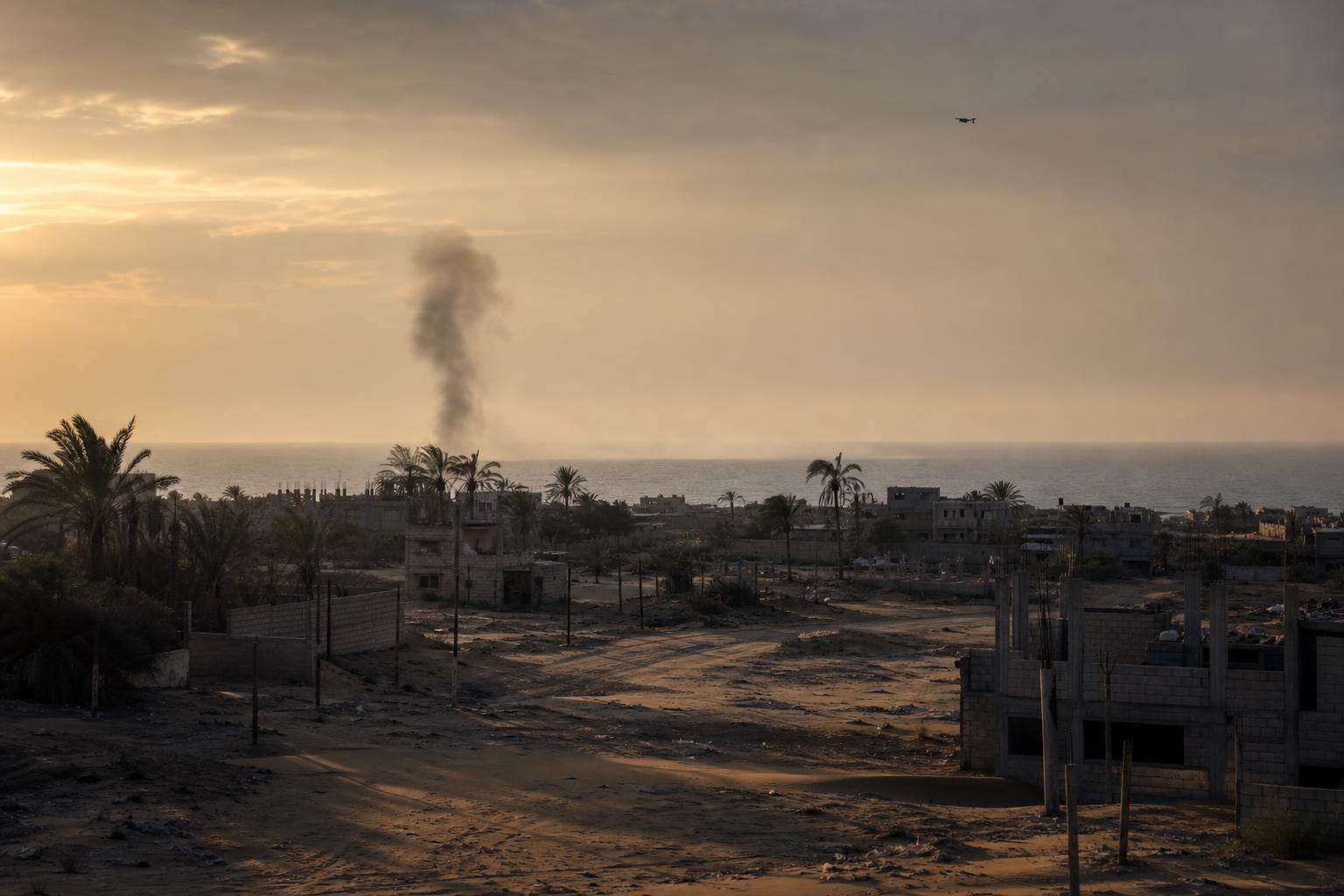
Hamas says Samir Abu Younis, 53, died in a strike in the Mawasi area of Khan Younis. Israel says it hit a senior commander of Hamas' armed wing but has not named him.
Filed November 15, 2026 · 📍 World desk · Washington, DC
Were you there? Share your story
Key points
- Hamas confirmed Rafah Brigade commander Samir Abu Younis, 53, was killed in an Israeli strike in Khan Younis' Mawasi area.
- Israel said it struck a senior Hamas armed-wing commander but had not confirmed his identity.
- Hamas says Abu Younis helped plan and oversee the October 7 attack; his funeral is set for Sunday afternoon.
- The October 2025 ceasefire ended major combat but has not disarmed Hamas.
Hamas has confirmed that Samir Abu Younis, the commander of its Rafah Brigade, was killed in an Israeli airstrike in the southern Gaza Strip, with his funeral set for Sunday afternoon in Khan Younis, according to reports carried by The Hindu and The Times of India [1][2].
The Israeli military said it had struck a senior commander in Hamas' armed wing but did not name him, the Reuters report in The Hindu said [2]. The Times of Israel noted that Israel had not confirmed the identity of the man it targeted [4].
What each side says
Hamas' armed wing, the Al-Qassam Brigades, identified the commander as Abu Younis, 53, and said he was killed on Saturday, Al Jazeera reported [3]. The group said he joined its military wing in 1991 and held a series of senior operational posts in Rafah before taking command of the brigade [3][4].
Hamas itself said Abu Younis played a role in planning and overseeing the October 7 attack on Israel, according to the reports [1][3]. The Times of India also described him as involved in planning that assault [1]. That is a remarkable thing for the group to say about its own man, and it explains why Israel would want him off the battlefield: by Hamas' own account, he helped plan the worst day in Israel's history.
Medical officials in Gaza said the strike hit a street in the Mawasi area of Khan Younis and injured several other people, Al Jazeera reported [3]. The Times of India also reported injuries [1]. There was no independent count of the wounded in the early reports.
The man and the brigade
The Rafah Brigade has been one of the most targeted units in Hamas' military structure. In September, Hamas confirmed that Na'el Abu Obeid, who then led the same brigade, had been killed in an Israeli strike in southern Gaza, i24NEWS reported [5]. Israel said at the time that Abu Obeid had taken over the brigade in May 2025 after his predecessor was killed [5].
That record shows a pattern Israel has pursued throughout the conflict: a commander is killed, a successor steps up, and the successor becomes the next target. For the Israelis, the strategy is about more than any single man. It is about making command of a Hamas brigade one of the most dangerous jobs in the world, and keeping the group from rebuilding the capacity to repeat October 7.
A ceasefire that never disarmed Hamas
The strike came more than a year into the ceasefire that took effect in October 2025. That truce ended major combat, but it has not stopped Israeli strikes or secured Hamas' disarmament, according to the Reuters account and Al Jazeera [2][3]. Gaza health authorities say at least 1,600 Palestinians have been killed in Israeli operations since the ceasefire began [2][3]. Those figures come from authorities in the Hamas-run territory and do not distinguish between fighters and civilians.
The disarmament question is the heart of the matter. A ceasefire that leaves armed brigades in place, with commanders who planned October 7 still in the field, is not the same as peace. Israel's argument has been consistent: as long as Hamas keeps its weapons and its command structure, Israel will keep going after the men who lead it. Hamas, for its part, treats every strike as a breach of the truce. Both sides' accounts should be weighed against the facts as they come out.
What comes next
The funeral in Khan Younis on Sunday afternoon will be watched for any public show of force by Hamas [1][2]. Also worth watching: whether the Israel Defense Forces formally confirm Abu Younis' identity and release details of the operation, and whether Hamas names a new commander for the Rafah Brigade [3][4].
For the families of those killed and taken hostage on October 7, the death of a man his own organization credits with helping plan that day will be read as a measure of justice. For Hamas, it is another reminder that its commanders are not safe anywhere in Gaza. Liberty Bell Report will update this story as Israeli and Palestinian officials release more information.
Sources
- [1]Opens in a new tab ↗
- [2]The Hindu (Reuters)Israeli military says it struck senior armed Hamas commanderOpens in a new tab ↗
- [3]Opens in a new tab ↗
- [4]The Times of IsraelHamas confirms Rafah Brigade commander Samir Abu Younis killed in Israeli strike overnightOpens in a new tab ↗
- [5]Opens in a new tab ↗
Israel's new parliament is sworn in. Who would you rather see lead Israel?
- Benjamin Netanyahu
- Gadi Eisenkot
- Someone new
- That's for Israelis to decide
More in World News
Follow the Oil: Iraq Fires Nine Officials Over Smuggling in a Militia Stronghold, but Baghdad Still Won't Name Kataib Hezbollah
Overnight on Deep Dive with Kevin Nakamura
South Sudan Delays Its First Election Again: The Hard Questions Behind the New February Date
Last night on Cross-Examination with Dominic Kane

Kushner Says the Next Step Toward Peace Is Getting Russia and Europe to Talk Directly
Last night on World Watch with Grace Whitfield
Were you there?
If you were at the scene, or this story touched your life, tell us what you saw and what it was like.
Discussion 0
Sign in or create a free account to join the discussion.
No comments yet. Start the discussion.