
 This morning on The Power Grid with Priya Desai
Falklands Oil Gets the Green Light as a Sea Court Turns Argentina Away
The Hamburg tribunal voted 18-3 against freezing the Sea Lion project, and drilling plans for 2027 move ahead
Filed November 28, 2026 · 📍 Washington, DC 20001
Were you there? Share your story
Story tracker
Our anchors are following this story. New details will appear here as they come in.
Key points
- The International Tribunal for the Law of the Sea voted 18-3 to reject Argentina's request to halt the Sea Lion oil project
- The judges found no prima facie basis for jurisdiction and said they were not ruling on sovereignty
- Britain's Rockhopper and Israel's Navitas plan to start drilling in March 2027
- Britain welcomed the decision; Argentina says it will keep fighting with diplomatic, legal and economic tools
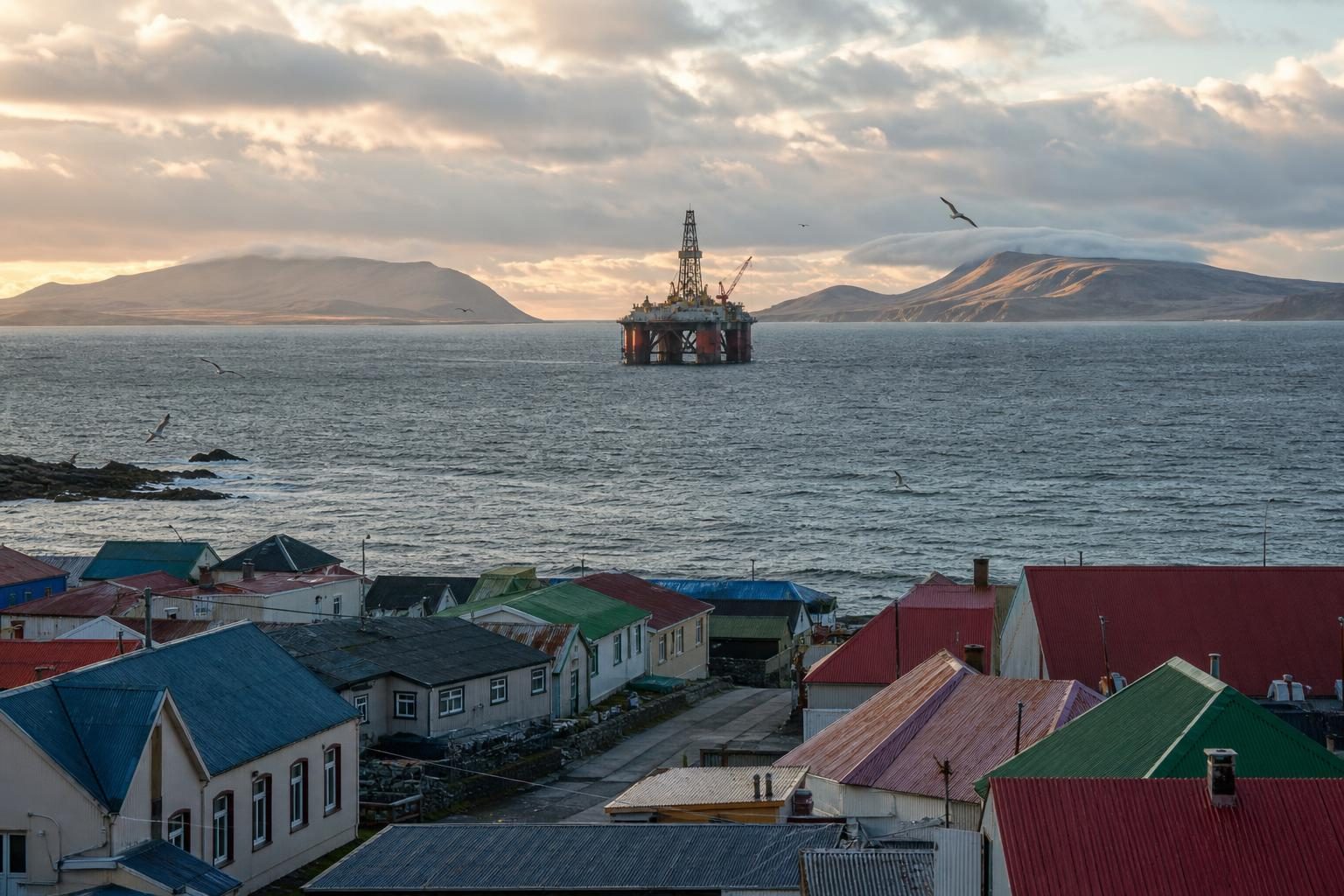
An international maritime court on Saturday turned down Argentina's request to halt an oil project off the British-held Falkland Islands, clearing the way for drilling plans to go forward while the wider dispute plays out [1][2][3].
The International Tribunal for the Law of the Sea, sitting in Hamburg, voted 18 to 3 against ordering the temporary measures Argentina had sought to stop work on the Sea Lion offshore field, AFP and the Buenos Aires Times reported [2][4]. The tribunal said there did not appear to be a basis for believing that a future arbitration panel would have jurisdiction over Argentina's claims, The Guardian reported [1].
What the Court Decided
Argentina began arbitration against Britain on September 28 under the United Nations Convention on the Law of the Sea, then asked the Hamburg tribunal on October 13 to freeze the project until that case is heard, according to the Buenos Aires Times [4]. The judges found that none of Argentina's claims met the threshold for jurisdiction even on a first look, so they did not go on to weigh its arguments about urgency or lasting harm [4]. The tribunal stressed that its order does not settle questions of sovereignty and does not decide in advance what the arbitration panel may find [2][4].
Argentina argued the project was unlawful, posed environmental risks and threatened its claim to the islands it calls the Malvinas, AFP reported [2]. GB News noted that President Javier Milei continues to claim Argentine sovereignty over the British overseas territory [5].
The Project and the Money
The BBC said the work is a joint venture of British and Israeli companies that is set to start exploring for oil and gas [3]. The partners are Britain's Rockhopper Exploration and Israel's Navitas Petroleum, and drilling is expected to begin in March 2027, according to AFP and the Buenos Aires Times [2][4]. The Daily Mail reported the project could bring the islands about 4 billion pounds [6].
The British government welcomed the ruling and called it a vindication of its legal defense, the Buenos Aires Times reported [4]. Argentina's government has said it will keep using diplomatic, legal, economic and regulatory tools to press its case beyond the Hamburg decision [4].
Why It Matters
For the islanders, the ruling protects a simple principle: the people who live on a piece of land, and the nation they have chosen to belong to, decide how its resources are used. For the free world, more oil from a stable democracy in the South Atlantic means less dependence on hostile producers. And for Washington, the case is a reminder that the rule of law at sea works best when courts stay within the limits nations agreed to, rather than reaching into questions of sovereignty they were never given.
The dispute is far from over. What to watch: the arbitration case itself, any new Argentine penalties on the companies involved, and whether the drilling timetable holds into 2027.
Sources
Israel's new parliament is sworn in. Who would you rather see lead Israel?
- Benjamin Netanyahu
- Gadi Eisenkot
- Someone new
- That's for Israelis to decide
More in World News

Bombs Hit a Wedding and a School as Myanmar's Military Strikes Kill Dozens
Today on Cross-Examination with Dominic Kane
Netanyahu Offers Eisenkot the First Turn as Prime Minister in a Unity Deal
Today on World Watch with Grace Whitfield

Taiwan Votes Under Beijing's Shadow: The Ruling Party Gains, the KMT Keeps Taipei, and a Pro-Nuclear Yes Leads the Count
This morning on Cross-Examination with Dominic Kane
Were you there?
If you were at the scene, or this story touched your life, tell us what you saw and what it was like.
Discussion 0
Sign in or create a free account to join the discussion.
No comments yet. Start the discussion.