World News
U.S. Says Europe Will Join the Next Ukraine Talks, but the Kremlin Won't Confirm It and Wants One European Negotiator
After seeing Putin in Moscow and Zelensky outside Dublin, Trump's envoys promised a European seat at the next round, as EU leaders meet in Ireland to decide who would fill it.
By GRACE WHITFIELDStaff Correspondent · WASHINGTON · Nov 13, 11:31 AM · 3 min. read
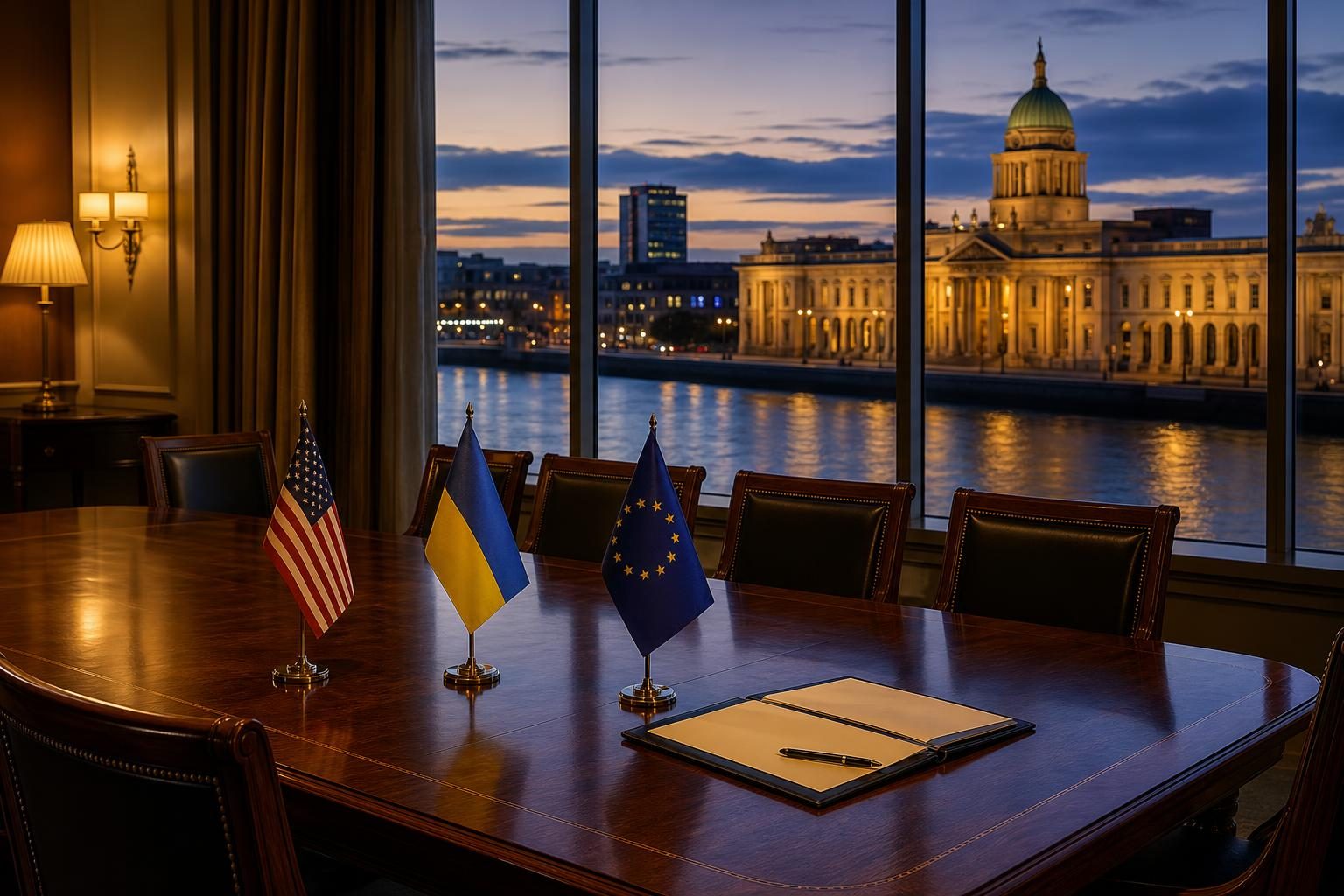
Illustration · Liberty Bell Report
President Trump's envoys left Dublin on Thursday night saying Europe will have a seat at the next round of Russia-Ukraine peace talks. By Friday, Moscow still had not said yes, and Europe's own leaders were gathering in the Irish capital to sort out who would fill that chair.
Euronews reported Friday that U.S. envoy Jared Kushner said both Russia and Ukraine had agreed to widen the next round of negotiations to include European partners, but that the Kremlin had not confirmed it had signed on. Kremlin spokesman Dmitry Peskov instead attached a condition, saying the European Union would first need to name a single representative, and he brushed aside European efforts to reach Moscow through separate channels. Euronews also reported that Russia has asked Europe to stop military aid to Ukraine as a condition.
From the Kremlin to a Dublin Airfield
Kushner and special envoy Steve Witkoff met Russian President Vladimir Putin in Moscow on Thursday, following U.S.-mediated talks between Russian and Ukrainian delegations in Abu Dhabi earlier in the week. NPR reported that Kushner said one aim of the Kremlin meeting was to win Putin's blessing for European representatives to join the negotiations. The Abu Dhabi round produced one concrete result, an agreement in principle on a large prisoner exchange, and Kushner said territorial questions would be the hardest to settle.
From Moscow, the envoys flew to Ireland, where they briefed Ukrainian President Volodymyr Zelensky at Casement Aerodrome in Baldonnel, outside Dublin, on Thursday evening, the Kyiv Independent reported. Zelensky said Russia had accepted a prisoner swap that would be the largest of the war, and that Europe would be part of the negotiating team at the next round instead of watching from the sidelines. Witkoff said another round had been scheduled but gave no date or location.
Kushner was blunt about Europe's place in any settlement. Speaking in Dublin, he said "we cannot conclude this deal" without Europeans at the table, RTÉ reported.
Putin, for his part, used the Kremlin meeting to restate a hard line on what a settlement could contain. He warned that foreign troops in Ukraine after a deal would mean another war, EU Perspectives reported. That position narrows the options for backing up any agreement on the ground, and it is likely to shape whatever role Europe takes once it joins the table.
Europe Has to Decide Who Speaks for It
The European seat comes with homework. Euronews reported that Zelensky has asked the EU to designate one common representative by the end of the month, the same demand Peskov is now using as a precondition.
RTÉ reported that Irish Taoiseach Micheál Martin is hosting an informal meeting of EU leaders at the Convention Centre in Dublin on Friday, the day after the European Political Community summit, where leaders were to review the latest briefing from the U.S. envoys on their talks with Russia. RTÉ described the question of who would represent Europe in substantive negotiations with Moscow as a sensitive one for the bloc. European officials did not take part directly in the Abu Dhabi talks, according to RTÉ.
Money is on the agenda too. Leaders were due to discuss how to cover Ukraine's funding needs for next year, estimated at about 70 billion euros, RTÉ reported, while member states remain sharply divided over that funding and over the size and scope of the EU's next long-term budget.
What It Means and What Comes Next
The week's diplomacy shows the shape of the administration's approach: Washington is brokering the talks directly with both Moscow and Kyiv while pressing Europe to take on a defined and accountable role in ending a war on its own continent. Kushner's insistence that a deal cannot be finished without Europe puts responsibility where it belongs: on the wealthy nations next door to the fighting.
The prisoner exchange, if it goes forward, would be the most tangible humanitarian gain of the effort so far, bringing prisoners of war home on both sides. For a war that has separated so many families, that matters regardless of how the larger negotiations turn out.
The obstacles are real. Moscow has not confirmed a European seat, Peskov's demand for a single negotiator puts the burden on a bloc that is already split over Ukraine's funding, and Putin has ruled out the kind of foreign troop presence that could anchor a settlement. The next round has been promised but not publicly scheduled, and no one has said who will speak for Europe when it convenes.
Three things to watch in the coming days: whether EU leaders settle on a single representative, whether the Kremlin accepts that person at the table, and whether the promised prisoner swap actually takes place.
Sources
- Euronews: US pushes for European presence at Ukraine-Russia talks, which Moscow refuses to confirm (link)
- Kyiv Independent: Zelensky meets with Trump's envoys in Dublin after their summit with Putin (link)
- RTÉ: Europe must be at table for Ukraine peace talks - Kushner (link)
- EU Perspectives: Putin: Foreign troops in Ukraine would mean another war (link)
- RTÉ: Taoiseach to host informal meeting of EU leaders (link)
- NPR: U.S. envoys meet with Putin in the Kremlin after Ukraine talks in Abu Dhabi (link)
— 30 —