World News
'The Water Was on Fire': Swimmer Braves Hormuz War Zone
British endurance swimmer Lewis Pugh, 56, swam about 15 kilometers through the Strait of Hormuz over three days as tankers came under attack, to show what Iran's war is doing to the sea.
By HANNAH LINDGRENStaff Correspondent · WASHINGTON · Nov 22, 10:33 AM · 2 min. read
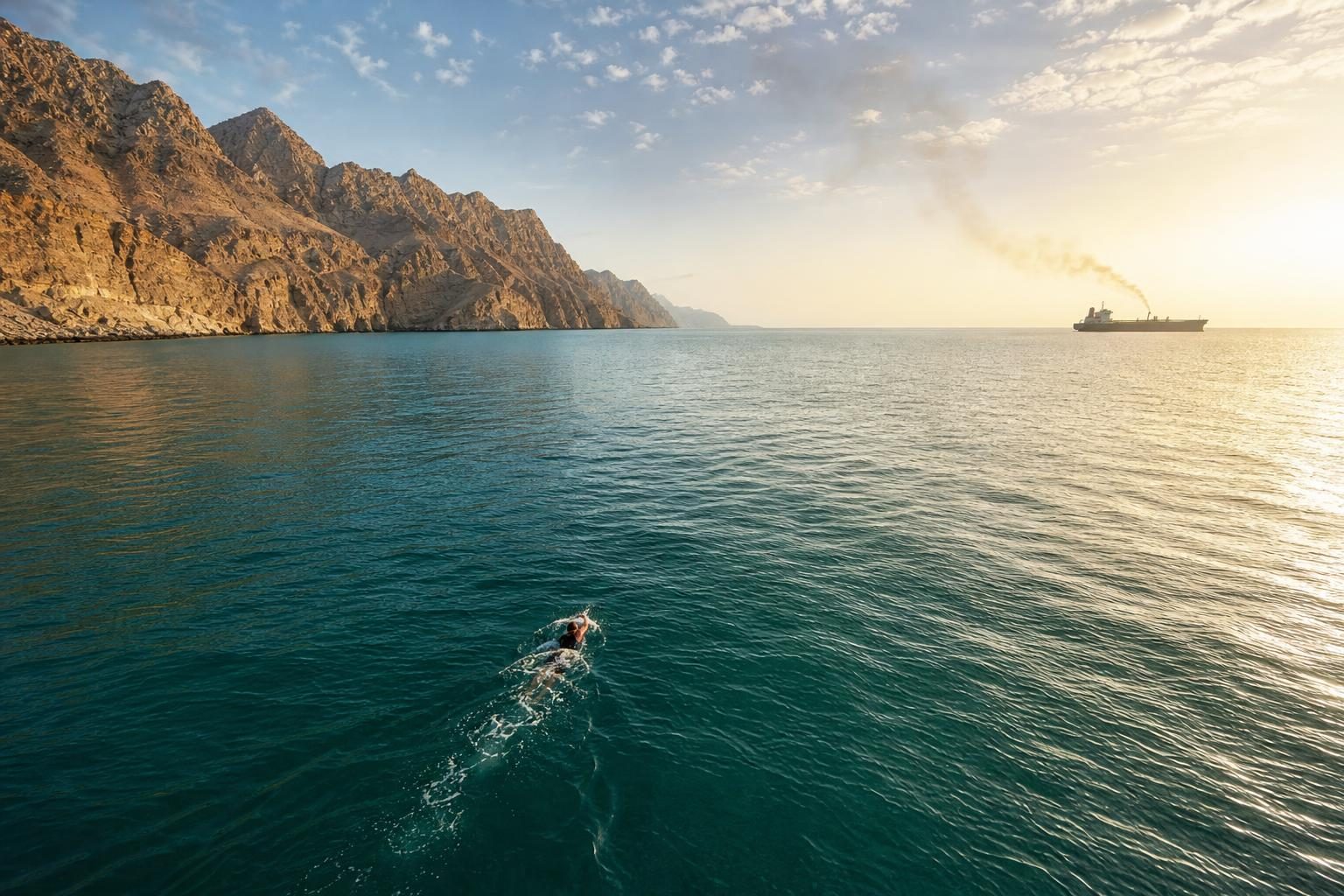
Illustration · Liberty Bell Report
A British endurance swimmer has completed a swim through the Strait of Hormuz, the narrow waterway at the center of the Iran war, to call attention to what the fighting is doing to the sea and the creatures that live in it.
Lewis Pugh, 56, set out on Nov. 15 from the Musandam peninsula at the southern tip of the strait and finished by rounding the Cape of Hormuz, covering about 15 kilometers, a little more than 9 miles, by Nov. 18, according to The National. To stay safe, he swam in sections over three days, spending a total of about six and a half hours in the water. The Associated Press reported that he is believed to be the first person to attempt a long-distance swim there since the war began.
Swimming Past Burning Ships
The water he crossed is among the most dangerous anywhere right now. The strait remains largely blocked, with Iran attacking vessels that try to cross it, France 24 reported. Pugh swam while tankers nearby came under attack, and he described the scene to Men's Journal in stark terms: "Around the ship, the water was on fire". The National reported that he swam with explosions going off around him.
Pugh, a longtime ocean advocate, made the swim to highlight what the conflict is doing to the strait's environment and wildlife. France 24 noted growing concern about toxic chemicals spreading through the air and sea as the conflict drags on.
What Is at Stake Beneath the Surface
The strait is more than an oil highway. The International Fund for Animal Welfare says the waters host roughly 7,000 dugongs, the gentle sea cows of the region, and warns that wildlife that holds steady in peacetime tends to decline sharply in war. Earlier this year, a free diver who explored the strait's southern tip told NPR he saw perhaps 50 dolphins leaping in the water, a reminder of how much life these waters still hold.
Our Take
Scripture tells us the earth is the Lord's, and that people were placed in the garden "to work it and keep it" (Genesis 2:15). Iran's attacks on vessels trying to cross the strait have turned one of the world's richest seas into a war zone, and sailors, fishermen and the creatures of the deep are paying the price.
Americans can argue in good faith about how best to end this war. But there is nothing partisan about wanting the strait open, the attacks stopped and the waters healed. Pugh's swim will not reopen the shipping lanes, but it gave the world a picture of what peace would protect.
What comes next: the strait's future still depends on whether the blockade and the attacks on ships come to an end, and Liberty Bell will keep following the fight for this vital waterway.
Sources
- The National: 'Explosions around me': Endurance swimmer Lewis Pugh's risky journey through Strait of Hormuz (link)
- The Washington Times (AP): Endurance athlete swims in Strait of Hormuz to highlight Iran war's impact on wildlife (link)
- NPR: A free diver visited the Strait of Hormuz. Here's what he saw (link)
- France 24: Endurance athlete swims in Hormuz Strait (link)
- Men's Journal: Lewis Pugh Swims the Strait of Hormuz Amid Tanker Attacks (link)
- IFAW: (journal: what is at stake for wildlife in the Strait of Hormuz) (link)
— 30 —