World News
Gulf Allies Stand Firm as Iran Fires on a U.S. Air Base in Kuwait and on Bahrain After America's Qeshm Strike
Kuwait and Bahrain say their defenses stopped the attacks, Qatar calls them a dangerous escalation, and Vice President Vance says the conflict will not become a forever war.
By GRACE WHITFIELDStaff Correspondent · WASHINGTON · Nov 18, 10:40 AM · 3 min. read
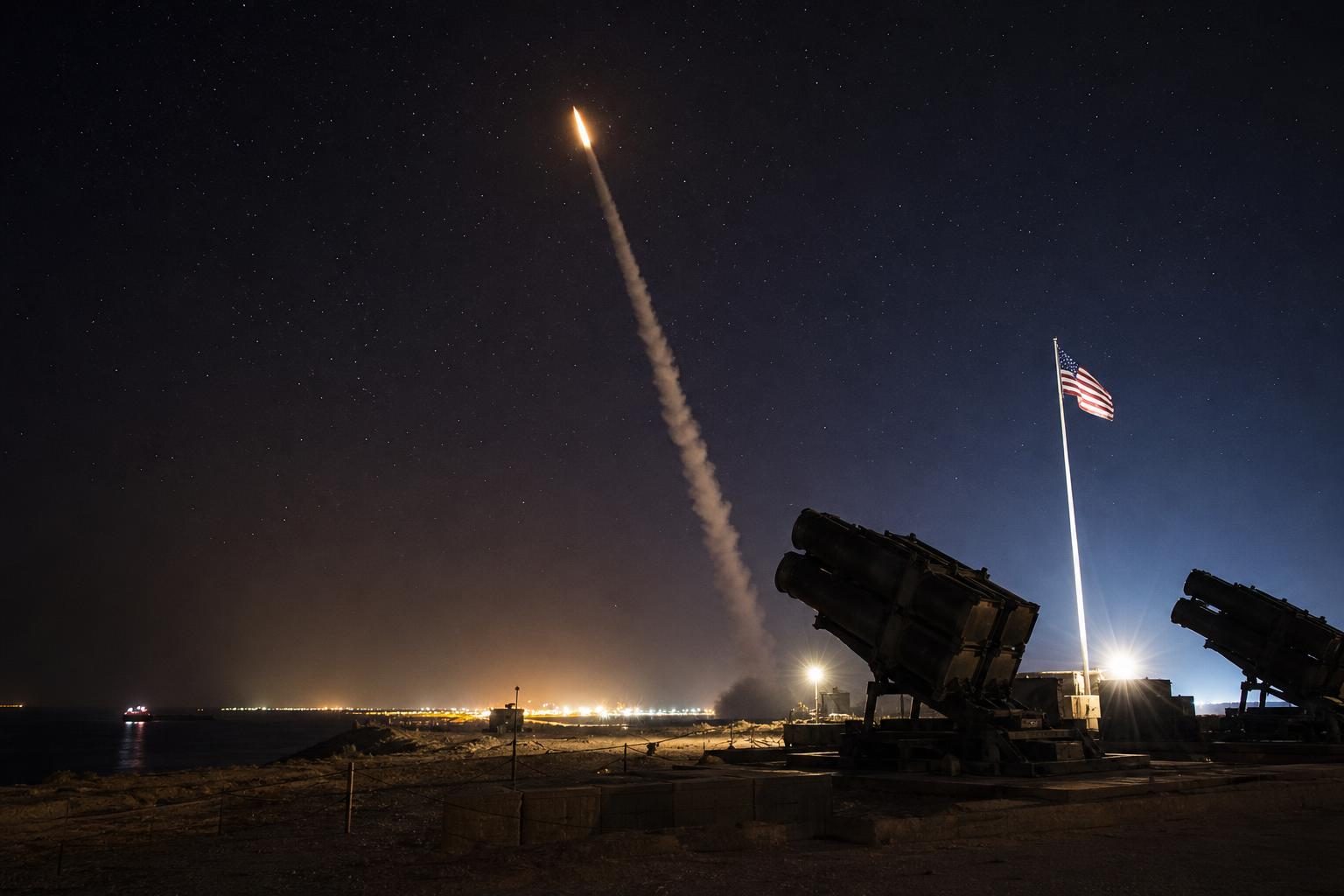
Illustration · Liberty Bell Report
Iran's war with the United States spilled back across the Persian Gulf on Wednesday, as Tehran fired on an American air base in Kuwait and on targets in Bahrain hours after U.S. fighter jets struck an Iranian missile site. Both Gulf partners said their defenses knocked the attacks down, and their neighbors lined up behind them.
A Strike, Then a Retaliation
The latest round began Tuesday. U.S. fighter jets carried out what an American military official described as a self-defense strike on an Iranian missile launch site on Qeshm Island, using precision munitions, CNN reported. Time reported that the American strike came hours after Iran targeted a U.S. radar site in Bahrain.
Early Wednesday, Iran's army said its drones went after American drone and missile installations at Ali Al Salem Air Base in Kuwait, according to a statement on Iranian state media reported by CNBC. Kuwait's military said its air defenses intercepted the drones and did not immediately report any damage, the Associated Press reported in coverage carried by The Independent. Bahrain's military said it also intercepted a number of Iranian attacks but gave no details on damage or casualties.
The BBC reported that it was the first Iranian attack Kuwait had repelled in two months. Iran's claims about what its drones were aiming at come from Iranian state media and have not been independently confirmed.
The Gulf Closes Ranks
The reaction from Arab capitals was swift and one-sided. Kuwait condemned what it called repeated Iranian attacks, and Qatar warned that the strikes on Bahrain and Kuwait were a dangerous escalation, according to Al Jazeera's live coverage. The same coverage reported that the United Arab Emirates and the secretary general of the Gulf Cooperation Council condemned the attack on Kuwait, and that Saudi Arabia denounced the Iranian attacks on both countries and called for a return to negotiations.
That matters. For months Tehran has tried to frighten its neighbors into blaming Washington for the war. Instead, the countries that live closest to Iran keep pointing at Tehran, and they keep shooting its drones out of the sky.
Why It Matters to Americans
American service members serve at the bases Iran keeps aiming at, and every drone that gets through would put them at risk. So far, Gulf and American air defenses have done their job. The Qeshm strike sent a clear message that attacks on U.S. forces will be answered quickly and precisely.
The way Washington described that strike matters, too. By calling it self-defense, the military framed Qeshm as a direct answer to an attack on Americans rather than the start of a new offensive. That keeps the moral and legal high ground with the United States, and it leaves the choice of escalation where it belongs: with the regime that keeps launching drones at its neighbors.
There is also a strategic lesson in Wednesday's events. Kuwait and Bahrain did not just absorb the attacks; they shot them down and said so publicly. Partners who defend their own skies and stand openly with America are the backbone of any lasting security arrangement in the Gulf.
The administration has paired that message with a promise of limits. Vice President JD Vance said the conflict with Iran will not become a "forever war," Time reported. That is the right balance for a country that remembers two decades of open-ended deployments: hit back hard when Americans are threatened, protect our partners, and keep the door open to a deal that ends the fighting on terms that keep Iran from threatening the region again.
What Comes Next
Time reported that an agreement to end the war has looked unlikely in the near term. Saudi Arabia's call for talks shows that even the Gulf's biggest power wants a diplomatic exit, but not at the price of letting Iran keep firing at its neighbors.
The pattern of this week is plain. Iran fires, America and its partners shoot the threats down, and the United States answers attacks on its forces. The question now is whether Iran's leaders will choose the negotiating table before the next round, or keep testing defenses that have so far held.
Sources
- CNN: Iran widens Gulf attacks after US strikes missile launch site (link)
- The Independent: Iran widens Gulf attacks, firing on a US air base in Kuwait and at targets in Bahrain (link)
- BBC News: Kuwait says it repelled first Iranian attack in two months after US strikes island (link)
- CNBC: Iran says army targets U.S. drone and missile sites in Kuwait as Gulf attacks mount (link)
- Al Jazeera: Qatar says attacks on Bahrain and Kuwait represent 'dangerous escalation' (link)
- Time: U.S. Strikes Qeshm Island as Vance Says Iran Won't Become 'Forever War' (link)
— 30 —