World News
Europe's Top Rights Court Says Nations Can Turn Back Migrants Used as a Weapon
The European Court of Human Rights ruled that Poland, Latvia and Lithuania may push back migrants sent by Belarus, as long as children and other vulnerable people are protected.
By NATHAN BROOKSStaff Correspondent · WASHINGTON · Nov 24, 3:30 PM · 3 min. read
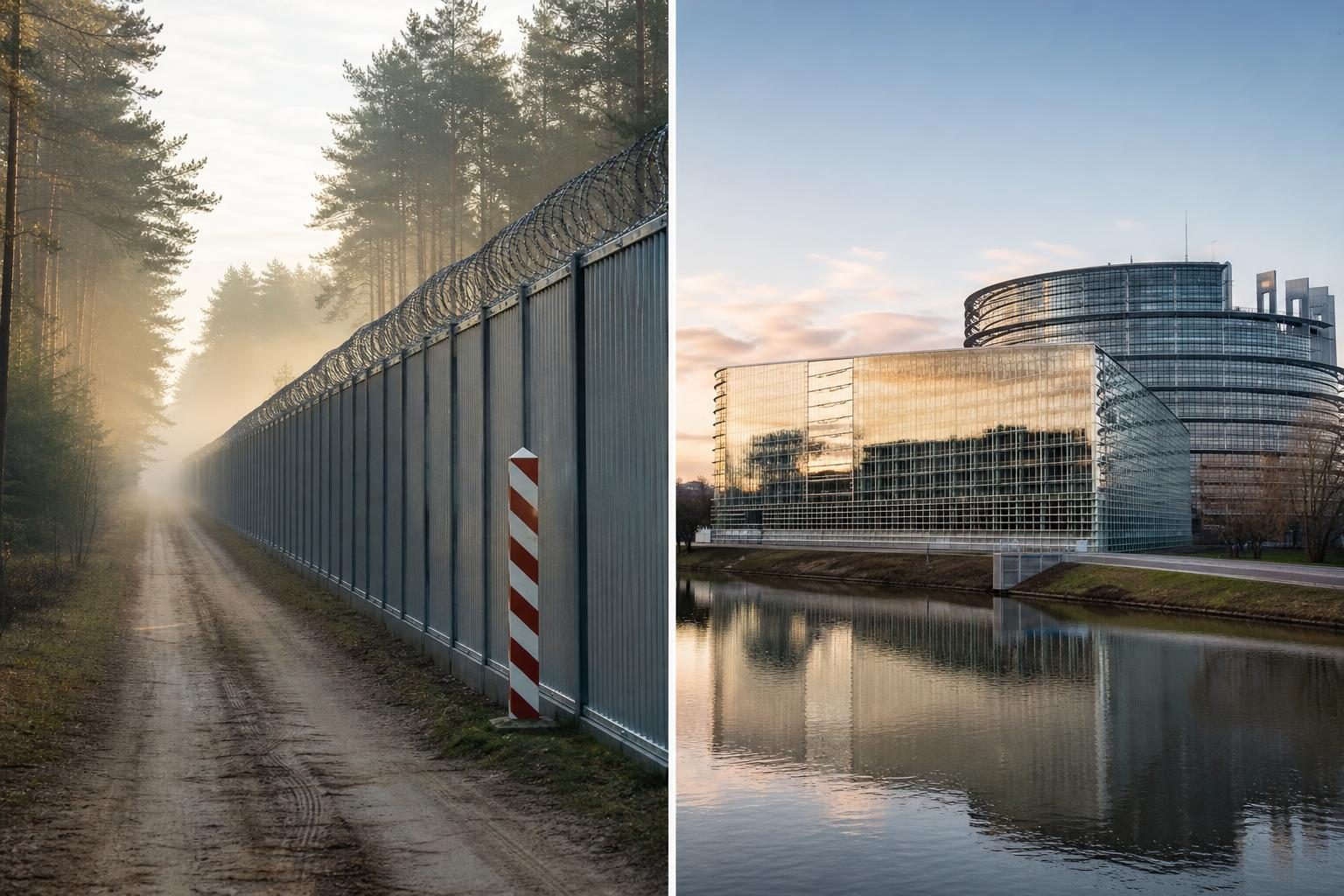
Illustration · Liberty Bell Report
Europe's top human rights court ruled Tuesday that countries may turn back migrants at their borders when a hostile neighbor is using those migrants as a weapon, handing a significant win to nations on the front line with Belarus.
The European Court of Human Rights said such pushbacks are permitted in a context of what it called the instrumentalization of migration, unless the migrants show clear personal vulnerabilities tied to age, health or disability, or face a serious risk if they are sent back, according to RTÉ. Deutsche Welle reported that the court found states can turn people away even under "hostile" conditions, unless they have been identified as people who may face ill-treatment.
The three judgments, issued by the court's Grand Chamber in Strasbourg, covered cases brought against Poland, Latvia and Lithuania. All three grew out of the 2021 crisis in which Belarus moved migrants to its borders with the three countries, RTÉ reported.
A Mixed Verdict on the Details
The court did not hand the three governments a blank check. Latvia was found in breach for turning back families with young children, and Poland for returning a man despite a court request not to do so, RTÉ reported.
In the Polish case, the man was an Afghan national who was sent back to Belarus while an order from the Strasbourg court barring his return was still in force, according to the independent news site Notes from Poland. The court also found that Poland had violated the rights of two Afghan men by keeping lawyers from reaching them, and ordered Warsaw to pay them 20,000 euros and 5,000 euros in compensation, the outlet reported.
Lithuania was cleared. By a vote of 11 to 6, the Grand Chamber declined to classify the four Cuban applicants in the Lithuanian case as particularly vulnerable, Bluewin reported, though the court criticized their detention, which lasted about six months.
The court made clear that the burden now falls on border officers to spot those who need protection. States may control their borders, but they must identify vulnerable people such as children or the disabled before sending anyone back, Notes from Poland reported. The court also treated the use of migrants by Belarus as a hostile act, one that can allow the targeted country to refuse entry at the border in some circumstances, according to the outlet.
Poland Calls It a Win
Poland's government welcomed the outcome. Deputy Interior Minister Maciej Duszczyk, who oversees migration policy, called the ruling "very important and favourable for us," Notes from Poland reported.
Migrant advocates read the same judgments differently. InfoMigrants, a news site that covers migration, described the ruling as mixed and reported that the three states still may not use force or carry out collective pushbacks at the Belarus border.
The decision comes as many European governments push back against how far the court has stretched protections for migrants. A majority of the members of the Council of Europe, the body behind the court, including Britain and Italy, had pressed the judges to give migrants fewer individual protections, RTÉ reported.
Why It Matters, and What Comes Next
Europe's border states have long warned that Minsk, a close ally of Moscow, was steering migrants to the edge of the European Union to stir chaos. Tuesday's ruling recognizes that reality in law: a nation facing that kind of pressure is not required to throw open its gates.
That principle will sound familiar to Americans. A country has both the right and the duty to decide who crosses its borders, and to defend those borders when a foreign power tries to turn human beings into a tool of pressure. At the same time, the court's insistence on protecting children, the sick and the disabled reflects the moral line that most families of faith would draw on their own: a firm border and a compassionate heart are not opposites.
The ruling also strengthens the hand of Poland, Latvia and Lithuania, which stand on the eastern edge of the EU along the border with Belarus. With war still raging in nearby Ukraine, the security of that frontier is also the security of NATO's eastern flank.
The judgments came from the Grand Chamber, the court's highest panel, and they spell out how far a state may go when another state is using migration against it. Governments across Europe that have pressed for more room to defend their borders are likely to cite them.
For Poland and Latvia, the practical test begins now: building screening that catches vulnerable children and families at the border while keeping the line closed to those who are being pushed across it by a hostile regime.
Sources
- RTÉ: European court rules on criteria for migrant turn backs (link)
- Deutsche Welle: European court: States can turn back migrants in some cases (link)
- Notes from Poland: Poland, Lithuania and Latvia violated rights of migrants sent back to Belarus, finds European court (link)
- Bluewin: Ruling: Pushbacks May Be Legal If They Are Used as a Tactical Tool (link)
- InfoMigrants: ECHR issues mixed ruling on migrant rights in EU states along Belarus border (link)
- European Court of Human Rights: A.R. and Others v. Poland, H.M.M. and Others v. Latvia and C.O.C.G. and Others v. Lithuania (link)
— 30 —