World News
Australia Sanctions the Two Men It Says Ran Iran's Arson Attacks on Jews
Canberra names the alleged organizers of the 2024 firebombings of a Sydney restaurant and a Melbourne synagogue and freezes anything they own, the latest blow against Iran's Revolutionary Guard.
By COLE BRENNANStaff Correspondent · WASHINGTON · Nov 27, 3:33 AM · 3 min. read
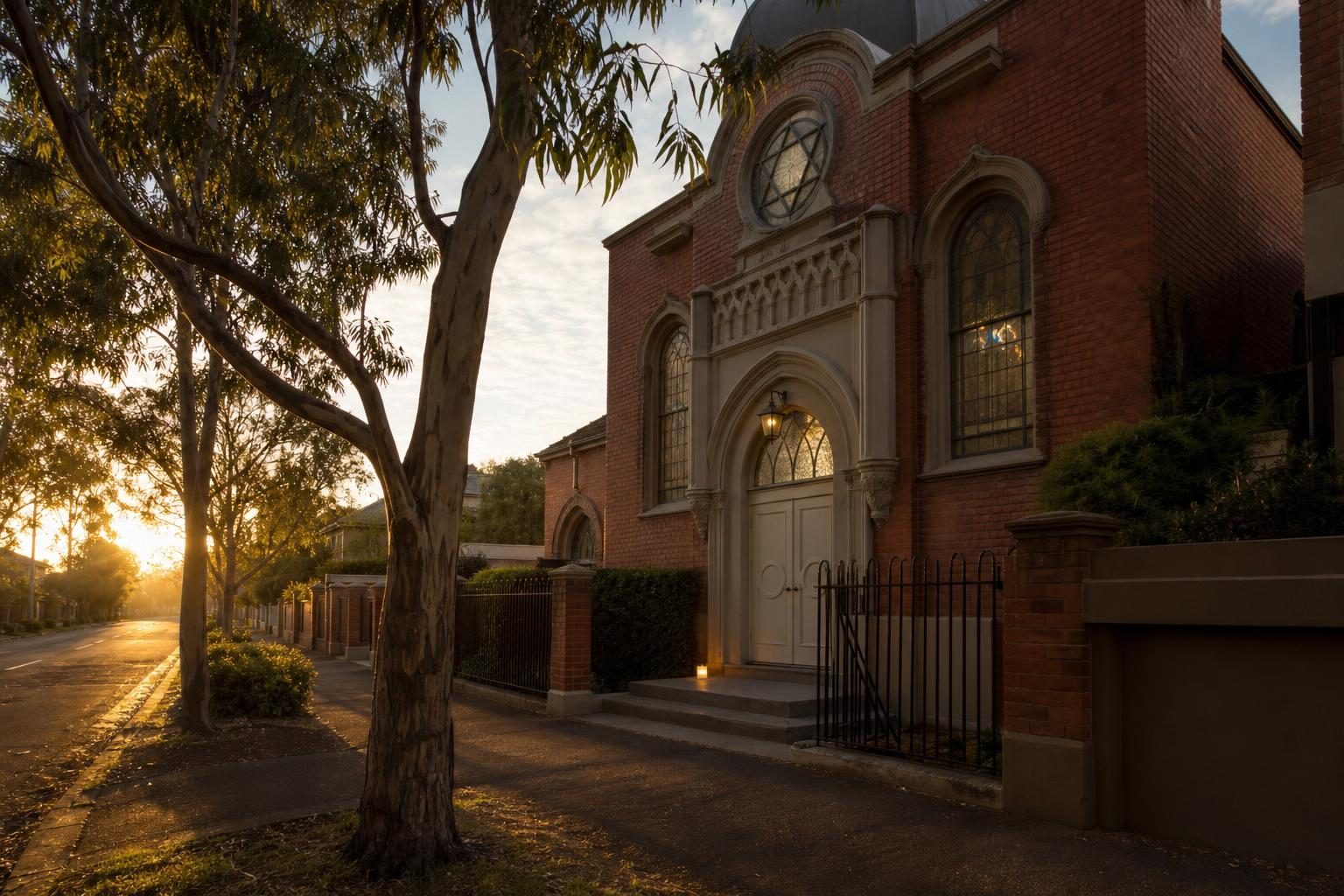
Illustration · Liberty Bell Report
Australia has named the two men it says organized the 2024 firebombings of a Jewish-owned restaurant in Sydney and a synagogue in Melbourne on behalf of Iran's Islamic Revolutionary Guard Corps, and it has moved to cut them off from every dollar they hold or could receive.
Foreign Minister Penny Wong announced counter-terrorism financing sanctions on Zohair Hassib and Kazem Hamad, saying the pair used a "complex chain of proxies" to carry out the attacks on Lewis' Continental Kitchen in Sydney and the Adass Israel Synagogue in Melbourne. Under the sanctions, it is now a crime in Australia to deal with the men's assets or to make any assets available to them, and a breach can bring up to 10 years in prison, heavy fines, or both. The move was also reported by the Australian Broadcasting Corporation and Iran International.
Who the Two Men Are
According to the Australian Broadcasting Corporation, Hassib is an Australian-Afghan dual citizen described as a senior IRGC agent who remains offshore in Iran, while Hamad is an Iraqi citizen and former Australian resident with extensive ties to organized crime and the illicit tobacco trade. That profile matches what Australia's domestic spy agency concluded last year: the Guard did not send its own diplomats to do the work but directed the attacks through intermediaries to hide its hand.
Neither man is in Australian custody. The sanctions do not put anyone behind bars, but they make it a serious crime for anyone under Australian law, from a bank to a business partner, to move money or property for them.
A Steady Campaign Against Iran's Guard
The new sanctions are the latest step in a campaign that began after investigators traced the attacks to Tehran. In August 2025, after ASIO Director-General Mike Burgess said the IRGC was behind the two arson attacks, the government expelled Iran's ambassador, Ahmad Sadeghi, and three other officials, the first time Australia had expelled an ambassador since World War II. Canberra also suspended operations at its embassy in Tehran.
Late last year, Australia listed the IRGC as a state sponsor of terrorism, the first listing under a new law written for that purpose. It made it a crime to direct, join, fund, recruit for or support the Guard, with penalties of up to 25 years in prison. Wong's office said Australia now lists 102 people and entities for counter-terrorism financing sanctions, along with 30 terrorist organizations and one state sponsor of terrorism.
Iran has denied any role in the attacks, and Tehran called the 2025 expulsion of its envoy unjustified.
Why It Matters Here
Americans have seen this fight before. In April 2019, the Trump administration designated the entire IRGC a Foreign Terrorist Organization, the first time the United States put a foreign government's official military force on that list. The goal then, as in Australia now, was to treat the Guard as what it is: an arm of the Iranian state that plans violence beyond Iran's borders, not an ordinary army.
The lesson from Sydney and Melbourne is sobering. A regime like Tehran's does not need to send its own officers to threaten Jewish families on the far side of the world. It can hire local criminals, pass its orders through middlemen and then deny everything. That is why naming names and following the money matter. Every freeze order raises the cost of renting a firebomber, and every public attribution strips away the deniability the regime counts on.
For families of faith, this is not an abstract foreign-policy story. A house of prayer was set alight in a free country, and a neighborhood restaurant was burned because of who owned it. Synagogues, churches and the businesses that serve them should not have to depend on luck. When allied governments identify the people behind these attacks and choke off their money, believers everywhere are a little safer.
What Comes Next
Wong's office framed the sanctions as building on Australia's earlier actions against the Guard. Because both men are outside the country, the practical test will be enforcement: whether banks, businesses and police can find and freeze anything tied to them, and whether other governments that share Australia's concerns follow its lead with sanctions of their own. Tehran, for its part, has given no sign that it will stop denying the charges.
Sources
- Australian Minister for Foreign Affairs: Further action against Iran's IRGC attacks in Australia (link)
- ABC News (Australia): Two men sanctioned over Iran-backed antisemitic arson attacks (link)
- Iran International: Australia sanctions two individuals over IRGC-linked antisemitic attacks (link)
- Al Jazeera: Australia accuses Iran of directing anti-Semitic attacks, expels envoy (link)
- SBS News: Australia lists Iran's Islamic Revolutionary Guard as a state sponsor of terrorism (link)
- PBS NewsHour: U.S. declares Iran's guard force a terrorist organization (link)
— 30 —