Science & Space
China Set to Fly Pakistan's First Astronaut to Its Station
Shenzhou-24 is scheduled to lift off Tuesday evening U.S. time, carrying the first foreign visitor to China's Tiangong station as Beijing courts partners in space.
By HANNAH LINDGRENStaff Correspondent · WASHINGTON · Nov 24, 12:09 AM · 2 min. read
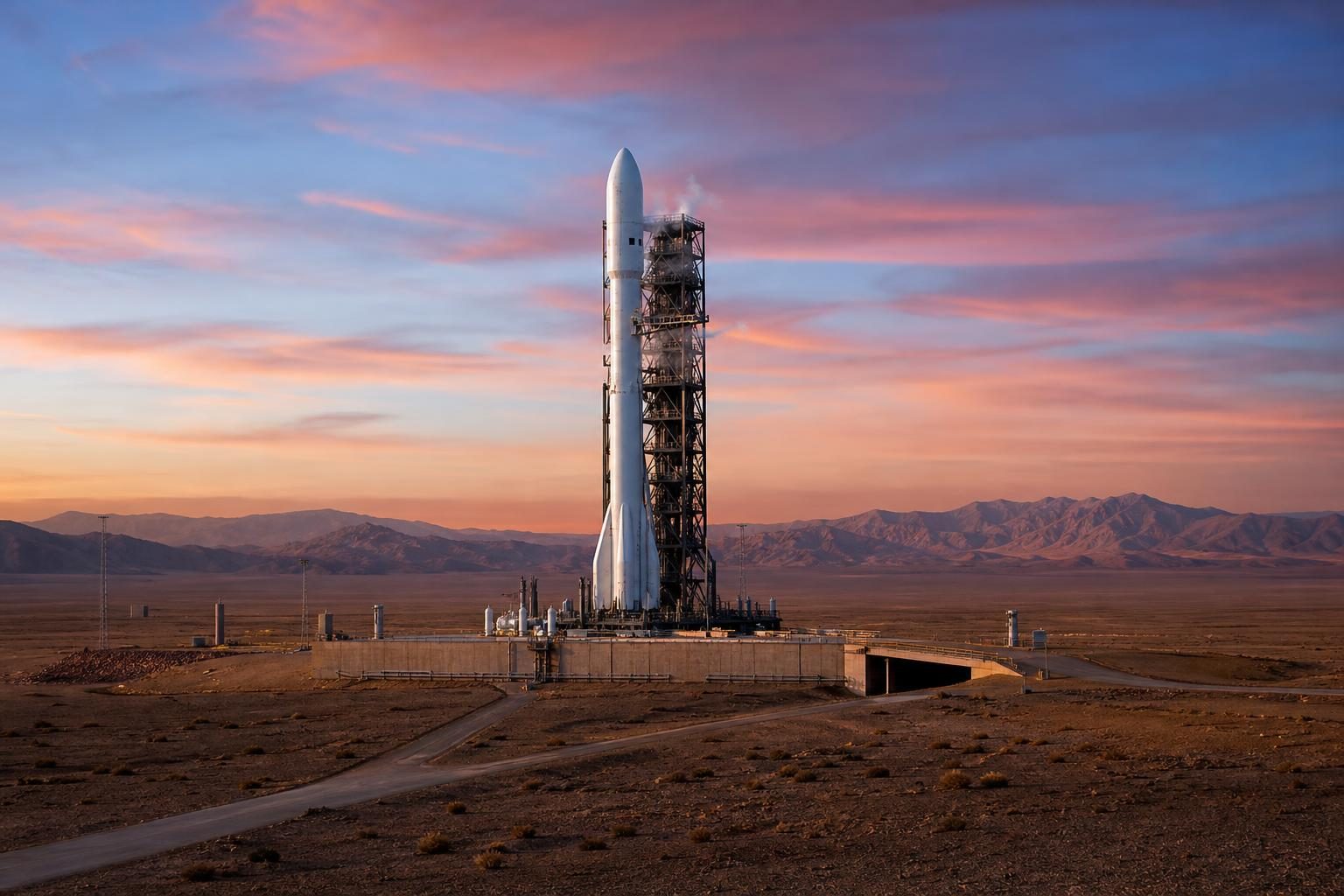
Illustration · Liberty Bell Report
China is preparing to launch the first foreign astronaut ever to visit its Tiangong space station, a Pakistani payload specialist who will also become the first person from his country to fly in space.
The Shenzhou-24 mission is scheduled to lift off at 8:18 a.m. Beijing time on Wednesday, Nov. 25, which is 7:18 p.m. Eastern on Tuesday, from the Jiuquan Satellite Launch Center in northwestern China, according to the China Manned Space Agency. China rolled the rocket to the launch pad ahead of the flight.
The Crew
China unveiled the three-member crew on Tuesday local time. Tang Hongbo will command the mission, Wu Yi will serve as flight engineer, and Pakistan's Muhammad Zeeshan Ali will fly as a payload specialist. Ali is expected to spend about a week aboard the station before returning to Earth on the Shenzhou-23 spacecraft.
Pakistan's space agency, SUPARCO, had earlier shortlisted two candidates for the seat, Ali and Khurram Daud, with one flying and the other serving as backup. The two countries agreed in early 2025 that China would train Pakistani astronauts and fly one to the station as a payload specialist. Pakistani media have hailed the flight as a historic moment for the country.
China built Tiangong on its own after being shut out of the International Space Station, largely over U.S. concerns about the Chinese military's control of the program, and it is aiming to land astronauts on the moon before 2030, the Associated Press has reported.
China's state broadcaster CGTN billed the announcement as the debut of the station's first foreign astronaut, and Space.com noted the mission makes Ali the first international visitor to Tiangong.
Why It Matters
For a quarter century, the International Space Station has been the place where America and its partners flew together, and astronauts from many nations trained alongside NASA crews. Beijing is now using seats on its own station as a diplomatic prize.
The choice of Pakistan is no accident. Islamabad is one of Beijing's closest partners, and a seat on a Chinese spacecraft is the kind of gesture that deepens that bond. Every country that hitches its space program to China's makes the Communist Party's program look more like the world's future and America's look more like the past.
Nations deciding where to send their astronauts will weigh more than rockets. They will weigh openness, the rule of law and partners who keep their word, and those are American strengths. The answer is not to resent China's progress but to outpace it. American leadership in space has always rested on doing hard things well and inviting free nations to share in them. As Tiangong opens its hatch to foreign guests, the race for partners in orbit is on, and the United States should intend to win it.
Sources
- ABC News (AP): China unveils new space mission crew, with a Pakistani astronaut (link)
- Space.com: China rolls out rocket for launch of 1st international astronaut to Tiangong space station (link)
- Geo News: Pakistan's first astronaut set for historic liftoff aboard China's Shenzhou-24 tomorrow (link)
- CGTN: China unveils Shenzhou-24 crew, including first foreign astronaut (link)
- Space.com: Pakistani astronaut set to become 1st international visitor to China's Tiangong space station this month (link)
— 30 —