
Real Estate & Housing
Home Sales Sink to Lowest Pace Since 2010 as High Mortgage Rates Squeeze First-Time Buyers
Existing-home sales fell 5.5% in October to a 3.75 million annual pace, the weakest since August 2010, as 7% mortgage rates and stubborn inflation pushed young families to the sidelines.
By CARLOS MENDOZAStaff Correspondent · WASHINGTON · Nov 12, 4:15 PM · 4 min. read
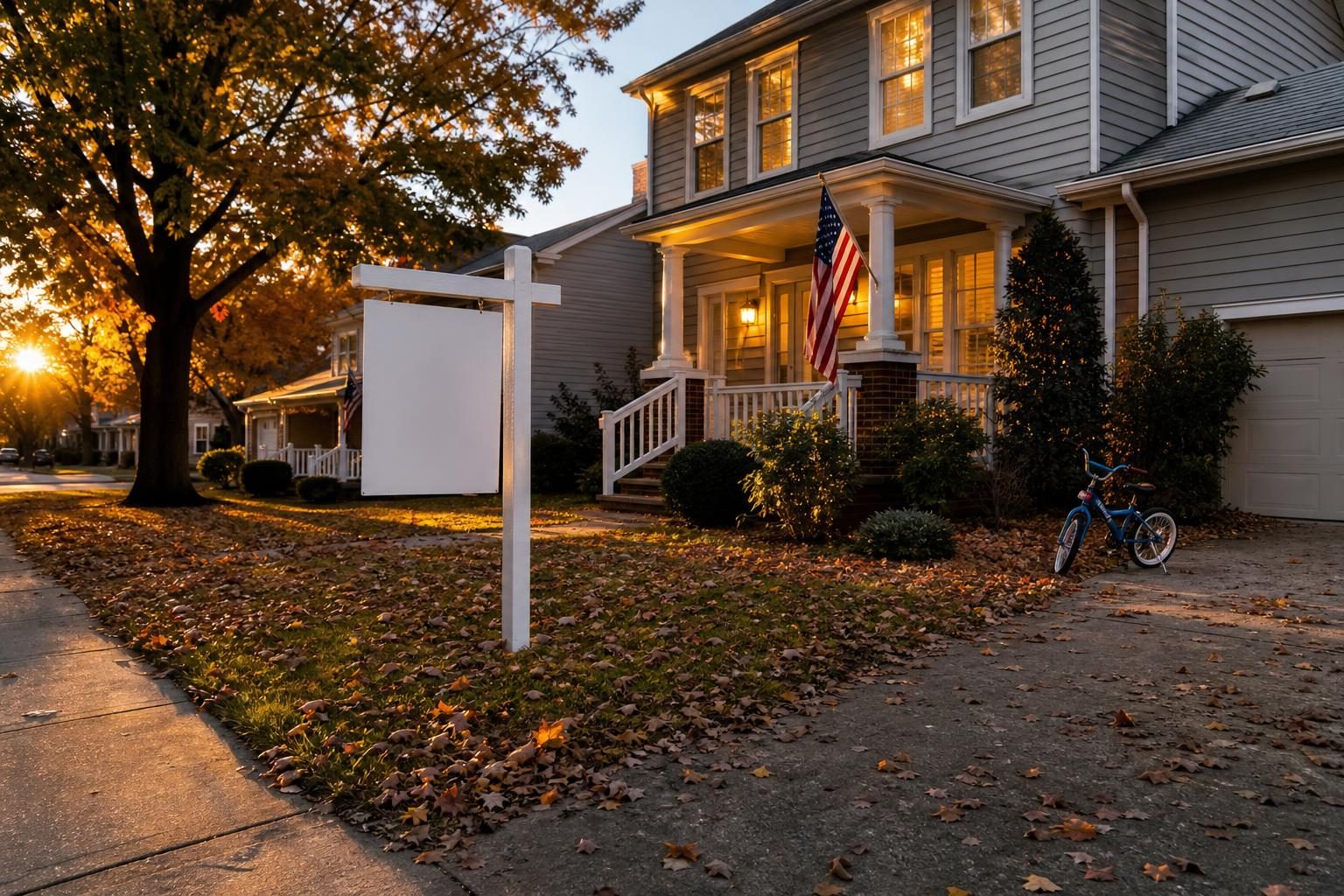
Illustration · Liberty Bell Report
Americans bought previously owned homes at the slowest pace in more than 16 years in October, as mortgage rates near their highest in a quarter-century pushed ownership further out of reach for young buyers.
Existing-home sales dropped 5.5% from September to a seasonally adjusted annual pace of 3.75 million, the weakest since August 2010, the National Association of Realtors reported Thursday. Sales were 8.8% lower than a year earlier, and the figure fell short of the roughly 3.85 million economists had expected, The Epoch Times reported.
NAR chief economist Lawrence Yun blamed borrowing costs, noting rates have climbed to their highest levels since 2000, aside from a single month in 2023. The Freddie Mac average for a 30-year fixed loan was 7.33% in October, up from 6.86% in September and 6.25% a year before. Joel Berner, senior economist at Realtor.com, told NPR the report was "a punch in the gut".
A Market Stuck in Low Gear
The median existing-home price was $416,700, up 0.4% from a year earlier and the 40th straight month of annual gains. Inventory rose to 1.59 million homes, 4.6% more than a year ago, which equals a 5.1-month supply, up from 4.7 months in September and 4.4 months a year earlier.
Sales fell from a year earlier in all four regions. The West was hit hardest, with sales down 9.7% for the month and 14.5% from a year ago to a 650,000 pace. The South, the largest market, slid 6.5% to 1.73 million, and its median price dipped 0.4% to $360,900. Midwest sales dropped 3.2% to 900,000, and the Northeast held steady at 470,000, where the median price rose 3.2% to $519,600.
The annual sales pace topped 6 million in early 2022 and have slid since. Al Jazeera reported that sales last year were essentially flat at a 30-year low and that Yun expects 2026 to finish lower still. Because sales are counted at closing, October's tally largely reflects contracts signed in August and September. Rates had been rising since late February, when the U.S. war with Iran began and drove up oil prices and inflation, Al Jazeera noted.
Owners holding low pandemic-era mortgages are also staying put, The Epoch Times reported, citing Federal Reserve research on how the 2022 rate surge raised the cost of moving.
What It Means for Young Families
The hardest hit are the young couples who would traditionally buy a starter home and begin raising children in it. First-time buyers made up 29% of October purchases, down from 31% in September and 32% a year earlier, well below the roughly 40% share that has been typical. Individual investors and second-home buyers rose to 20% of sales from 16% a year ago, and all-cash deals made up 29%.
NAR's housing affordability index fell to 100.7 from 107.3 a year earlier.
Yun said the nation's 88 million homeowners are largely in a comfortable financial position thanks to accumulated housing wealth, and distressed sales remain just 2% of transactions. NAR estimates the average home has gained $146,000 in value over the past seven years. But that equity belongs to those who already own. It does little for a young family still renting.
Frank Cassidy, identified by The Epoch Times as a former Federal Housing Administration commissioner under President Trump, called the numbers "a wake-up call" and said the country needs results rather than more studies or promises.
What Comes Next
Freddie Mac said Thursday the 30-year average eased to 7.11%, its fourth straight weekly decline and the lowest in seven weeks, though still well above the 6.24% of a year ago. Yet the 10-year Treasury yield climbed back above 5% this week, and mortgage rates generally track that benchmark.
Inflation remains the core problem. The consumer price index rose 0.4% in October, more than forecast, and core prices rose 0.3%, Yahoo Finance reported. The Fed raised its benchmark rate in September, and policymakers have signaled another increase could come in December, NPR reported. Investors see an 85% chance of a quarter-point hike and a 15% chance of a half-point move. Fed Governor Christopher Waller warned that hiking only a quarter point "would put our credibility at risk".
Berner acknowledged that more hikes can feel like kicking housing while it is down, but noted that the increases are meant to bring inflation under control over the long run. Jeff DerGurahian, head economist at loanDepot, said the door is open for 30-year rates to fall into the high 6% range if several factors line up, with improvement possible heading into 2027. Yun sees a silver lining, saying "there could be sizable pent-up demand if mortgage rates decline".
That pent-up demand is made up of real households: newlyweds, growing families and young workers who want to put down roots in a community and a church. Inflation is a quiet tax that falls hardest on them, and no clever program can make a home affordable while the dollar keeps losing value. The Fed's resolve to finish the inflation fight is painful today, but stable money is the surest way to bring the American dream of homeownership back within reach.
Sources
- National Association of Realtors: Existing-Home Sales Decreased 5.5% in October, According to NAR Report (link)
- The Epoch Times: Existing Home Sales Fall to Lowest Level Since August 2010: NAR (link)
- NPR (via WUNC): 'Punch in the gut': Homes sales fall to their lowest in 16 years (link)
- Al Jazeera: Home sales in the US are at their lowest level since 2016 (link)
- Freddie Mac (GlobeNewswire): Mortgage Rates Decline for Fourth Consecutive Week to 7.11% (link)
- Yahoo Finance: Hot inflation report has Wall Street eyeing whether the Fed could make a jumbo rate hike next month (link)
— 30 —