Pushback
Within Reach Isn't Within the Constitution: Why the Popular Vote Compact Still Has to Answer to Articles I and V
NPR says the plan to bypass the Electoral College could reach 270 after the midterms. The Compact Clause and the amendment process say there is a right way to change how America picks its presidents.
By SOPHIA REYESStaff Correspondent · WASHINGTON · Nov 21, 7:00 AM · 3 min. read
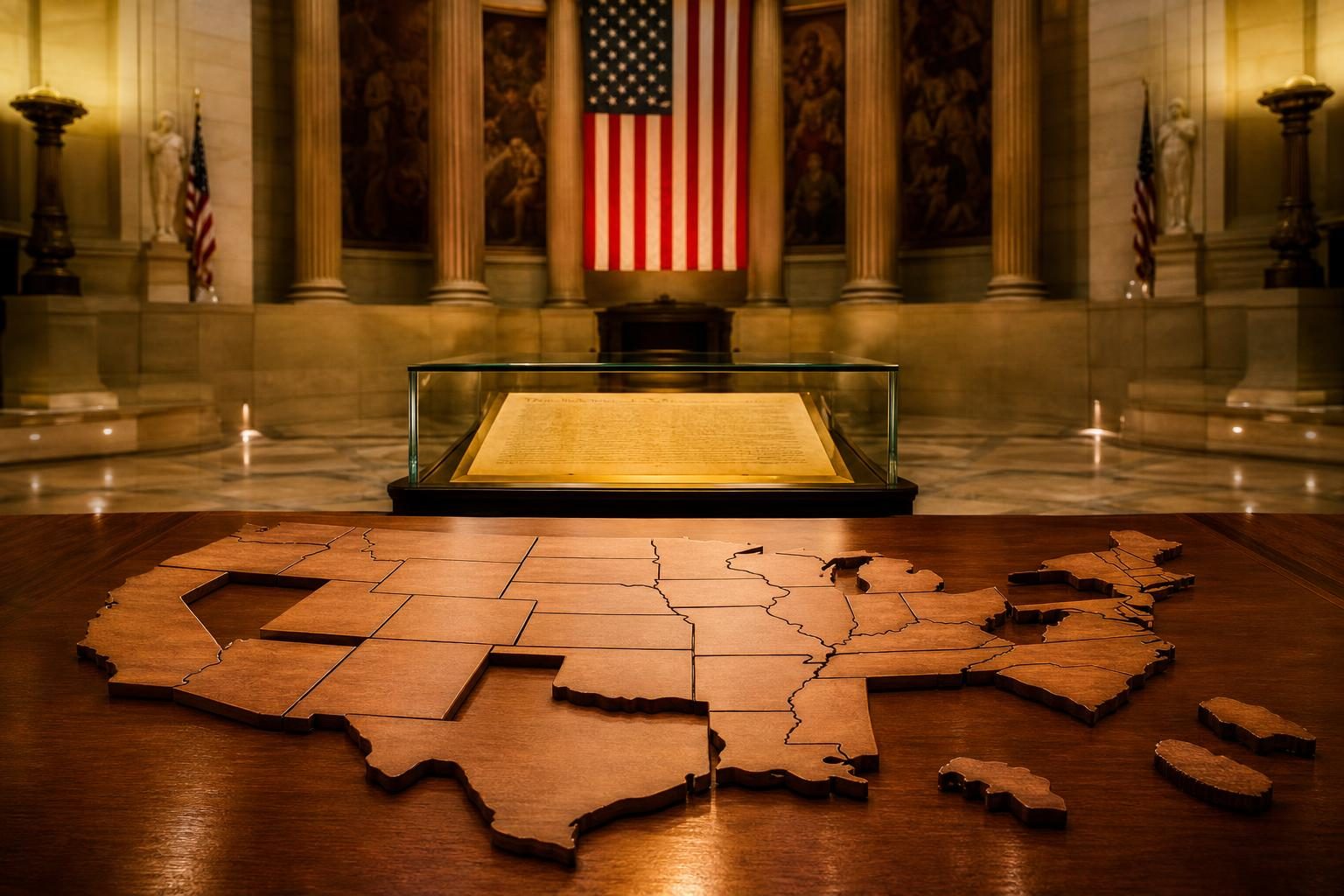
Illustration · Liberty Bell Report
The campaign to elect presidents by a national vote count, without amending the Constitution, is having its best month in years. NPR reported Saturday that the National Popular Vote Interstate Compact may be within reach after the midterms, though it acknowledged that serious hurdles remain. Supporters see a finish line. The Constitution sees a detour around the rules, and Americans deserve to hear that side before 2028.
What the Compact Would Do, and Where It Stands
The idea is simple to describe. States that join the compact promise to give all of their electoral votes to whichever candidate wins the most votes nationwide, regardless of how their own citizens voted, and the agreement only switches on once members control 270 electoral votes.
Today, 18 states and the District of Columbia, holding 222 electoral votes, have signed on, leaving the effort 48 votes short, according to NPR and Ballotpedia. NPR noted that Democrats will fully control five more states next year, Arizona, Pennsylvania, Michigan, Nevada and Wisconsin, which together hold 61 electoral votes, so almost any four of them would push the compact past the threshold. NPR also reported that no Republican-led state has joined.
The Constitution Already Has a Way to Change This
The Framers did not leave Americans without a remedy if they want a different system. Article V lays out how the Constitution is amended: two-thirds of both houses of Congress, or a convention called by the states, followed by ratification by three-fourths of the states. That high bar is deliberate. It means a change to how the country chooses its president must win broad agreement across regions and parties, not just a narrow majority of electoral votes controlled by one party's state capitals.
The compact skips that step. It would change the practical outcome of the Electoral College while leaving its text untouched, which is precisely why so many constitutional scholars are uneasy about it.
The Compact Clause Problem
Article I, Section 10 says plainly that no state shall, without the consent of Congress, enter into any agreement or compact with another state. The compact's supporters argue that it does not need Congress's blessing. Critics disagree. A Cato Institute analysis published this week argued that the compact's legal problems begin with that very clause, calling the plan a constitutional train wreck.
The Congressional Research Service, Congress's nonpartisan research arm, has examined the same question and laid out the competing legal views on whether congressional consent is required. That debate matters. If courts decide the compact is the kind of agreement that shifts power among the states and the federal government, it cannot take effect without a vote in Congress, and no such vote has happened.
Ballotpedia also reported a separate objection raised by one critic: the compact could clash with state constitutions that tie a state's electors to the votes of that state's own residents.
What It Would Mean for Voters
The common-sense problem is just as serious. Under the compact, a state's voters could choose one candidate while their state's electors are handed to the other. American Thinker pointed out that, had the compact been in force for the 2024 election, California's 55 electoral votes would have gone to Donald Trump, the national popular vote winner, despite how Californians voted. Supporters may welcome that result in theory. Most Californians, and most voters in any state, would not.
The Electoral College was designed to make candidates build coalitions across many states, rural and urban, large and small. It rewards breadth, not just raw totals in the largest population centers. That design has given smaller states and rural communities a voice that a single national tally would drown out.
Who Is Pushing Back, and What Comes Next
The opposition is broad. NPR noted that no Republican-led state has joined the compact. Scholars at the Cato Institute have laid out the constitutional objections in detail, and the CRS analysis shows that the legal questions are real and unresolved. If the compact reaches 270, a court fight over the question of congressional consent is widely expected.
The five states that could tip the balance will begin their new legislative sessions next year. Their lawmakers have a choice. They can join a plan that hands their citizens' electoral votes to the national tally and invites a constitutional crisis in the middle of a presidential election. Or they can respect the process the Framers built and argue for their idea the honest way, through an amendment that the whole country can vote on.
Within reach is not the same as within the Constitution. If the case for a national popular vote is as strong as its backers believe, they should have no fear of making it through Article V.
Sources
- NPR: An effort to circumvent the Electoral College may be within reach. But hurdles remain (link)
- Ballotpedia News: New Democratic trifectas in five states could provide enough electoral votes for National Popular Vote Interstate Compact (link)
- Cato Institute: The National Popular Vote Compact: A Constitutional Train Wreck (link)
- American Thinker: Under the Dems' Electoral College runaround, Trump '24 would have won California's 55 EC votes (link)
- Congressional Research Service: The National Popular Vote (NPV) Initiative: Direct Election of the President by Interstate Compact (link)
- National Archives: The Constitution of the United States: A Transcription (link)
— 30 —