Pushback
Why the Drivers Are Saying No to Mamdani's Ban on Central Park's 150-Year Carriage Tradition
New York signed away an industry and some 200 jobs in a single afternoon. The union's lawsuit asks a fair question: where is the just compensation the Constitution requires?
By JACK HOLLISTERStaff Correspondent · NEW YORK · Nov 20, 1:15 AM · 3 min. read
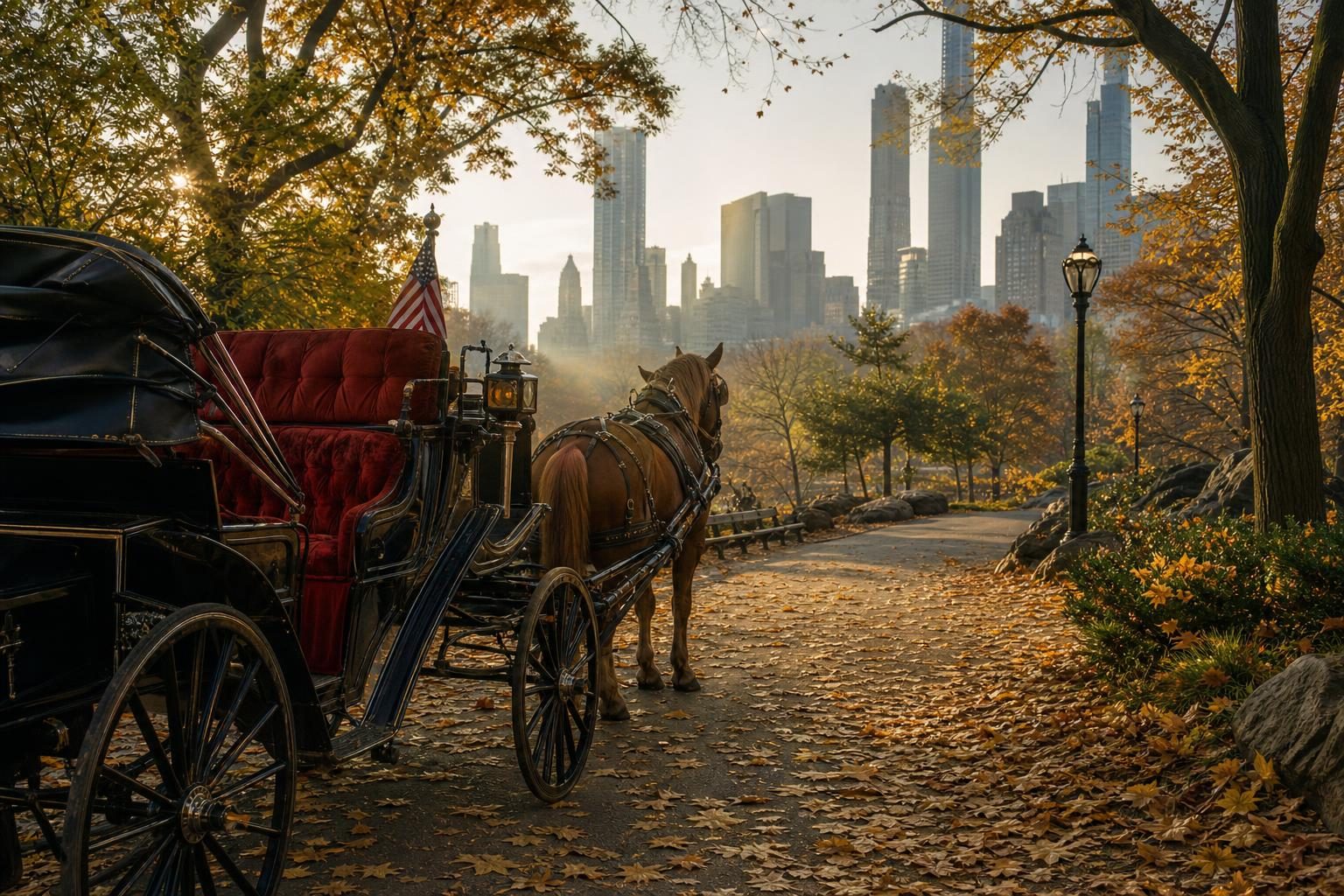
Illustration · Liberty Bell Report
New York City Mayor Zohran Mamdani on Thursday signed a law that will end the city's horse-drawn carriage industry, a fixture of Central Park for roughly 150 years, with carriages required to stop operating by June 1, 2028, the Washington Examiner reported. Within minutes, the drivers who make their living on those carriages were in federal court asking a judge to stop it, The Washington Times reported.
The measure is called Romanch's Law, after Romanch Mahajan, an 18-year-old visitor from India who died following a carriage crash in Central Park in June, ABC7 New York reported. Any honest discussion of this law has to begin there. A young man's death is a real tragedy, his family's grief is real, and the city was right to take a hard look at safety.
But the question in front of New Yorkers is not whether that loss matters. It is whether wiping out an entire trade, and the livelihoods of the families in it, is a fair or lawful answer to it. On that question, the facts and the Constitution point the other way.
What the City Did
According to ABC7 New York, City Hall estimates that about 200 workers, including drivers, stable hands and medallion owners, will be affected by the phaseout. The mayor has argued that the city has changed and its laws should change with it, and his administration says it will study alternatives such as electric carriages and pedal-assist vehicles for use in and around the park.
The Answer: Jobs, Fairness and the Fifth Amendment
Start with the workers. These are not corporate executives or investors. They are drivers and stable hands who belong to the Transport Workers Union. The union and its Local 100, joined by two carriage owners and one driver, filed a class action in Manhattan federal court asking that the law be declared unconstitutional, arbitrary and capricious, according to the Associated Press report carried by ABC News.
Their argument rests on some of the oldest words in the Bill of Rights. The Fifth Amendment says "nor shall private property be taken for public use, without just compensation." A carriage medallion, a carriage and a horse are property, bought and paid for under the city's own licensing rules. The lawsuit argues that the law does not clearly provide just compensation to the owners and drivers whose businesses it ends. In 2015, in a case brought by California raisin farmers, the Supreme Court made clear that the government's duty to pay applies to personal property, not just land.
The union also argues that the law singles out the carriage trade while leaving other horse businesses, such as horseback riding and racing, untouched, the AP reported. If the city's concern is the welfare of working horses or the safety of people near them, it is fair to ask why only one group of horse owners is being shut down.
Then there is common sense. When a tragedy happens on a city street, New York does not ban the vehicles involved. It investigates, sets new rules, trains drivers and enforces the law. The crash in June calls for exactly that kind of serious review. Romanch Mahajan's family has said they believe the horse may have been spooked by stray voltage from utility equipment in the park, and they are seeking damages from the city, Fox News reported. That claim has not been proven. But if a hidden electrical hazard did play a role, a carriage ban does nothing to fix it for the joggers, families and police horses who still use the same paths.
Who Is Pushing Back
City Journal argued that the council's decision amounts to punching down at a small group of working people, with lawmakers sacrificing their jobs to satisfy animal-rights activists. That criticism carries weight in a city that talks constantly about protecting workers. Two hundred jobs may not sound like many in a city of eight million, but for the families who hold them, they are everything.
The legal fight is just beginning. The union's suit will now go before a federal judge in Manhattan, and the June 2028 deadline gives the courts time to decide whether the city must pay for what it is taking.
New Yorkers who love the city's traditions should watch closely. Central Park's carriages have outlasted the Gilded Age, two world wars and generations of mayors. A tradition that old, and the people who keep it alive, deserve more than a signature and a sunset date. They deserve safety reforms that work, fair treatment under the law and, if the city insists on taking their livelihoods, the just compensation the Constitution promises.
Sources
- The Washington Times: Central Park's horse-drawn carriage drivers sue NYC over incoming ban (link)
- Washington Examiner: Mamdani signs legislation ending 150-year tradition of horse-drawn carriages in NYC (link)
- ABC News: Central Park horse-drawn carriage drivers sue NYC (link)
- ABC7 New York: Mayor Mamdani signs Romanch's Law ending NYC horse-drawn carriage industry (link)
- City Journal: New York Punches Down at Horse-Carriage Drivers (link)
- Fox News: Family seeks $105 million from New York City after teen's fatal Central Park carriage ride (link)
— 30 —