Pushback
Texas' Next Attorney General Doesn't Get a Veto: Why the Ten Commandments Law Deserves a Defense
Nathan Johnson says he won't defend the classroom law. The courts' own record on the Commandments in Texas points the other way.
By BENJAMIN STONEStaff Correspondent · TEXAS · Nov 28, 10:40 AM · 3 min. read
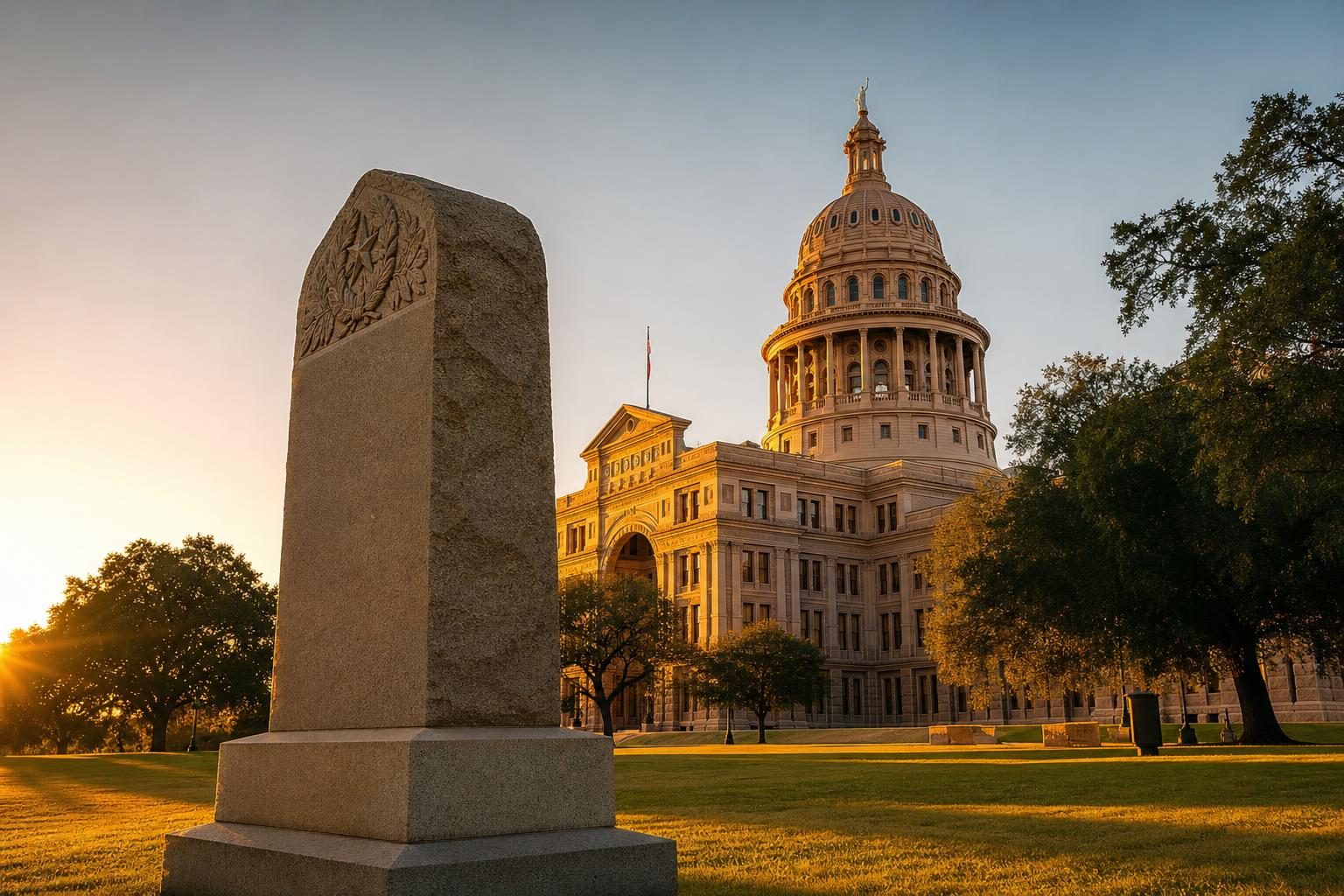
Illustration · Liberty Bell Report
Texas Attorney General-elect Nathan Johnson, a Dallas Democrat, has said he will not defend the state law that requires a copy of the Ten Commandments in every public school classroom, The Dallas Morning News reported. "My jurisprudential opinion is that the law is unconstitutional," Johnson told the paper. The Hill and Fox News reported the same pledge from the incoming attorney general, who takes office in January.
That is a remarkable announcement from a state's next chief lawyer. The law, Senate Bill 10, remains in effect today because a federal appeals court upheld it, the Morning News reported. Johnson, who will be the first Democrat to lead the office in 28 years, also said he will review federal lawsuits filed by other state attorneys general to decide whether Texas should join them.
What the Courts Have Actually Said
Johnson is entitled to his opinion. But the federal court that has looked hardest at this law does not share it.
In April, the full U.S. Court of Appeals for the Fifth Circuit, with all 17 judges hearing the case, ruled 9 to 8 that S.B. 10 is constitutional, FindLaw reported. The majority also concluded that the reasoning of Stone v. Graham, the 1980 decision that struck down a Kentucky classroom display, was built on the old Lemon test and no longer controls.
That conclusion did not come out of nowhere. In Kennedy v. Bremerton School District in 2022, the Supreme Court said it had long ago abandoned Lemon and told lower courts to read the Establishment Clause in light of historical practices and understandings. That case involved a high school football coach who was disciplined for kneeling in prayer at midfield after games, and the justices ruled 6 to 3 in his favor.
The Commandments have also already won at the Supreme Court in Texas itself. In Van Orden v. Perry in 2005, the justices upheld a granite Ten Commandments monument, about six feet tall, on the grounds of the Texas State Capitol in Austin, where it stands among 17 monuments and 21 historical markers. The Fraternal Order of Eagles gave the monument to the state in 1961. The plurality reasoned that the Commandments carry historical as well as religious meaning, and that displaying them on public grounds did not by itself establish a religion.
The Job Is to Defend the Law
There is a deeper problem with Johnson's announcement. A state attorney general is the lawyer for the people of the state. When the people's elected Legislature passes a law and a federal appeals court has upheld it, the attorney general's job is to defend it in court and to leave changes in policy to the people's representatives. An official who refuses turns his personal reading of the Constitution into a veto the voters never gave him.
Outgoing Attorney General Ken Paxton's office has already told the U.S. Supreme Court that Johnson's position is a reason the justices should not take up the families' challenge right now, the Morning News reported. If the Court someday hears the case with no Texas lawyer willing to argue for the law, the justices could be left without a full defense of a statute the Legislature enacted.
Nor are the Commandments a foreign import into American life. Prohibitions on murder, theft and false witness are written into the criminal law of every state. For generations of American children, the Commandments were simply part of learning right from wrong, and the Supreme Court's own Van Orden decision recognized the role they have played in the country's heritage.
Who Is Pushing Back, and What Comes Next
The fight is far from over. The law stays on the books and in force for now. The families challenging it have asked the Supreme Court to review the Fifth Circuit's ruling, and the justices have not yet said whether they will. Paxton remains in office until January, and his office is still defending the statute.
Parents and pastors who support the displays should watch three things: whether the Supreme Court agrees to hear the case, whether Johnson moves to join other states' lawsuits once he takes office, and whether lawmakers in Austin find a way to make sure a law they passed has a lawyer in court.
A state that keeps the Ten Commandments on its Capitol grounds, with the Supreme Court's approval, should not be told by one incoming official that the same words are forbidden on a classroom wall.
Sources
- The Dallas Morning News: Texas AG-elect Nathan Johnson won't defend Ten Commandments law (link)
- The Hill: Texas Attorney General-elect Nathan Johnson won't defend Ten Commandments classroom law (link)
- FindLaw: Fifth Circuit Gives Texas' Ten Commandments Law a Razor-Thin Win (link)
- Justia: Van Orden v. Perry, 545 U.S. 677 (2005) (link)
- Justia: Kennedy v. Bremerton School District (2022) (link)
- Fox News: Texas AG-elect Nathan Johnson won't defend Ten Commandments law in court (link)
— 30 —