Pushback
Hinojosa Is Right to Back Border Security. The Facts Say Texas Should Keep Its Enforcement Tools, Too
Texas's governor-elect agrees with President Trump on securing the border but vows to fight interior immigration enforcement; the record, the Constitution and the state's own sheriffs point toward keeping what works.
By COLE BRENNANStaff Correspondent · TEXAS · Nov 14, 4:15 PM · 3 min. read
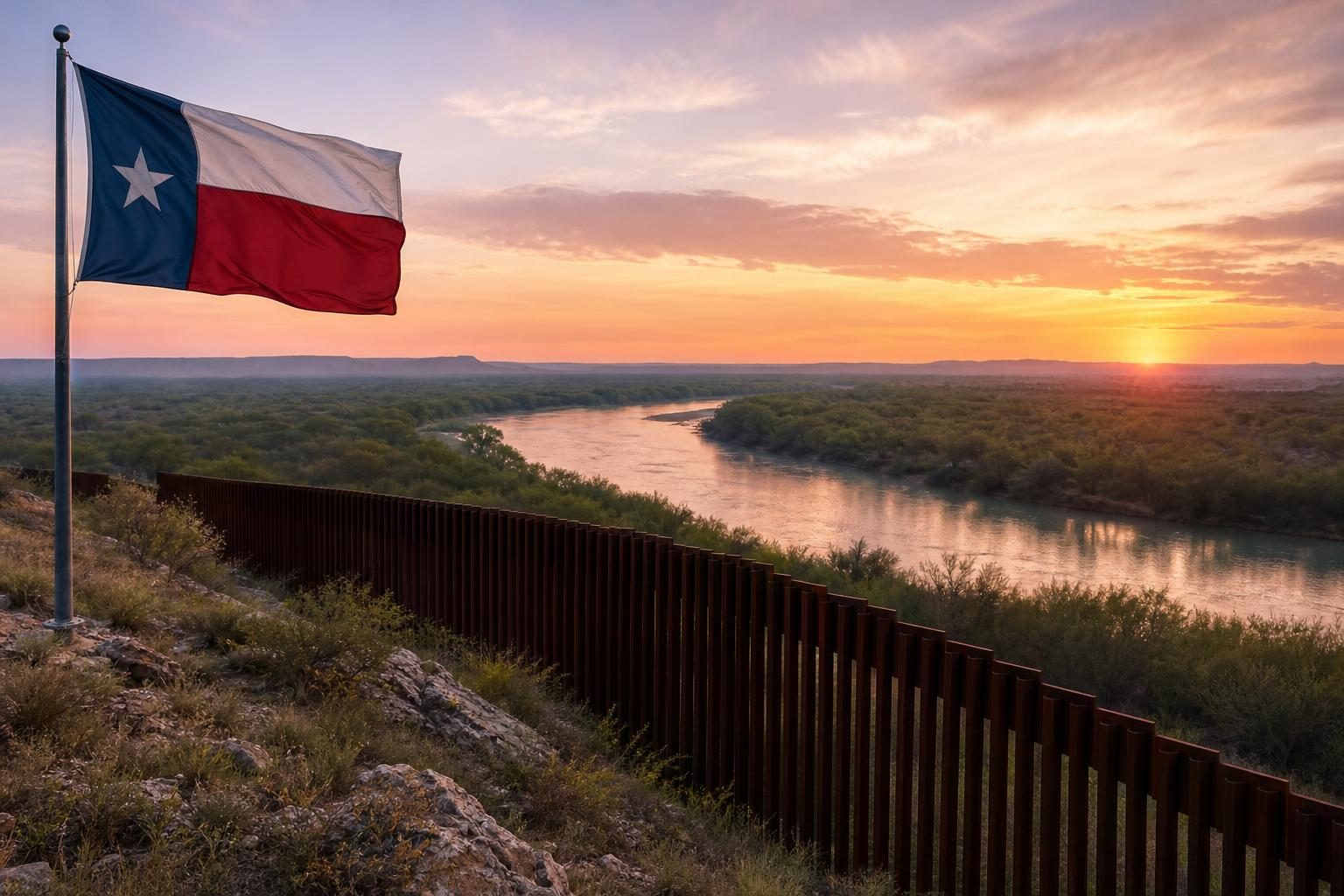
Illustration · Liberty Bell Report
Texas Gov.-elect Gina Hinojosa deserves credit for something many in her party have been slow to say: the border must be secure. In an interview with the Washington Post, the Democrat said she agrees with President Donald Trump on the need for border security. In the same breath, she vowed to fight what she called "chaotic and dangerous" immigration enforcement in major Texas cities.
Hinojosa drew a line between federal agents securing the border, which she supports, and interior enforcement in Texas cities, which she criticized. Concerns about how enforcement is carried out deserve a serious hearing, and every use of force by a federal officer should be fully investigated. Asked whether she would end Operation Lone Star, Hinojosa said she would review its legality. The Post framed her agenda as a promise to trade the GOP's culture wars for moderation.
That is a fair summary of her position. But the record of the past five years, the courts and the state's own sheriffs suggest Texas should keep the enforcement tools it has built rather than dismantle them.
What the record shows
Border security and interior enforcement are not two separate policies. They are two halves of the same promise. A border that is hard to cross but easy to disappear behind once inside is not secure.
Operation Lone Star, which Abbott launched under emergency powers in 2021, has cost the state more than $11 billion, the Texas Tribune reported. State officials say the operation has overseen the apprehension of half a million migrants crossing illegally and made more than 54,000 criminal arrests, resulting in 45,000 felony charges, according to Spectrum News. Illegal crossings are now at a historic low, due in part to President Trump's enforcement policies, the outlet reported. Those numbers are the context for any review of the program's cost.
Federal enforcement has also reached record levels. ICE carried out 483,200 deportations in the fiscal year that ended Sept. 30, the most in the agency's history, and made more than 491,000 arrests, according to Department of Homeland Security figures reported by CBS News. The deportation total surpassed the prior record of 442,640 set in fiscal 2025.
Fairness requires the rest of the picture. A CBS News analysis found that in July, for the first time in Trump's second term, more than half of ICE arrests involved immigrants with neither criminal convictions nor pending criminal charges. That is a legitimate debate about priorities, and Hinojosa is entitled to press it. But it also means a large share of those arrested did have convictions or pending charges. The most reliable place to find people already accused of crimes is the county jail, which is exactly where local partnerships with ICE operate.
What a governor can and cannot do
The Constitution settles much of this. Under the Supremacy Clause, federal law is the supreme law of the land, and immigration enforcement is a federal responsibility. A new governor cannot rewrite immigration law, though Texas can make choices about how it uses its own state resources, the Texas Tribune reported, citing an immigration law group. ICE's operations in Houston, Dallas or Austin do not depend on a governor's permission.
State law also stands in the way of a quick reversal. A federal appeals court decided in late May that Texas can enforce SB 4, the law making illegal entry a state crime, Fox 7 Austin reported. Senate Bill 8, passed in 2025, requires covered sheriff's offices to enter 287(g) agreements with ICE by Dec. 1, 2026, KXAN reported. Both are acts of the Legislature. Undoing either would take new legislation, not an executive order.
The enforcement question will fall to incoming Attorney General Nathan Johnson, who has discretion over whether to sue sheriffs who do not sign, according to KXAN.
Texas sheriffs, meanwhile, have voted with their signatures. As of Nov. 4, 202 of the 232 sheriff's offices covered by the mandate had 287(g) agreements in place, KXAN reported. Some of the largest counties, including Harris, Dallas and Travis, have not signed. That means the overwhelming majority of the elected sheriffs who run Texas jails have already chosen cooperation, and they are the officials closest to the problem.
What comes next
Hinojosa takes office in January, but the Dec. 1 deadline for sheriffs arrives first. Lawmakers who want to repeal SB 4 or SB 8 will have to win votes in the Legislature and make their case in public, and Texans will be watching.
The governor-elect has an opportunity to show that her support for border security is more than a campaign line. She can press ICE to prioritize criminal offenders and demand accountability for misconduct while keeping the jail partnerships that help find dangerous people before they are released. Texans voted for a governor who promised moderation. Keeping the tools that work, and fixing what needs fixing, would be the moderate course.
Sources
- The Washington Post: Texas's Democratic gov.-elect vows to trade GOP culture wars for moderation (link)
- The Texas Tribune: Can Texas Democrats reverse Abbott's immigration crackdown? (link)
- KXAN: Democratic election upsets could reshape Texas' expanding local immigration enforcement program (link)
- Fox 7 Austin: Texas can enforce controversial immigration law, US appeals court decides (link)
- CBS News: ICE deportations and arrests hit record high as Trump faces reckoning over immigration crackdown (link)
- Spectrum News: Operation Lone Star remains in effect after 5 years (link)
— 30 —