Pushback
Florida Is Not a Sanctuary State: Why Doral and Tallahassee's Talk of Quitting ICE Runs Into the Law Floridians Passed
After a tight midterm, some city officials want out of their immigration partnerships. State law, the attorney general's office and the incoming governor say the rules are clear.
By JACK HOLLISTERStaff Correspondent · FLORIDA · Nov 23, 11:25 PM · 3 min. read
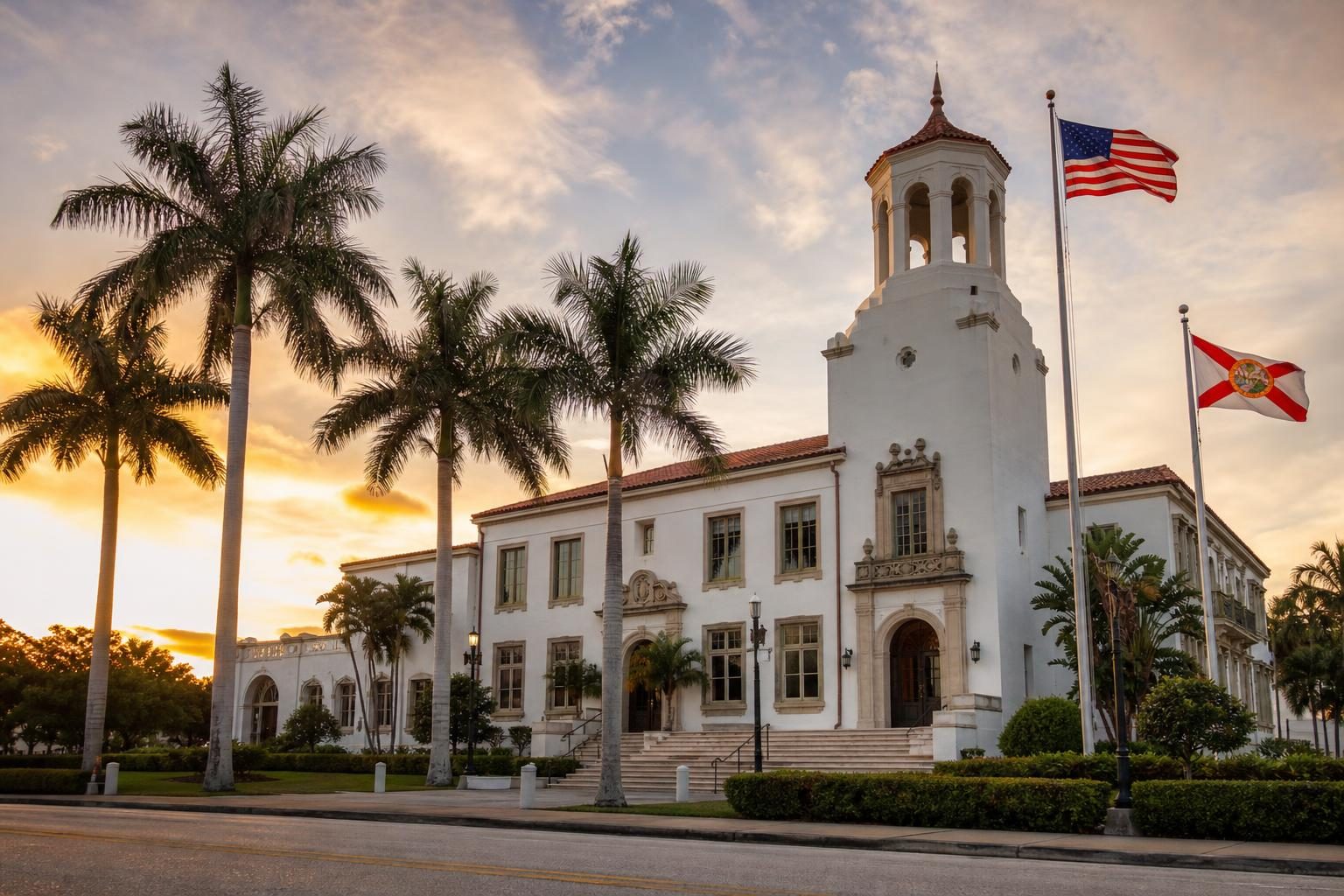
Illustration · Liberty Bell Report
Some Florida city leaders have decided the lesson of this month's midterm elections is that their towns should stop helping federal immigration agents. Bloomberg reported Monday that Florida cities are rebelling against their role in the Trump administration's immigration crackdown. Before that idea spreads, it is worth looking at what Florida law actually says, and what Floridians have voted for again and again.
What the cities are doing
Following elections in which some South Florida Republicans blamed immigration enforcement for surprisingly tight results, officials in Doral and Tallahassee have shown interest in ending their cooperation agreements with ICE. Those deals, known as 287(g) agreements after the section of federal law that authorizes them, let trained local officers help identify people in custody who are in the country illegally.
Doral's council delayed a decision while it waited for an opinion from the state attorney general's office. Tallahassee's city commission voted unanimously to bring back a proposal to withdraw at a future meeting. Tallahassee Mayor Jeremy Matlow argues the state has admitted in court that cities are not required to have such agreements, and an attorney with the Community Justice Project disputes the state's reading of the law. In Doral, some residents are urging the city to leave anyway, the Miami New Times reported.
What the law says
Florida settled this question in 2019. State law flatly prohibits any state entity, law enforcement agency or local government from adopting or keeping a sanctuary policy. The same chapter requires local governments to use their best efforts to support the enforcement of federal immigration law, and it gives the governor authority to act against officials who violate those duties.
The attorney general's office applied that law carefully. In an opinion requested by Doral's mayor, Deputy Attorney General Greg Slemp concluded that rescinding an executed 287(g) agreement without sufficient justification likely demonstrates a sanctuary policy and a lack of best efforts, which would violate Florida statutes.
That is not an overreach. The same opinion acknowledges that a city's choice not to sign an agreement in the first place does not, by itself, break state law. The line the state draws is simple: once a city has made a commitment to help enforce the law, it cannot walk away for political reasons and call that something other than a sanctuary policy.
The voters have spoken, too
The incoming governor is not wavering. Governor-elect Byron Donalds said Florida cities must comply with federal and state laws, "full stop". He has also vowed that Florida's capital will not become a de facto sanctuary city.
Florida has been here before. In 2025, Fort Myers initially rejected an agreement with ICE, then reversed itself and approved one unanimously after warnings from Attorney General James Uthmeier about possible penalties, and Key West likewise reversed a vote to end its agreement after the attorney general raised the possibility of removal from office, as reports recounting that history noted. In both cases, local officials ultimately chose to follow the law.
A close election is not a mandate to ignore statutes. If city leaders believe the 2019 law is wrong, the honest path is to ask the Legislature to change it. Until then, every mayor and commissioner in Florida swore an oath to uphold the laws of the state.
Why it matters
The point of these partnerships is not to target families going about their lives. It is to make sure that when someone is already in a local jail on criminal charges and is also in the country illegally, federal authorities know about it before that person is released back onto Florida streets. Cities that pull out do not stop federal enforcement; they simply make it harder, slower and more likely to happen in neighborhoods instead of in secure facilities.
Scripture tells us that the governing authorities are established to restrain wrongdoing, and that rulers are meant to be a terror to bad conduct, not good. Clear laws, applied evenly, are a kindness to everyone, including the many immigrants who came here legally and want safe communities as much as anyone.
What comes next
Tallahassee's commission is expected to take up the withdrawal proposal and its legal consequences at a future meeting, and Doral's council must decide how to proceed after receiving the state's opinion. If either city votes to leave, expect the attorney general and the new governor to test the 2019 law's enforcement provisions. Florida's message so far is consistent: the state is not a sanctuary, and its cities are not either.
Sources
- Bloomberg: Florida Cities Rebel Against Role in Trump Immigration Crackdown (link)
- Yahoo News: Will some Florida cities challenge Uthmeier and kill their immigration enforcement agreements? (link)
- Yahoo News: Uthmeier says Doral leaving ICE pact likely violates Florida law. Does it? (link)
- Miami New Times: Florida says Doral can't quit ICE deal. Residents say do it anyway (link)
- ClickOrlando: 'Full stop:' Gov.-Elect Byron Donalds issues warning to Florida's capital city (link)
- The Florida Legislature: The 2025 Florida Statutes, Section 908.103: Sanctuary policies prohibited (link)
— 30 —