Pushback
Fifty Rulebooks for One Federal Badge? Why Connecticut's ICE Mask Ban Ran Into the Constitution
A federal judge found Connecticut likely overstepped by regulating how federal immigration officers dress, identify themselves and use force, and the principle behind his ruling is written into Article VI.
By HAROLD WHITMOREStaff Correspondent · CONNECTICUT · Nov 23, 2:15 PM · 4 min. read
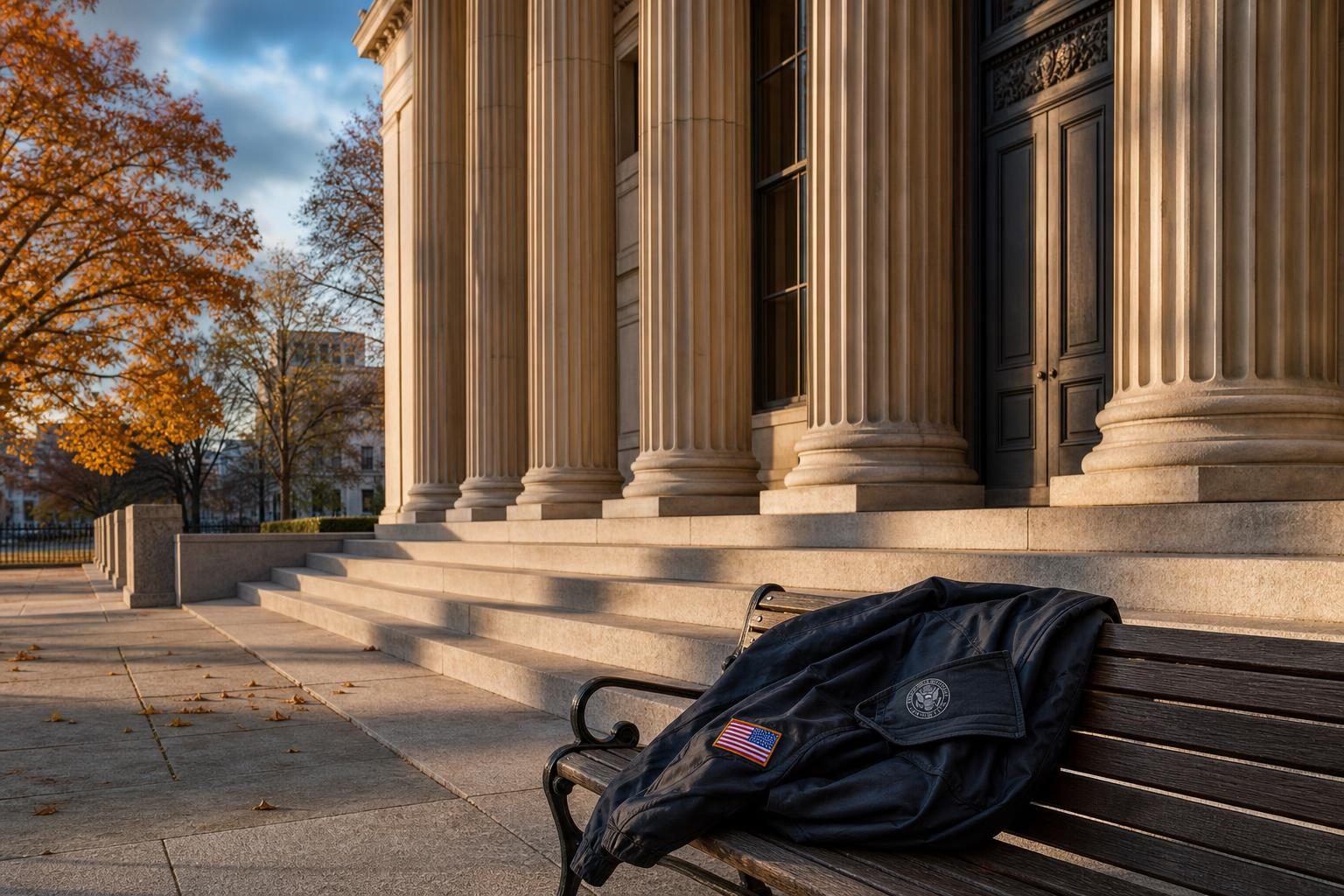
Illustration · Liberty Bell Report
Connecticut lawmakers set out this year to write their own rulebook for federal immigration agents working inside the state. Senate Bill 397, now Public Act 26-14, barred those officers from covering their faces, required visible identification, imposed state use-of-force standards on them and gave the state's inspector general power to investigate them, CT Mirror reported. Gov. Ned Lamont has called the dispute a moral issue, and Attorney General William Tong defended the law as lawful and necessary for public safety, News12 reported. In court, the state's lawyers argued that the Tenth Amendment gives Connecticut a sovereign right to regulate public safety within its own borders.
On Friday, Nov. 20, U.S. District Judge Vernon D. Oliver in Hartford said no, at least for now. He granted the Justice Department a preliminary injunction against the mask, identification, use-of-force and inspector general provisions as they apply to federal officers, finding they likely violate the Constitution's Supremacy Clause because they let Connecticut regulate federal officers carrying out federal duties.
The concern behind the law deserves a fair hearing. Many people want to know who is making an arrest on their street. But the question before the court was never whether masks are good policy. It was who gets to decide.
One Nation, One Chain of Command
The answer is written into the Constitution. Article VI says federal laws made under it "shall be the supreme Law of the Land," binding on judges in every state no matter what state law says. Immigration enforcement is a federal job, set by Congress and carried out by federal agencies. How those officers dress, identify themselves and decide when force is needed is governed by federal law, federal policy and federal oversight, answerable to Congress and the federal courts.
The Justice Department put it plainly at the hearing. Its lawyer told the judge the United States would not direct its agents to follow Connecticut's rules, adding, "That is for the federal government to determine, not Connecticut," News12 reported.
Common sense points the same way. If every state could set its own uniform code and its own force rules for federal agents, an officer working a case from New York through Connecticut and into Massachusetts could face three different rulebooks for the same assignment. Add an inspector general in each state empowered to investigate federal agents, and fifty capitals would be supervising one national government. The Tenth Amendment protects the powers reserved to the states. It does not hand states a power to manage the federal government's own employees.
What the Courts Keep Finding
Courts call the principle at work intergovernmental immunity, and it cuts two ways. A state may not directly regulate how the federal government operates, and it may not single out federal officers for treatment it does not apply to its own. Both theories have now been tested.
In California, U.S. District Judge Christina Snyder blocked the state's mask ban as applied to federal officers in February because it exempted California's own officers, including the Highway Patrol, and treated federal agents differently from similarly situated state officers, the Volokh Conspiracy reported. She did not accept the broader direct-regulation argument in that case. Last week, as Liberty Bell Report covered, California agreed to stop enforcing its mask law against federal agents.
In New York, a federal judge ruled in August that the state cannot ban federal agents from wearing face coverings or require them to wear visible identification, finding the federal government was likely to show the measures conflict with the Supremacy Clause, the Associated Press reported. Connecticut is now the third state to see a federal court stop its rules for federal officers.
Judge Oliver's order also shows what states can do. It did not block the law as it applies to state and local officers. Connecticut remains free to set standards for the police it hires, pays and answers for. What it may not do is reach across the line and supervise the officers Washington sends.
Who Is Pushing Back, and What Comes Next
The Justice Department brought the case and has now won the first round. In Hartford, Senate Republican Leader Stephen Harding has called the law unconstitutional, News12 reported. On the other side, state Sen. Steven Stafstrom said he did not believe the judge gave enough weight to the states' inherent police powers, according to Connecticut news reports.
Tong was dismissed from the case because the court found he lacked authority to enforce the challenged provisions, and his office said it is reviewing the decision and weighing next steps. Lamont's office said it was disappointed.
The injunction is temporary. A final ruling is still to come and may be weeks away, and Connecticut can appeal.
The better path is the one the Constitution already provides. If Connecticut's leaders believe federal agents should not wear masks, the state's members of Congress can propose that rule in Washington, where federal policy is made and where every state has a voice. That is how a free people settles disagreements under one Constitution: through the proper channel, not through fifty competing rulebooks for one federal badge.
Sources
- CT Mirror: Federal judge blocks CT law that sought to regulate ICE agents (link)
- WFSB: Federal judge temporarily blocks parts of Connecticut's ICE restrictions (link)
- News12: CT bans ICE agents from wearing face masks. Now a judge is deciding whether to block the law (link)
- Reason (The Volokh Conspiracy): Federal court blocks California ban on masked federal law enforcement because the ban exempts state officials (link)
- ABC News (AP): Judge rules New York can't ban federal agents from wearing face coverings (link)
- Constitution Annotated: Article VI (link)
— 30 —