Pushback
Every Culture but One? Hunter College Owes Its Jewish Students the Same Stage
A student-run cultural night at Hunter College was canceled after Hillel joined the program; the Constitution, civil rights law and common sense say Jewish students deserve an equal place.
By REBECCA HARTMANStaff Correspondent · NEW YORK · Nov 24, 3:30 PM · 3 min. read
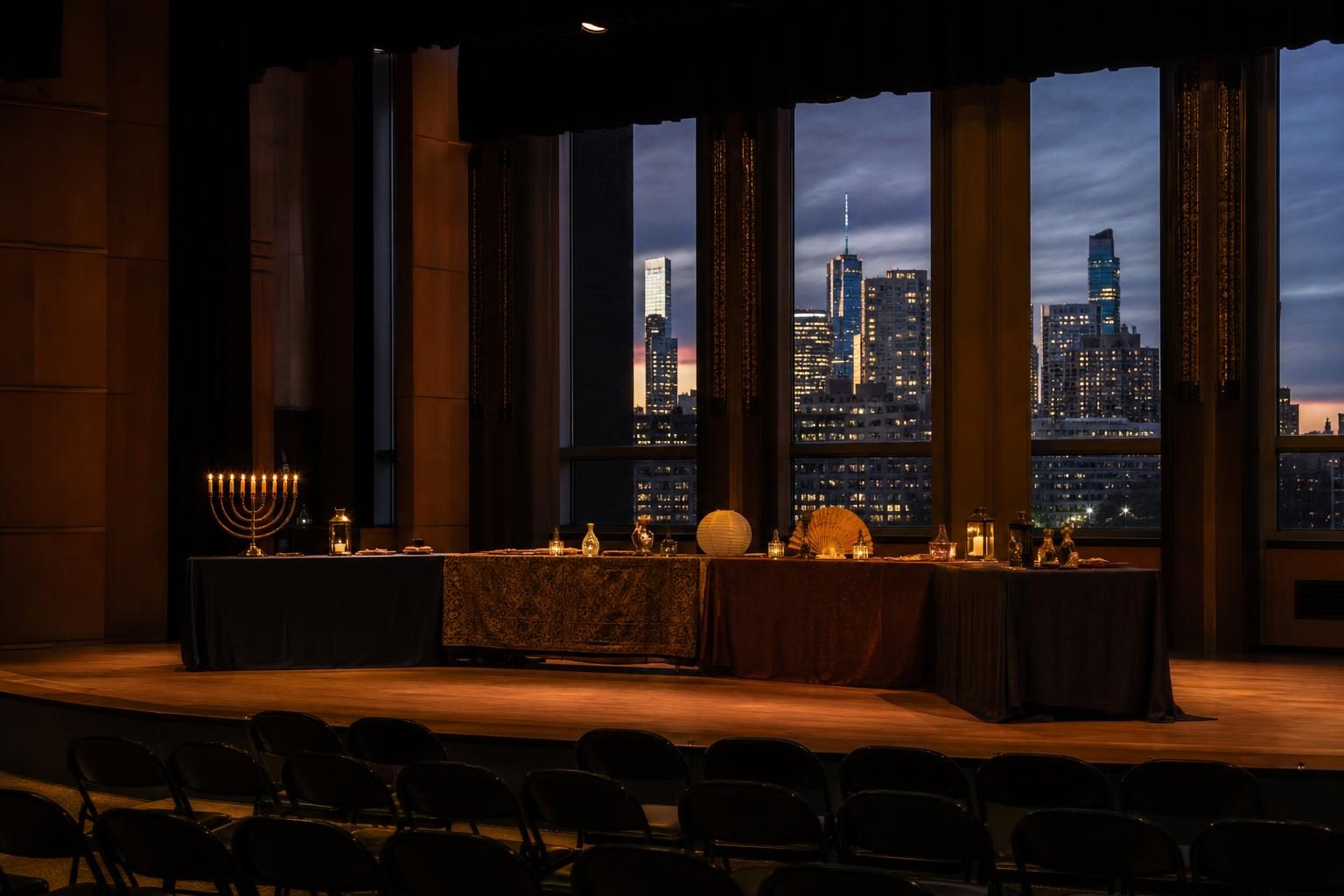
Illustration · Liberty Bell Report
Hunter College's student government had planned a Cultural Arts Night for Nov. 16, an evening meant to celebrate the many cultures on the Manhattan campus. Hunter Hillel, the Jewish student group, was on the program. Then the night was called off. The student government first said the event did not fit its values or those of the students it represents, and later said it had been canceled because of safety concerns, adding that its first statement may have caused confusion, JNS reported.
Jewish groups are asking the obvious question: was the event scrapped because Hillel was part of it? They have asked the college to find out, and the college has said its student affairs division is reviewing what happened. Hillel's leaders have said their students were looking forward to taking part and played no role in the decision. Protesters rallied outside the college last week to say "enough," Fox News reported.
Hunter is part of the City University of New York, a public system that families and taxpayers support. Parents who send a son or daughter there have every right to expect that a campus celebration of cultures does not quietly leave out one culture. If the review confirms what Jewish students fear, it will not be a scheduling mix-up. It will be exclusion.
Safety Can't Be a Blank Check
Fairness requires saying plainly that the review is not finished, and that the student government has offered its own explanation. But "safety" has a history at Hunter. In 2024, the college canceled a screening of a documentary critical of Israel, citing unspecified safety concerns, and the free speech group FIRE noted that Hunter never disclosed any specific threat behind that decision.
That earlier case involved a film many pro-Israel students disliked. This one involves Jewish students themselves. The lesson is the same either way: when an institution reaches for a vague safety rationale and never names a threat, students lose the right to be heard, and the loudest objectors win. A campus that cancels events whenever someone objects to who is on the stage is not protecting students. It is handing a veto to whoever is most willing to complain.
If there was a credible threat, the answer is more security for the event, not a cancellation that punishes the students who were threatened. If there was no threat, the word "safety" should never have been used.
What the Constitution and the Law Require
Public colleges are bound by the First Amendment, and the Supreme Court has been clear about student activities. In Rosenberger v. Rector and Visitors of the University of Virginia in 1995, the Court ruled that a public university could not deny student activity funding to a Christian student newspaper because of its religious viewpoint. Student programs paid for through a public university must be open to all on equal terms. A student government acting under a public college's authority cannot pick which religious or ethnic communities get a seat at a shared celebration.
Federal civil rights law points the same way. The Education Department's Office for Civil Rights has explained that Title VI of the Civil Rights Act of 1964 protects students who are, or are perceived to be, Jewish from discrimination based on shared ancestry or ethnic characteristics, along with students of many other faiths and backgrounds. Colleges that take federal money must respond when Jewish students are shut out of campus life.
That is why the question matters so much. A Jewish student who is told, in effect, that her club is too controversial to stand beside the other cultural groups on the program is being told her identity is a problem. No other student would be asked to accept that.
Who Is Pushing Back, and What Comes Next
The response has been swift and broad. New York City Council members, including Eric Dinowitz, who chairs the council's Jewish Caucus, have called on CUNY to open a civil rights investigation, JNS reported. UJA-Federation of New York has joined that call. Hillel has said it expects to take part in future student government events, which is a gracious answer to a hard week.
Now the college has to finish its review and tell students what it found. If Hillel's presence was the reason, Hunter should say so, apologize to its Jewish students and make sure the next Cultural Arts Night includes every group that wants to come. If another reason truly drove the decision, Hunter should make the evidence public.
Parents, alumni and lawmakers will be watching. Jewish students at Hunter are not asking for special treatment. They are asking for a place at the same table as everyone else, and on a public campus, that is exactly what the Constitution promises.
Sources
- JNS: Jewish groups ask Hunter College to probe if student government canceled event since Hillel was involved (link)
- Fox News: 'Enough': Protesters decry antisemitism after Hunter College student event including Jewish group is canceled (link)
- FIRE: Hunter College: Cancellation of 'Israelism' documentary over unspecific safety concerns (link)
- Justia: Rosenberger v. Rector and Visitors of Univ. of Va., 515 U.S. 819 (1995) (link)
- U.S. Department of Education: Discrimination Based on Shared Ancestry or Ethnic Characteristics (link)
- JNS: NYC Council members demand CUNY probe Hunter nixing event with Hillel (link)
— 30 —