Pushback
A Speech Code by Another Name: Why New Jersey's 'Islamophobia' Bill Puts Honest Talk About Faith at Risk
Protecting Muslim neighbors from real discrimination is right, and the law already does it. Writing a vague, contested definition into state enforcement is something else.
By ETHAN CALLOWAYStaff Correspondent · NEW JERSEY · Nov 23, 9:30 AM · 3 min. read

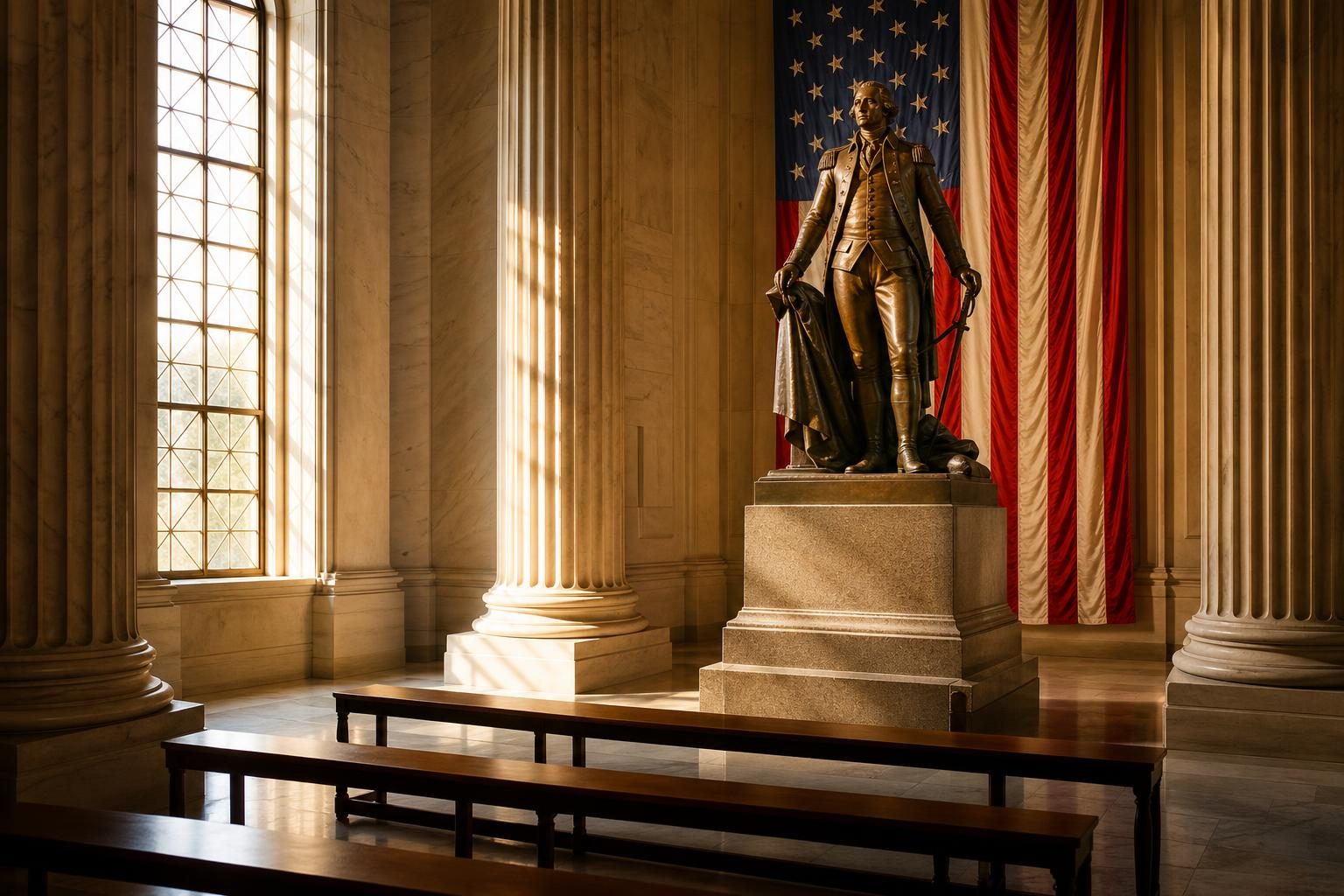
Illustration · Liberty Bell Report
Every American of every faith deserves to live, work and worship without being mistreated because of what they believe. That principle is not in dispute. What is in dispute is a bill in Trenton that would take a vague and contested idea, "Islamophobia," and write it into how New Jersey officials decide who is guilty of discrimination.
What the bill would do
Assembly Bill A1146 would adopt a state definition of Islamophobia and require public officials and law enforcement officers to consider it when reviewing alleged violations of existing anti-discrimination laws, including when deciding whether an act was motivated by anti-Muslim intent, according to the bill text and reporting by The Algemeiner. The definition describes Islamophobia as "a type of racism that targets expressions of Muslimness" and lists 13 examples, drawing in part on a definition written by a British parliamentary group. The bill does not create a new crime, and it says criticism of a Muslim-majority country comparable to criticism of any other country would not count.
The sponsor is Democratic Assemblyman Joe Danielsen, joined by several Democratic colleagues, and the bill has not yet had a committee hearing. Supporters argue that a uniform definition would help officials recognize and respond to discrimination against Muslims.
Why the definition is the problem
Laws protect people. Definitions like this one protect ideas. Critics have pointed out that the British group behind the model language said it was not meant to curb criticism of Islam as a religion, an assurance the New Jersey bill does not repeat. Republican Assemblyman Paul Kanitra has warned that factual statements about Islamic texts, history or demographics could be treated as evidence of a discriminatory motive. Billy Graham's Decision magazine and The Daily Signal have raised the same alarm, describing the measure as a blasphemy rule in modern dress.
That concern is not paranoia. When a definition folds disagreement with a religion's teachings into "racism," a pastor's sermon on the uniqueness of Christ, a Jewish scholar's history lecture or a former Muslim's testimony can start to look like evidence. The Constitution does not allow that. In Matal v. Tam in 2017, the Supreme Court made clear there is no "hate speech" exception to the First Amendment, and that the government may not punish speech because it offends. In Dawson v. Delaware in 1992, the Court held that a person's abstract beliefs cannot be used against him in a courtroom when they have nothing to do with the conduct at issue.
New Jersey already protects people from discrimination based on creed and religion. Assault, vandalism and threats are already crimes, and the state can already take bias motive into account when it is proven by what a person did and said about the victim. A Muslim family harassed at a grocery store has the law on its side today. What A1146 adds is not protection for people, but a thumb on the scale for one set of religious claims against their critics.
Equal treatment, not special categories
The deeper problem is fairness. Religious liberty in America has always meant that no faith is placed beyond criticism, and no faith is singled out for suspicion. Christians are told, rightly, that they must make their case in the public square. The same rule should apply to everyone. A free country lets an imam and an evangelist both preach, both persuade, and both be disagreed with.
Notably, a separate New Jersey bill that would have adopted a definition of antisemitism advanced through committees in 2024 and 2025 but never reached a floor vote, a reminder that lawmakers have hesitated before writing contested definitions into enforcement.
Who is pushing back, and what comes next
Kanitra, Christian ministries and free-speech advocates have all raised objections. For now the bill sits in committee. It would need approval in both chambers and the governor's signature to become law. New Jersey residents who believe in both religious freedom and free speech should let their legislators know that the way to protect Muslim neighbors is to enforce the laws already on the books, equally, for every faith.
Sources
- LegiScan: Bill Text: NJ A1146 (link)
- The Algemeiner: Proposed New Jersey Bill Would Establish 'Islamophobia' Definition to Be Used in Criminal Prosecution (link)
- Decision Magazine: Sharia Law in New Jersey? Bill Raises Questions About Criminalizing Criticism of Islam (link)
- The Daily Signal: New Jersey's 'Islamophobia' Bill Is a Blasphemy Law in Disguise (link)
- Cornell Legal Information Institute: Matal v. Tam (link)
- Cornell Legal Information Institute: Dawson v. Delaware (link)
— 30 —