Native America
A Homeland Made Whole: Quinault Nation Buys Back 11,000 Acres as the Seneca Nation Swears In Its First Woman President
Good news from Indian Country this week: a $60 million land buyback in Washington's rainforest, a historic swearing-in in New York, insulin pumps for Cherokee children and $9.5 million to train tribal manufacturers.
By JOE REDHAWKStaff Correspondent · WASHINGTON STATE · Nov 13, 9:30 AM · 4 min. read
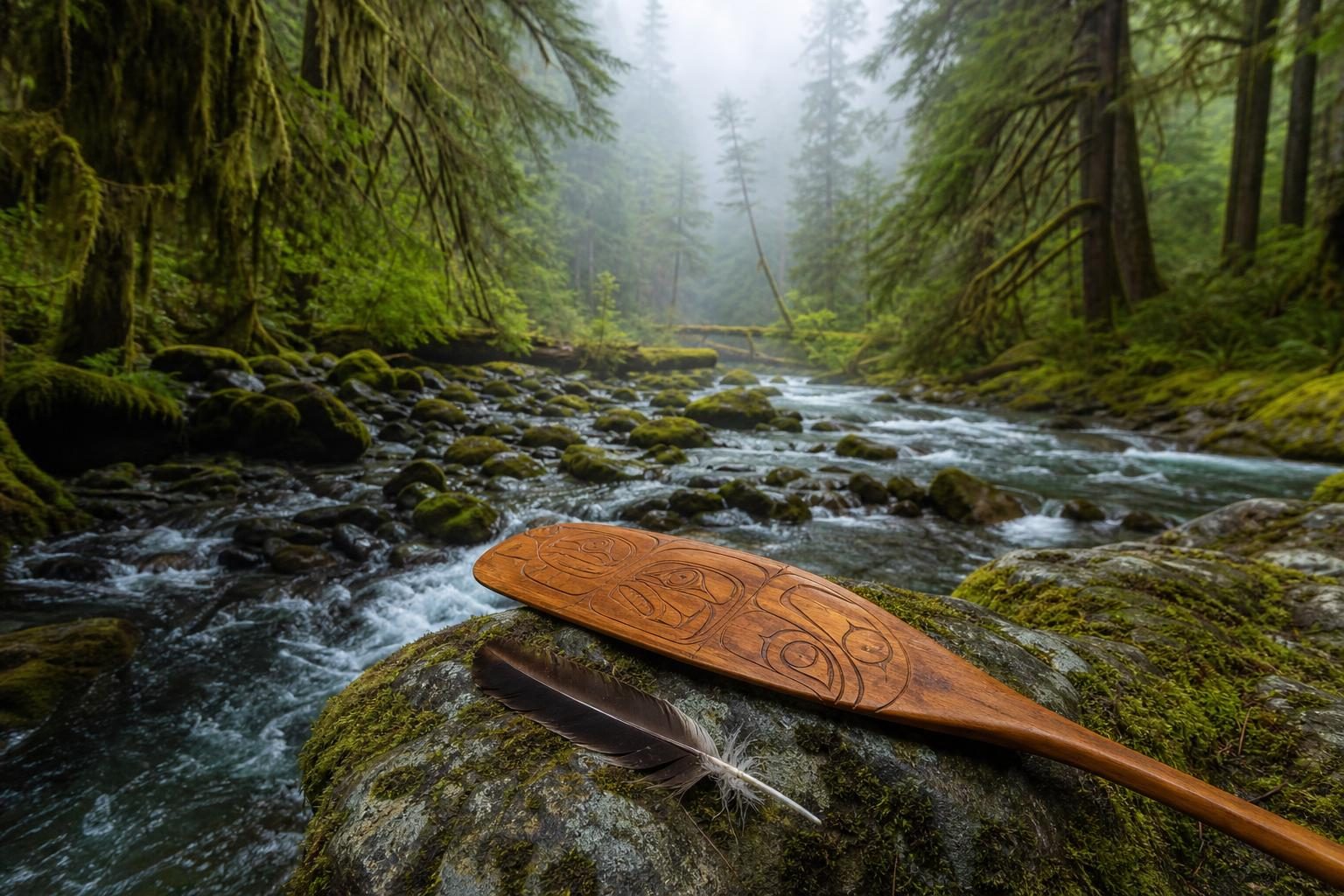
Illustration · Liberty Bell Report
From the rainforests of the Pacific Northwest to the hills of eastern Oklahoma, this has been a week of good news across Indian Country. A Northwest tribe made its homeland whole again, the Seneca Nation swore in its first woman president, the Cherokee Nation moved to help children with diabetes, and two tribal institutions won millions to train manufacturing workers. Here is a closer look.
The Quinault Nation Buys Back 11,000 Acres
The Quinault Indian Nation in Washington state has purchased more than 11,000 acres of ancestral land inside its own reservation from a logging company, Native News Online reported. Citing a press release from The Nature Conservancy, the outlet said the property was one of the largest privately owned tracts on the reservation, about half of the reservation's privately held fee lands.
The land sits in the Olympic rainforest, largely in the Raft River watershed, home to salmon, steelhead trout, elk and gathering areas important to Quinault families. The purchase cost $60 million, with $25 million from Washington's Climate Commitment Act fund, about $20 million from the Nation itself and $15 million raised by The Nature Conservancy from private donors and foundations.
The deal raises the Nation's ownership within the reservation from about 47% to more than 52%, according to Native News Online. Quinault President Guy Capoeman said the purchase fulfills a vision of earlier generations and lets the Nation manage its lands as a whole rather than piece by piece. "This is making our ancestral land whole again," he said. Tyson Johnston of the tribal council's business committee called it one of the most meaningful milestones in restoring the Nation's land base, and noted that scattered parcels had long made forestry, fisheries and restoration work difficult.
It is a story of a tribe using its own money, state conservation dollars, private charity and a willing seller to restore what was lost, the kind of voluntary, ownership-based solution that respects property and sovereignty alike.
The Seneca Nation Swears In Its First Woman President
In western New York, Tina Abrams was sworn in as president of the Seneca Nation this week, the first woman the Nation has elected to its highest office, Native News Online reported. She took the oath at the Nation's Canvass Day ceremony at the Seneca Allegany Resort & Casino, alongside other leaders elected the week before.
Abrams is no newcomer. She was first elected to the Seneca Nation Council in 2001, became the first woman appointed co-chair in 2012, and earlier this year became the first Native American woman to receive the New York State Senate's Woman of Distinction Award, according to the report.
Her election carries family history. Her grandfather Morris Jimerson and father Walden Jimerson both served on the Nation Council and fought for women's right to vote in Seneca elections, and her grandmother Sybil Eels was the fourth Seneca woman ever elected to a government post. Seneca women won the right to vote in a 1964 referendum and the right to hold office in 1966, the outlet reported. Abrams told the gathering she would work every day to honor the responsibility, promising the Seneca people, "Yours will always be the voice that guides me". She will serve a two-year term.
Cherokee Nation Helps Children With Type 1 Diabetes
In Tahlequah, Oklahoma, Principal Chief Chuck Hoskin Jr. signed a memorandum on Monday creating a program to provide automated insulin delivery devices to Cherokee children with Type 1 diabetes, the Cherokee Phoenix reported. The devices work with a continuous glucose monitor and adjust insulin automatically, day and night.
Cherokee Nation Health Services serves an estimated 95 children and 650 adults with Type 1 diabetes, and the tribe will spend more than $665,000 a year of its own funds on the effort, according to the Phoenix. Hoskin said the disease is a full-time job for a child and family, and that the program will give children more freedom at school, on the ballfield and at home. Deputy Principal Chief Bryan Warner said families should not have to choose between cost and their child's health.
Ten-year-old Hazel Branham, who has Type 1 diabetes, attended the signing with her mother and grandmother. Her grandmother, Rhonda Merrill, thanked the Nation and said the devices give children back their independence.
Training the Next Generation of Tribal Manufacturers
Two tribal institutions have won a combined $9.5 million from the U.S. Small Business Administration to train manufacturing workers and help small businesses compete for government contracts, Tribal Business News reported. The awards come through the agency's Manufacturing in America Empower to Grow program.
Navajo Technical University received $4.54 million to expand a manufacturing initiative serving the Navajo Nation and nearby tribal communities in New Mexico, Arizona and Utah, including a mentor-protege partnership with a private engineering firm. Chippewa Sustainable Solutions received $5 million for training in advanced additive manufacturing and friction stir welding in Belcourt, North Dakota, serving small manufacturers that supply the aerospace, defense, energy and construction industries, in partnership with the University of North Dakota and Turtle Mountain Community College.
Good jobs close to home, built on skills and enterprise, are one of the surest ways to strengthen families and communities on and off the reservation.
What Ties It Together
Each of these stories is about tribal nations taking responsibility for their own future: buying back land with their own resources, choosing their own leaders, caring for their own children and training their own workers. That is self-government at its best, and it deserves more attention than it usually gets. We will keep bringing you these stories.
Sources
- Native News Online: Quinault Nation Buys 11,000 Acres Within Its Own Reservation (link)
- Native News Online: Sixty Years After Granting Women the Right to Vote, Seneca Nation Swears in First Woman President (link)
- Cherokee Phoenix: CN establishes Pediatric Automated Insulin Delivery Device initiative (link)
- Tribal Business News: Navajo Tech, Chippewa win $9.5M to expand manufacturing training (link)
— 30 —