Military & Defense
Putin's Zircon Sub Joins the Fleet as U.S. Sub Building Lags
Russia's navy took delivery of the Perm, a Yasen-M attack boat Moscow says carries hypersonic missiles, while America's attack-sub yards still run short of the Navy's two-a-year goal.
By DAN WHITAKERStaff Correspondent · VIRGINIA · Nov 28, 12:40 PM · 3 min. read
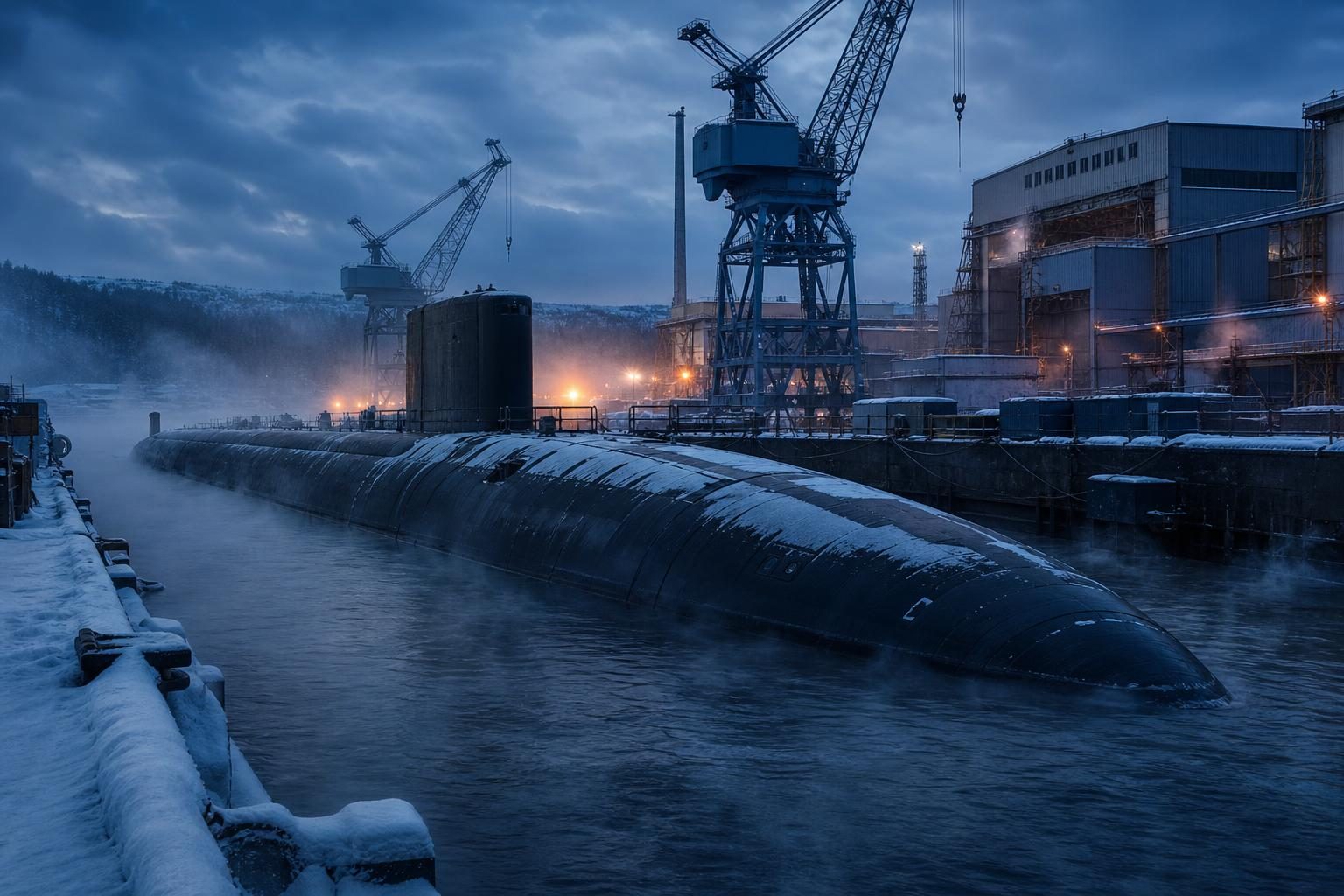
Illustration · Liberty Bell Report
Russia's navy took formal delivery of a new nuclear-powered attack submarine on Friday, and Vladimir Putin traveled north to raise its flag himself. The Kremlin wants the world to notice. Americans should, too, because the boat arrives while our own submarine yards are still building at a pace well short of what the U.S. Navy says it needs.
What Moscow Unveiled
Putin attended a flag-raising ceremony aboard the Perm at the Sevmash shipyard in the northern port city of Severodvinsk, marking the submarine's formal handover to the Russian navy, Al Jazeera and Arab News reported. Moscow says the Perm is the first Russian submarine equipped with the Zircon hypersonic cruise missile. That claim comes from the Russian government, which has every reason to talk up its new weapons.
The Perm is a Yasen-M boat, Russia's newest class of multipurpose nuclear attack submarines, and the sixth in the Yasen series, Army Recognition reported when the boat was launched at Sevmash in March 2025. The outlet described it as the first attack submarine of its kind designed from the start to carry the Zircon, and boats of the class can also fire Oniks and Kalibr cruise missiles from vertical launch tubes.
Russian officials have claimed the Zircon can strike at up to nine times the speed of sound, United24 Media reported. That figure comes from Moscow, not from independent testing, but a missile anywhere near that fast leaves defenders very little time to react.
Putin also used the ceremony to announce that the navy will receive five more submarines by 2030, three of them Yasen-M boats like the Perm, and he said such submarines can carry cruise missiles into any of the world's oceans. The reports did not include a response from the Pentagon or NATO.
Why It Matters Here
A quiet nuclear submarine can stay hidden for long stretches, and a missile that is very hard to intercept gives sailors and air-defense crews little time to react. Put the two together and you have a capability that American commanders must plan around, whatever the Zircon's true performance turns out to be. The message from the Severodvinsk pier was plain: Russia intends to keep building undersea power even as its war in Ukraine drags on.
The American answer starts in our own shipyards, and there the record is sobering. The Congressional Research Service reported in January that Virginia-class attack submarine production has never reached the Navy's goal of two boats a year and has been limited to about 1.1 to 1.2 boats a year since 2022. The Navy ordered two Virginia-class boats a year from fiscal 2011 through fiscal 2024, then only one in fiscal 2025, the report said.
There are signs of progress. Builder General Dynamics Electric Boat has said its output across the Virginia and Columbia submarine programs rose about 30% from a year earlier, Army Recognition reported. But the same report noted that government auditors found the two Virginia-class boats delivered in 2025 each arrived more than three years behind schedule.
What Comes Next
Peace through strength is not a slogan. It is a production schedule. Deterrence depends on an adversary believing that America can put more capable boats to sea, crewed by better-trained sailors, faster than anyone else. That belief is built hull by hull by the welders, pipefitters and engineers in the yards that build our submarines, and by a Congress that funds them on time instead of lurching from one stopgap to the next.
For the families of the sailors who serve beneath the waves, this is not an abstract debate. Every crew that deploys deserves a boat that is ready, maintained and a match for anything it may meet. A Russian submarine with hypersonic missiles is a reason to finish the job of rebuilding America's undersea fleet, not a reason for panic.
What to watch: whether the Perm and its missiles perform as Moscow claims once the boat is at sea, how quickly Russia delivers the five additional submarines Putin promised by 2030, and whether Washington gives its shipyards the steady orders and skilled workers they need to reach two attack submarines a year.
Sources
- Al Jazeera: Putin unveils new Russian nuclear-powered submarine with hypersonic weapons (link)
- Arab News: Putin unveils new nuclear submarine (link)
- United24 Media: Putin's New Nuclear Submarine "Perm" to Carry Hypersonic Missiles That Strike at Mach 9 (link)
- Army Recognition: Russia launches Yasen-M class Perm as first nuclear attack submarine specifically designed to carry Zircon hypersonic missiles (link)
- Congressional Research Service: Navy Virginia-Class Submarine Program and AUKUS Submarine (Pillar 1) Project: Background and Issues for Congress (link)
- Army Recognition: U.S. nuclear submarine output rises 30% as Navy faces delays replacing its aging Ohio-class fleet (link)
— 30 —