Media & Journalism
A Promise to a Source, $800 a Day: Catherine Herridge Asks the Supreme Court to Protect Reporters Who Keep Their Word
The veteran investigative reporter was held in contempt for refusing to say who gave her FBI records. Her petition asks the justices to set a clearer rule for civil cases.
By HAROLD WHITMOREStaff Correspondent · WASHINGTON · Nov 28, 11:31 AM · 3 min. read
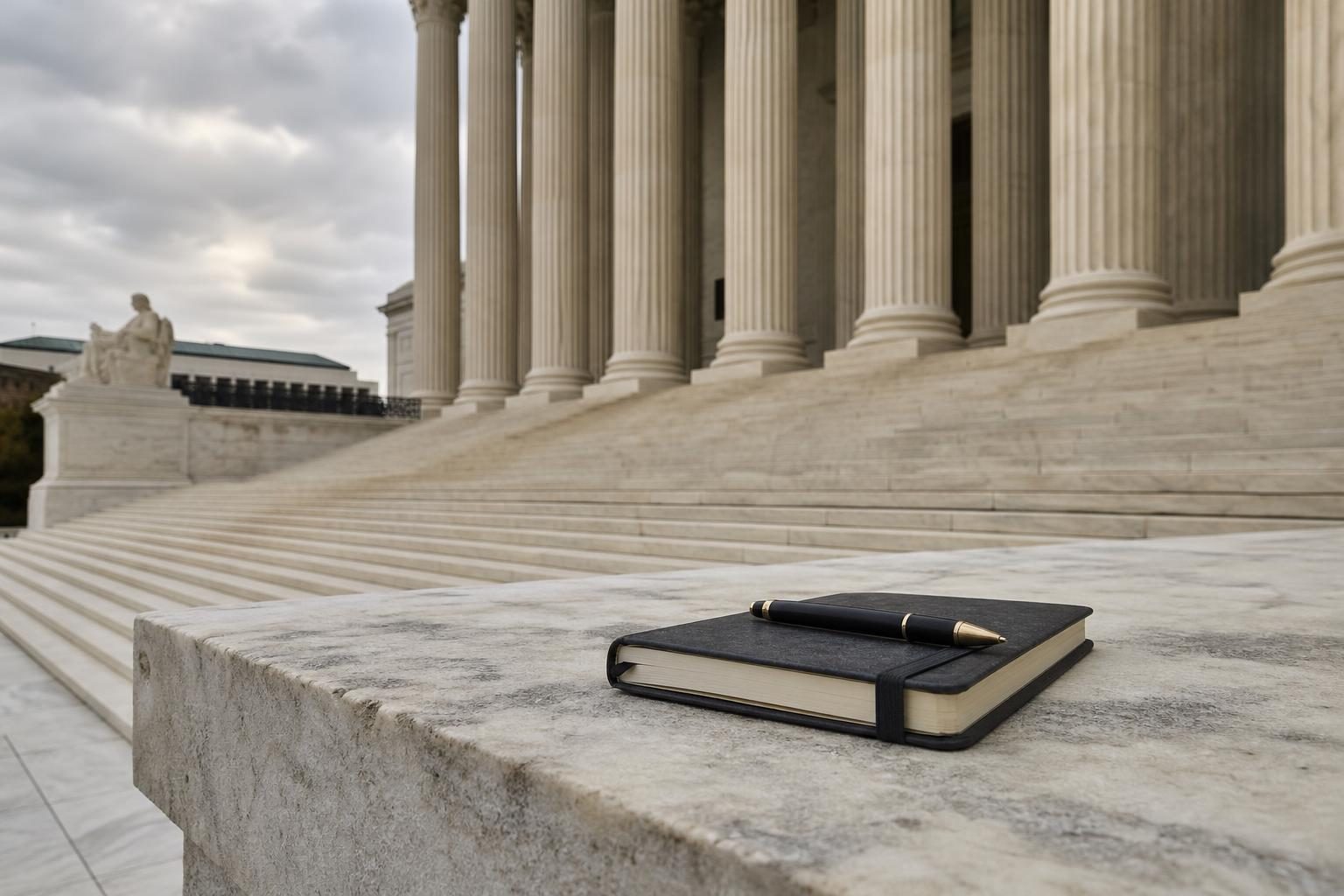
Illustration · Liberty Bell Report
Veteran investigative reporter Catherine Herridge has asked the U.S. Supreme Court to take up her long fight to protect a confidential source, Just the News reported. The New York Post described the petition as a widely watched test of a reporter's privilege to rely on confidential sources, and Fox News reported that her lawyers are asking the justices to rethink how courts decide when a journalist can be forced to give up a source in a civil case.
The stakes for Herridge are personal and expensive. A federal judge held her in contempt and ordered her to pay $800 a day for refusing to name the person who gave her government records, CNN reported.
How a News Story Became a Contempt Order
The case began with Herridge's reporting, while she was at Fox News, on an FBI investigation into Yanping Chen, a scientist the bureau had examined over alleged ties to the Chinese military, CNN reported. The investigation lasted years and never produced charges, and in 2018 Chen sued the FBI and the Justice Department over the disclosure of information about her.
To find out who leaked, Chen's lawyers subpoenaed Herridge as a third-party witness, seeking the names of the federal source or sources who supplied the records, Just the News reported. U.S. District Judge Christopher Cooper in Washington ruled that Chen's need for the information in her lawsuit outweighed Herridge's right to shield her source, and a federal appeals court in Washington upheld that ruling, according to CNN.
In July, the Supreme Court declined to halt the daily fine while the fight continued, though Justice Brett Kavanaugh said he would have granted Herridge's request, CNN reported.
What the Law Says Now
Reporters have been here before. In Branzburg v. Hayes in 1972, the Supreme Court ruled 5 to 4 that the First Amendment does not let reporters refuse to answer a grand jury's questions about their sources. Justice Lewis Powell's concurrence, however, said courts should strike a proper balance between freedom of the press and the duty to give testimony, case by case. Lower courts have built a limited reporter's privilege on that balancing, and its strength varies from one court to the next.
That patchwork is the problem Herridge's petition asks the justices to fix. Her lawyers want the Court to set a clearer standard for when a private litigant can compel a journalist to break a promise of confidentiality. Even The Intercept, which sits far from Fox News on the political spectrum, argued Saturday that the Court has a chance to defend confidential sources in this case.
Why It Matters
Chen's grievance deserves a fair hearing. She was investigated for years, never charged, and saw details about the probe reach the public. If someone inside the government broke the law by leaking her records, she has every right to seek accountability.
But the person who owes her an answer is the official who leaked, not the reporter who received the information. Investigative journalism that exposes government waste, abuse and threats to national security depends on sources who trust that a reporter's promise means something. Courts that fine reporters into silence teach every future whistleblower to stay quiet, and the public ends up knowing less about the government it pays for.
Americans across the political spectrum should be able to agree on that. Conservatives who have watched federal agencies stretch their powers in recent years have special reason to value reporters willing to protect the people who come forward.
What Comes Next
The Supreme Court will now decide whether to hear the case. If it agrees, the ruling could shape the rules for every reporter who relies on confidential sources in federal civil cases. If it declines, the contempt finding against Herridge stands, along with the precedent that a private lawsuit can force a journalist to choose between her word and her savings.
Sources
- Just the News: Journalist Catherine Herridge asks SCOTUS to hear case involving protection of a confidential source (link)
- New York Post: Journalist Catherine Herridge moves to take fight to preserve secret source's identity to Supreme Court (link)
- Fox News: Catherine Herridge asks Supreme Court to protect confidential sources (link)
- CNN: Catherine Herridge: Supreme Court declines to halt daily $800 fine for ex-Fox News reporter refusing to divulge sources (link)
- The Intercept: The Supreme Court Has a Chance to Defend Confidential Sources (link)
- Justia: Branzburg v. Hayes, 408 U.S. 665 (1972) (link)
— 30 —