Immigration & Border Security
Beneath the Border: How America's 'Tunnel Rats' Hunt the Cartels' Secret Passages
Federal agents who crawl into cartel smuggling tunnels from San Diego to El Paso face a well-funded enemy that digs deep, exploits forced labor and moves tons of cocaine beneath the line.
By COLE BRENNANStaff Correspondent · CALIFORNIA · Nov 14, 3:00 AM · 6 min. read
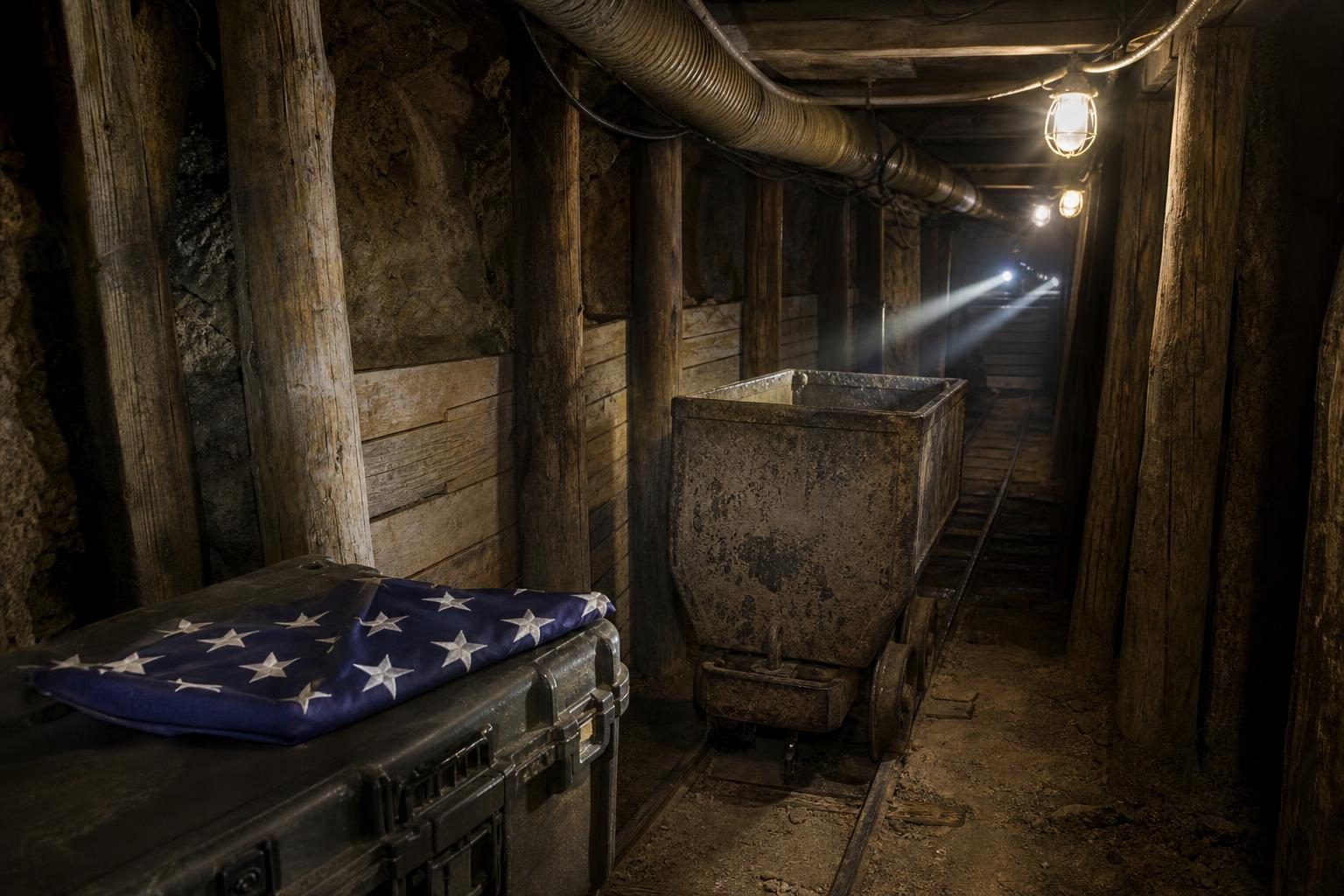
Illustration · Liberty Bell Report
Beneath the warehouses of Otay Mesa and the storm drains of El Paso, a quieter front in the fight for the southern border is waged in the dark. A small corps of federal agents nicknamed the "tunnel rats" crawls into the passages that cartels carve under the boundary line, mapping them, gathering evidence and closing them down. A new feature from NTD profiles these teams and describes tunnels dug with pickaxes and shovels that can sometimes stretch for miles.
Their work rarely makes the evening news unless a tunnel is spectacular. Yet the public record compiled by federal prosecutors and the Border Patrol shows a patient, well-financed criminal enterprise that keeps digging no matter what is built above ground. Understanding how these tunnels are made, who is forced to dig them and what they carry says a great deal about what securing the border really requires.
The Agents Who Go Underground
The Epoch Times went underground with the team on Sept. 17, 2026, at a narco-tunnel in the Otay Mesa area of San Diego, and described Border Patrol agent Michael Sablan, a two-decade veteran, leading the way through a cramped passage. Sablan is a member of the San Diego Tunnel Task Force, whose agents are known as the "Tunnel Rats". The team's leader, Lance LeNoir, helped create the task force in 2010 and has led it ever since, the outlet reported.
The size of their caseload is sobering. Since 1993, nearly 200 tunnels have been discovered along the southwest border, roughly half of them in the San Diego area, The Epoch Times reported, citing the Border Patrol. Federal prosecutors in the Southern District of California count 99 subterranean passages found in their district alone over that same span.
San Diego draws so many diggers for a reason that is plain on a map: the urban sprawl of Tijuana presses right up against the industrial parks of Otay Mesa, where trucks, loading docks and warehouses offer cover for both ends of a smuggling route. A tunnel that surfaces inside a busy commercial building can move product without ever crossing a checkpoint.
How a Narco-Tunnel Is Built
The most ambitious tunnels read like engineering projects. In January 2020, authorities announced the longest smuggling tunnel ever found on the southwest border, a 4,309-foot passage that began in an industrial area of Tijuana. FOX 9 reported that the tunnel ran about 70 feet below the surface, measured roughly 5.5 feet high and 2 feet wide, and was fitted with a rail-and-cart system, ventilation and electrical cables. Mexican authorities had found its entrance in August 2019, and it far surpassed the previous record of 2,966 feet, set by a San Diego tunnel found in 2014. No arrests or drug seizures were announced at the time.
The same pattern surfaced again this year. According to the U.S. Attorney's Office in San Diego, a tunnel uncovered in late May 2026 dropped about 55 feet below ground, was reached by a hydraulic lift, and had both electricity and ventilation. Its exit was hidden beneath the floor of a storage room inside a supposed retail store in Otay Mesa called Buy 4 Less. Prosecutors said the passage ran roughly 1,064 feet from the store to the border, with an estimated 800 more feet on the Mexican side.
Not every tunnel is dug from end to end. In El Paso, federal investigators in January 2025 found a passage from Ciudad Juárez that connected to the city's public storm drain system, according to the Drug Enforcement Administration. Tapping into infrastructure that already runs beneath an American city spares the cartels much of the digging and hands smugglers a ready-made network of exits.
The Human Toll in the Dark
Behind every tunnel is grueling, dangerous labor, and the people doing it are often not there by choice. NTD's feature reports that the laborers are often coerced at gunpoint or forcibly addicted to drugs. The Epoch Times reported that some diggers are paid in drugs, while in other cases men have been forced to dig under horrific conditions, sometimes blindfolded or hooded and driven by van to the tunnel site.
The tunnels carry people, too. The DEA announced in September that a Mexican national pleaded guilty to an alien smuggling conspiracy that used the Juárez-to-El Paso passage. The FBI said the tunnel was built by the Jalisco New Generation Cartel, known as CJNG, to support the smuggling of people, drugs and firearms.
For Americans who believe every person bears the image of God, this is the part of the story that should linger. The men driven underground to dig and the migrants who pay cartels to crawl through storm drains are being used by the same organizations that push cocaine into American neighborhoods. Closing a tunnel is drug enforcement, but it also breaks one link in a chain of exploitation that treats human beings as tools.
Following the Cargo
The most recent San Diego case shows what is at stake in a single passage. Agents seized about 1,029.6 kilograms, or roughly 2,270 pounds, of suspected cocaine worth more than $45 million, prosecutors said. Investigators had watched the warehouse from December 2025 to May 2026, a reminder that a single tunnel case can consume half a year of patient police work before agents ever see the shaft. On May 29, they seized packages from a van, stopped a second truck where a police dog alerted to drugs, and then found the tunnel's exit inside the store.
Four people were charged with conspiring to distribute controlled substances, and one also faces counts of conspiring to use a cross-border tunnel and to import drugs. U.S. Attorney Adam Gordon tied the case to CJNG, and his office noted that the last operational tunnel found in the district before this one was in 2022.
That cartel link matters. Two of the most notable recent tunnels, one in San Diego and one in El Paso, have been tied by federal officials to the same organization. These are not the work of freelancers with shovels. They are capital projects financed by transnational criminal groups that expect a steady return on what they bury.
Technology, Policy and the Road Ahead
Stronger barriers and surveillance above ground push smugglers below it, and the Trump administration has moved to meet them there. The Center Square reported that the Department of Homeland Security issued a solicitation for a roughly $100 million contract to expand its Persistent Surveillance and Detection system under the Cross Border Tunnel Threat program. Customs and Border Protection was to award the contract in the first quarter of fiscal 2026, with work in California and other southwest border locations slated for completion by Dec. 31, 2026. The system is designed to provide continuous detection in high-risk areas, including finding links to existing infrastructure and estimating where a tunnel crosses the line. The outlet reported that the El Paso storm-drain tunnel and a large narcotics tunnel linking Tijuana to the San Diego area helped drive the push. With that completion date now only weeks away, whether the expansion is in place and producing results along the most heavily tunneled stretches of the line will be a fair test of the investment.
Still, the record suggests no sensor will finish the job alone. The 2026 San Diego tunnel was uncovered through months of patient surveillance, a vehicle stop and a drug-sniffing dog. And once a tunnel is found, someone still has to go inside, which is exactly what the agents in the Epoch Times account do.
For conservatives who have long argued that border security is a matter of national survival, the tunnels are a reminder that the border has a third dimension. A wall can stop a ladder, but it cannot stop a crew digging 55 feet beneath it. The agents who crawl into those passages deserve the funding, the tools and the public gratitude their work has earned.
Sources
- NTD News: How America’s ‘Tunnel Rats’ Defend the Southern Border (link)
- The Epoch Times: We Went Into a Narco-Tunnel With the Elite ‘Tunnel Rats’ (link)
- FOX 9: Authorities find longest Southwest border smuggling tunnel (link)
- U.S. Attorney's Office, Southern District of California: Four Charged with Trafficking More Than $45 Million Worth of Cocaine Through Sophisticated Cross-Border Tunnel (link)
- Drug Enforcement Administration: Mexican National Pleads Guilty to Alien Smuggling Conspiracy Using an Underground Tunnel (link)
- The Center Square: Trump admin cracking down on cartel tunnels at southwest border (link)
— 30 —