Health & Medicine
Put Down the Rinse, Pick Up the Thermometer: A Family Guide to a Safe Thanksgiving Table, From the Weekend Thaw to the Last Leftover
USDA's 2026 holiday guidance and the nation's fire experts agree on a few simple habits that keep the people around your table healthy, from skipping the sink to watching the stove.
By SAMUEL ADEYEMIStaff Correspondent · WASHINGTON · Nov 21, 6:39 PM · 5 min. read
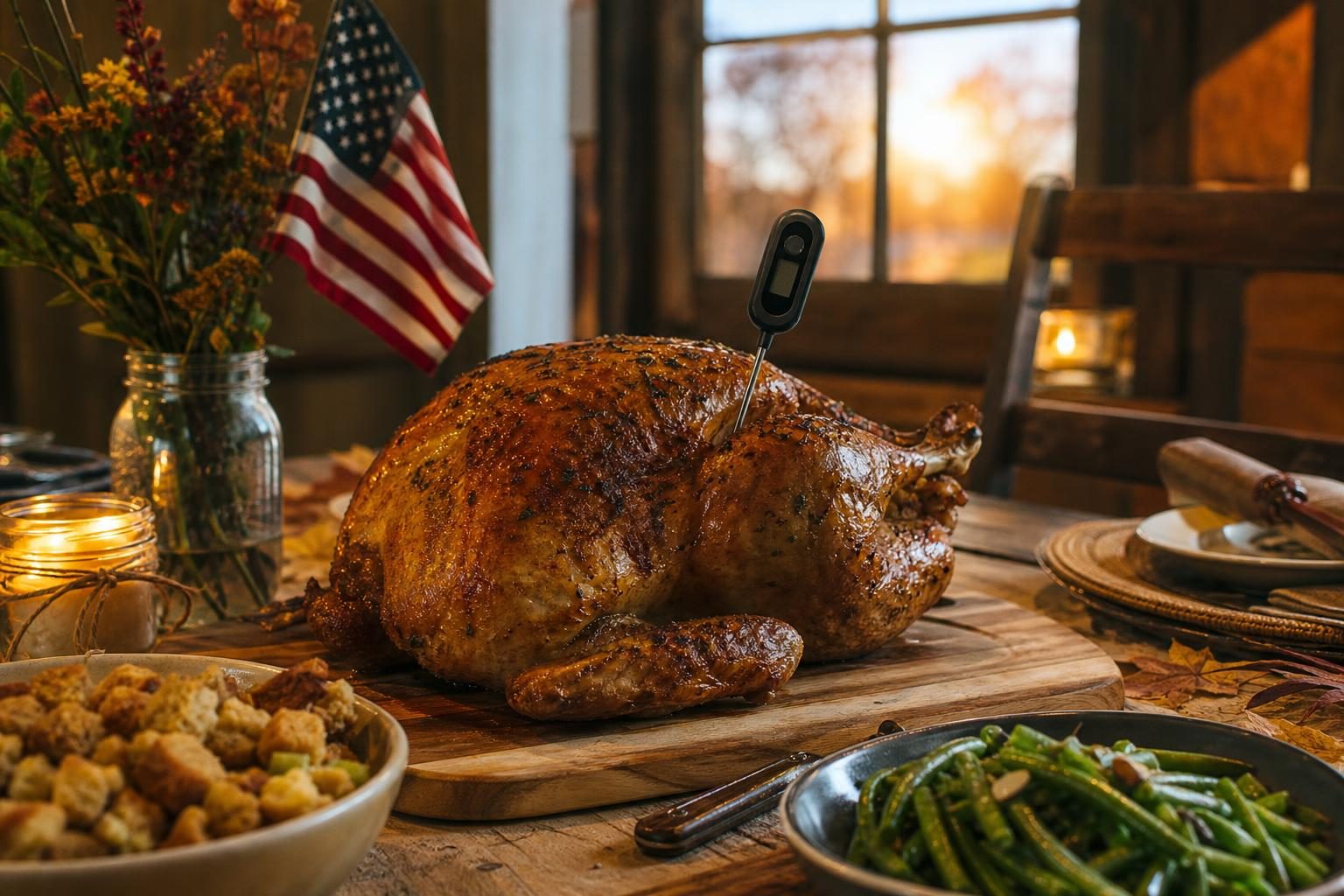
Illustration · Liberty Bell Report
Thanksgiving is the one day a year when millions of Americans who usually cook for two suddenly cook for twelve. The Associated Press, in its holiday food-safety guide, put it plainly: many people used to simple meals find themselves responsible for safely serving a multi-dish feast. That is a happy problem, and a solvable one. The U.S. Department of Agriculture has issued its 2026 holiday guidance, and the advice comes down to a handful of habits any family can master before Thursday.
Here is what the experts want you to know, in the order you will need it.
Start the Thaw This Weekend
The most common Thanksgiving mistake happens days before anyone sets the table. The USDA's rule for a frozen turkey is to thaw it in the refrigerator, allowing about 24 hours for every 4 to 5 pounds. By that math, a 16-pound bird needs three to four days, and a 20-pound bird needs four to five. If your turkey is that size and still in the freezer, the clock starts now.
Short on time? The cold-water method works faster: submerge the wrapped turkey in cold water and allow about 30 minutes per pound, changing the water every 30 minutes so it stays cold. What you should never do, the USDA says, is thaw the bird on the counter. The outside of the turkey warms into the danger zone long before the center thaws.
The USDA's online Safe Thanksgiving Guide includes an interactive calculator that works out thawing and cooking times for the size of your bird, a handy tool for first-time hosts.
A simple plan for the week helps. If your bird is large, move it this weekend from the freezer to a rimmed tray on the bottom shelf of the refrigerator, where any drips cannot reach other food. Make room by clearing out old leftovers and drinks; a cooler packed with ice can hold sodas and water for guests. Buy fresh produce and dairy early in the week, make the casseroles and desserts that hold well on Tuesday or Wednesday, and save Thursday morning for the turkey, the stuffing and the thermometer. A sticky note on the oven door with the planned start time keeps every helper in the house on the same page.
Why the Rinse Does More Harm Than Good
Many of us learned to rinse the turkey from a mother or grandmother who did it every year. The science now says to stop. Rinsing raw poultry does not wash bacteria away; it splashes them onto the sink, the counter and nearby food.
The USDA tested this in a kitchen study. Among participants who washed raw poultry, 60 percent had bacteria in their sink afterward, and 14 percent still had bacteria in the sink even after they tried to clean it. More troubling, 26 percent of those who washed their poultry transferred bacteria to salad lettuce that was meant to be eaten raw. That is how a beautiful meal becomes a miserable weekend.
The better habit is handwashing. The USDA advises washing hands with soap and water for at least 20 seconds after touching raw turkey. Clean cutting boards, knives and counters before they touch anything else, and keep one board for the bird and another for vegetables and bread.
The Only Test That Counts: 165 Degrees
Golden skin and clear juices are signs of a good cook, not proof of a safe one. The only reliable test is a food thermometer. The USDA says the turkey is done when it reaches 165 degrees Fahrenheit in three places: the thickest part of the breast, the innermost part of the wing and the innermost part of the thigh. Check all three. Ovens have hot spots, and a bird can be done in one place and underdone in another.
Stuffing deserves special care. When it is cooked inside the turkey, its center must also reach 165 degrees. Because getting the stuffing safe can mean overcooking the meat, the USDA suggests baking the stuffing in a separate casserole dish. Plenty of cooks find they like the crispy edges better anyway.
Sides, Buffets and the Two-Hour Rule
Bacteria grow quickly between 40 and 140 degrees, the range food safety experts call the danger zone. That is why the USDA's two-hour rule matters: food that has been sitting out should be refrigerated within two hours, or within one hour if it is hotter than 90 degrees. For most families, the risk is not the turkey itself but the long, happy afternoon when the platters sit on the table through a football game and a second round of pie.
A few practical steps help. Set a phone timer when dinner is served. Keep hot dishes hot in a warm oven or slow cooker, and keep cold dishes cold on ice or in the refrigerator until they are needed. Carve leftover turkey off the bone and divide large portions into shallow containers so they chill quickly.
The Busiest Day of the Year for Kitchen Fires
Food safety is half of a safe holiday. Fire safety is the other half. The National Fire Protection Association reports that Thanksgiving is the peak day of the year for home cooking fires in the United States, with several times as many as an ordinary day. Unattended cooking is the leading factor in home cooking fires and the deaths they cause.
The lesson is simple: someone should always be in the kitchen when the stove is on. Keep towels, oven mitts and paper packaging away from the burners. Keep children and pets a safe distance from the stove, and keep a lid or baking sheet nearby to smother a small pan fire. Never throw water on a grease fire.
If you are tempted by a deep-fried turkey, know that the NFPA strongly discourages oil-based turkey fryers, which can cause devastating burns, and points to alternatives such as infrared, air or electric fryers. Fire officials who do fry advise making sure the bird is fully thawed and the pot is not overfilled with oil. A partly frozen turkey and a pot of hot oil are a dangerous combination.
Leftovers, Gratitude and Help When You Need It
Leftovers are part of the tradition, and they can stay safe for days. The USDA says refrigerated leftovers are good for up to four days, and they can be frozen to keep longer. When you reheat them, bring them back up to 165 degrees before serving. When in doubt, throw it out.
If a question comes up in the middle of cooking, help is a phone call away. The USDA's Meat and Poultry Hotline, 1-888-MPHotline (1-888-674-6854), fields many holiday questions every year, and the department's online guide answers many more.
These small habits matter because of who is sitting at the table. Thanksgiving is often the one meal where the youngest grandchild and the oldest grandparent share the same platter, and they are the guests we most want to protect. A thermometer, a timer and a bar of soap are small investments in their health.
The first Thanksgivings were acts of gratitude for a harvest that carried families through the winter. Keeping our own families safe at the table is a quiet way of carrying that gratitude forward. Thaw early, skip the rinse, trust the thermometer, watch the stove and put the leftovers away on time. Then sit down, give thanks and enjoy the meal.
Sources
- The Washington Times: Stop washing your turkey. If you want a safe Thanksgiving, here's what to do instead (link)
- USDA: The Recipe for a Safe Thanksgiving (link)
- USDA Food Safety and Inspection Service: Your Safe Thanksgiving Guide (link)
- Valley News Live: How to thaw, cook and store your Thanksgiving turkey safely, according to the USDA (link)
- USDA: Washing Raw Poultry: Our Science, Your Choice (link)
- AOL: Thanksgiving is No. 1 day for home cooking fires, fire officials warn (link)
— 30 —