Health & Medicine
'No Longer Viable': Wisconsin Gov.-Elect David Crowley Sets Aside Full Medicaid Expansion as New Federal Rules Change the Math
The incoming Democrat now says the federal money for expansion is gone and is eyeing a state-run exchange instead. Governors-elect in Georgia, Texas and Kansas face the same wall.
By SAMUEL ADEYEMIStaff Correspondent · WASHINGTON · Nov 22, 9:30 AM · 3 min. read
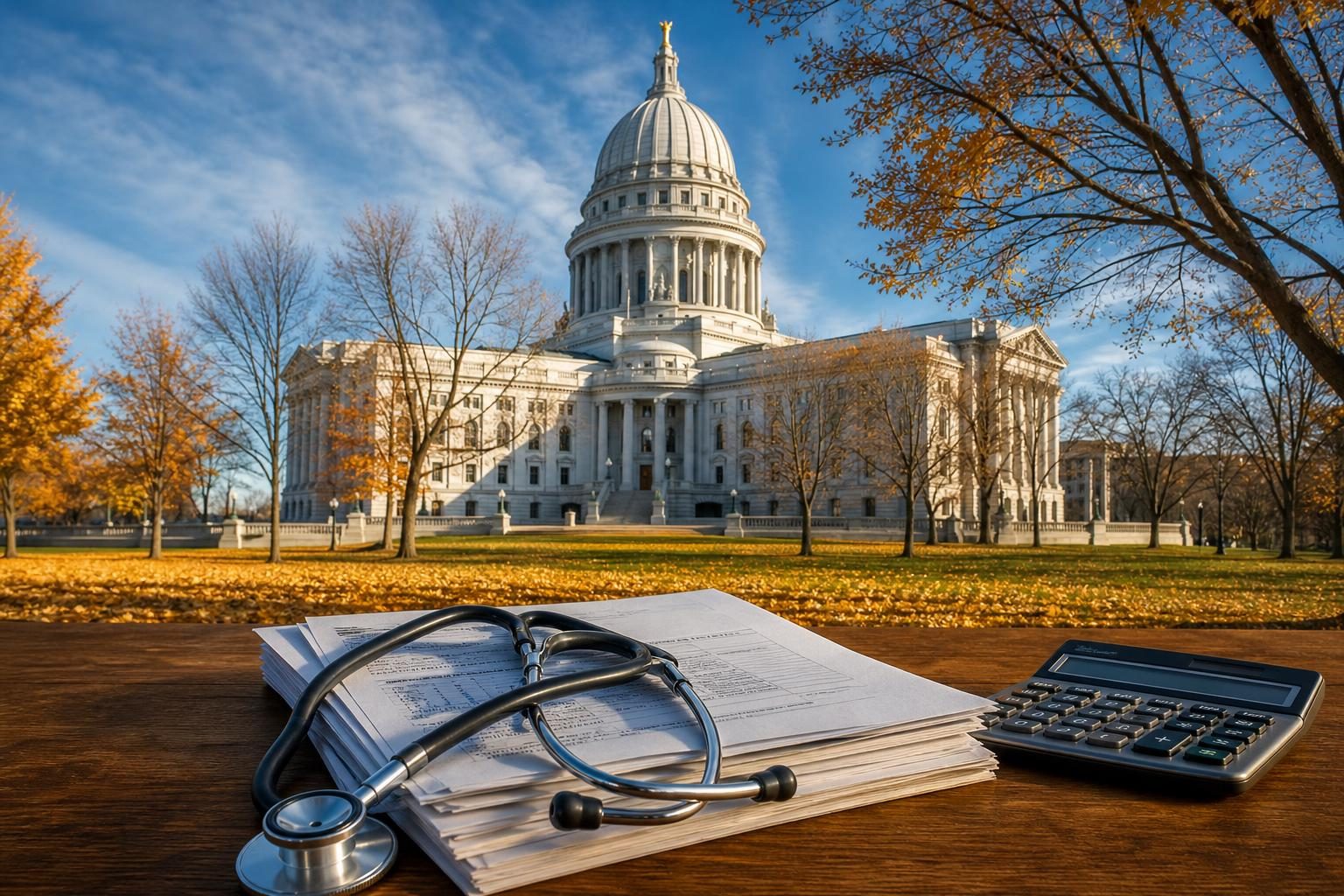
Illustration · Liberty Bell Report
Wisconsin's incoming Democratic governor campaigned on expanding Medicaid. Weeks before he takes office, he has concluded the math no longer works.
Gov.-elect David Crowley's campaign said the path to full Medicaid expansion is no longer viable because federal changes mean the money once on the table is gone, Townhall reported, quoting the campaign. His team told The Center Square he remains committed to widening access to affordable health care, and a spokesperson said he will work with legislative leaders and state agencies to weigh projected costs, available revenue and existing commitments before deciding on a path.
The state's own Department of Health Services has described expansion as cost and policy prohibitive under the new federal financing rules, The Center Square reported.
What Changed in Washington
The shift traces back to last year's federal tax and spending law. That law ended the financial bonus Washington offered states that newly expand Medicaid, set lower caps on the federal money expansion states can use for provider payments than other states receive, and requires many adult enrollees to show they work or complete at least 80 hours of other qualifying activities a month, the News Tribune reported. The White House has allowed states to delay the work rules, originally set for Jan. 1, by six months.
The federal government still pays 90% of the cost of covering the expansion population, Axios noted. But with the extra incentive gone and new limits in place, Axios reported, the case for expanding is not what it used to be.
Crowley's Fallback Plan
Instead of a full expansion, Crowley is exploring other ways to widen coverage in the near term, including a state-run health insurance exchange with a public option, according to Axios.
Wisconsin is among the states that never adopted the full Medicaid expansion offered under the Affordable Care Act, and Democrats there have long argued the state was leaving federal dollars on the table. Crowley's decision means that argument has changed. The dollars, in his campaign's own telling, are no longer there.
Other New Governors Face the Same Wall
Wisconsin is not alone. Four incoming Democratic governors, in Wisconsin, Georgia, Texas and Kansas, campaigned on expanding Medicaid, and all now face the same federal rules, the News Tribune reported.
In Georgia, Gov.-elect Keisha Lance Bottoms intends to pursue full expansion next year, but also wants to streamline the state's existing limited program, called Pathways to Coverage, as an interim step, according to Rough Draft Atlanta. In Georgia and Texas, Republicans still control at least one chamber of the legislature, making expansion a heavier lift, and some Texas Democrats have floated trigger bills that would expand Medicaid automatically if Congress rolls back parts of the federal law. In Kansas, where full expansion has long eluded lawmakers, Gov.-elect Cindy Holscher won a close race.
Why It Matters
Crowley deserves credit for telling voters the truth before he takes the oath rather than after. Promises are easy on the campaign trail. Budgets are where they meet reality.
The broader lesson is about who pays. Medicaid expansion was always a partnership in which states shouldered a share of the cost and Washington picked up the rest. When the federal share stops growing and new safeguards like work requirements arrive, governors have to decide whether their taxpayers can carry more of the load. Crowley has looked at Wisconsin's numbers and decided that, for now, the answer is no.
That is a sober choice, and it should not be lost in the partisan noise. Work requirements reflect a principle most Americans share: able-bodied adults who can work should be working or preparing to work, and public help should be a bridge back to independence. Health care for the truly needy, from children to the disabled to the frail elderly, is a duty a compassionate society takes seriously. So is spending other people's money wisely.
What Comes Next
Crowley takes office in January. The questions now are what a state-run exchange would cost, who would run it, and whether lawmakers of both parties can agree on ways to reach the uninsured without a full expansion.
Families in Wisconsin and the other three states should watch for those details, along with the work rules taking effect in 2027, as each new governor decides how far to go.
Sources
- The Center Square via Newsline Local: Wisconsin Gov.-elect Crowley won't expand Medicaid, hopes to increase access (link)
- Axios: Medicaid expansion isn't a "slam dunk" for new Dem governors (link)
- News Tribune: These governors-elect campaigned on expanding Medicaid — it won't be easy (link)
- Townhall: David Crowley Officially Axes One of His Major Campaign Promises Weeks Before His Inauguration (link)
- Rough Draft Atlanta: Bottoms, other governors-elect face Medicaid expansion hurdles (link)
— 30 —