Florida & Southeast News
How Florida Held the Line Against the Blue Wave, and Whether Its Republican 'Seawall' Can Last
As Democrats took the House and Senate, Florida elected Republicans Byron Donalds and Ashley Moody; now DeSantis, Rick Scott and Democrats are fighting over what the result means.
By TOMÁS ORTEGAStaff Correspondent · FLORIDA · Nov 13, 4:15 PM · 5 min. read
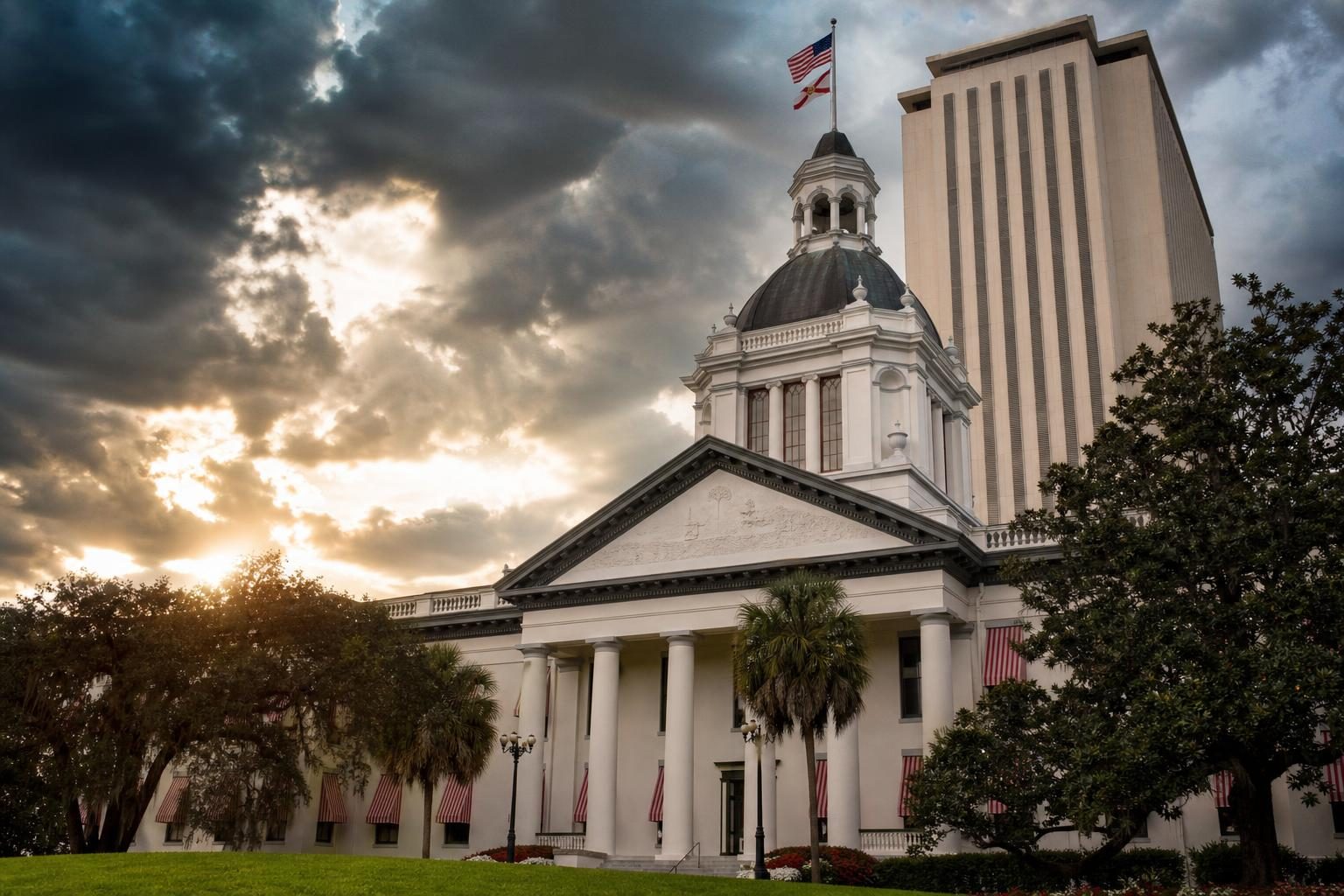
Illustration · Liberty Bell Report
When the votes were counted on Nov. 3, Democrats had won control of both the U.S. House and the Senate. Yet in Florida, Republicans Byron Donalds and Ashley Moody won the races for governor and U.S. Senate, Florida Trend reported. Ten days later, the question in Tallahassee and in Washington is no longer whether Florida held, but why it held, where it bent, and whether it can keep holding.
The Economist put the shift in historical terms this week, describing the state that was the ultimate swing state in 2000 as the bastion of Republicanism in 2026. For a party searching for answers after a national drubbing, that makes Florida something more than a bright spot. It makes it a case study.
A Swing State No More
Older readers remember Florida as the great battleground of the 2000 presidential election, the very picture of a state that could go either way. This year it did not wobble at the top of the ticket. While Democrats were sweeping into power elsewhere, Florida voters kept the governor's mansion and a U.S. Senate seat in Republican hands.
The Senate result was especially telling. Angie Nixon, the Democratic Socialist nominee, lost her race by 3 points, the Washington Free Beacon reported, even as the "blue tsunami" carried many far-left Democrats to surprise victories in other states. Moody, a Republican, holds the seat.
In a year when the national environment was this hostile to Republicans, a statewide Senate win in a once-purple state is not a small thing. It suggests that the realignment Florida has undergone over the past decade is built on more than one good election cycle.
The Governor's Case: A Seawall
Gov. Ron DeSantis has been quick to offer his own explanation. TheBlaze reported that DeSantis argued there was a reason his state was not swallowed by the blue wave, and summed it up in a phrase: "We had a seawall". TheBlaze, which described the midterms as a brutal wake-up call for the party, also reported that DeSantis sounded an alarm about Republican losses across the rest of the country, warning that they amounted to a threat to the party's very survival.
The image is a fitting one for a coastal state that knows hurricanes. A seawall is built in calm weather, long before the storm arrives, and it works only if someone has done the unglamorous work of maintaining it. Whether one agrees with every policy DeSantis championed, the results in his state are the strongest evidence any Republican governor can point to this year.
In this reporter's view, that record has put DeSantis back in the national conversation as Republicans look for leaders who know how to win in a difficult climate.
A Family Quarrel Over Credit
Not every Florida Republican is ready to hand the governor the trophy. Sen. Rick Scott is rekindling his feud with DeSantis, the Washington Examiner reported on Thursday. The Examiner, noting that Florida only partially avoided the blue wave, reported that Scott suggested in an interview that Election Day was actually a letdown for state Republicans and that DeSantis should not be putting the spotlight on himself.
Scott's critique is worth taking seriously, even for those who admire the governor. The wall held at the top of the ticket, but it was not seamless. Republican Rep. María Elvira Salazar held her House seat by the narrowest of margins. Just the News reported that the Associated Press called her race one week after Election Day, with Salazar taking 50.2% of the vote to Democrat Eliott Rodriguez's 49.8%, a gap of roughly a thousand votes.
A margin of a thousand votes is a warning sign. It suggests that even in Florida, the coalition that delivered big Republican wins in recent years can be tested when the national mood turns.
The public sparring between Scott and DeSantis is not new, but its timing matters. Republicans nationally are looking for a playbook, and two of Florida's most prominent conservatives are offering different readings of the same results.
Democrats Look for Someone to Blame
On the other side, Florida Democrats are dealing with a loss that stings more because of what happened elsewhere. The Free Beacon reported that Nixon has spent the days since her defeat accusing her own party of racism, launching a political action committee of her own and lashing out at critics.
That reaction tells its own story. A party that won the House and the Senate nationally could not convert that energy into a Senate seat in Florida, and its nominee is now blaming her allies rather than reckoning with why Florida voters said no. For Florida conservatives, the lesson is that the state's voters were not persuaded by a candidate running from the far left, even in a year built for Democrats.
Lessons for the Rest of the Party
For Republicans outside Florida, the contrast on the map is hard to ignore. The same national mood that swept away Republicans elsewhere ran into a state where the party kept winning statewide. That does not mean every Florida policy can be copied and pasted into Pennsylvania or Arizona. It does mean the national party should study what voters in a large, diverse and fast-growing state saw in Florida Republicans that they did not see in the party elsewhere.
Three lessons stand out from this desk's reading of the results. First, a record of governing matters more than slogans; DeSantis's seawall argument is ultimately a claim about results. Second, unity matters, and the public feud between Scott and DeSantis is a reminder that internal fights can distract from the work. Third, no seat is safe by default, as Salazar's thousand-vote race showed. A party that learns all three will be in better shape for the next storm.
What Comes Next
The next tests come quickly. Donalds will take over the governor's office from DeSantis, and Moody will serve in a Senate where Republicans no longer hold the majority. Florida's Republican officials will be governing as a state-level stronghold while Democrats run Congress, a position that could make Tallahassee one of the most important centers of conservative policy in the country.
Watch three things in the months ahead. The first is how Donalds governs once he takes office, and whether he can hold together the coalition that elected him. The second is whether the Scott-DeSantis feud cools or spills over into the early jockeying for 2028. The third is what becomes of Nixon's new PAC, and whether Florida Democrats move further left or back toward the center after a defeat their own nominee blames on her party. DeSantis's warning about the national losses is a reminder that Florida alone cannot carry the party.
From this desk, here is the plain reading. In my view, Florida held because, for years now, its Republican leaders have run on issues that matter to families: safe streets, parents' rights, low taxes and a government that does not apologize for the state's values. Voters stayed with them even when the rest of the country swung hard the other way.
But a wall is only as strong as the effort to maintain it. A House race decided by a sliver, the squabbling over credit and the national wreckage around the state are all reminders that nothing in politics is permanent. If Florida Republicans want to remain the party's anchor, the work of earning voters' trust begins again now, under a new governor, with a new Congress in Washington and a 2028 contest already on the horizon.
Sources
- The Economist: How Florida withstood a blue wave (link)
- Florida Trend: Donalds, Moody win in Florida as Democrats win the U.S. House and Senate (link)
- TheBlaze: 'Extinction-level event': DeSantis sounds alarm on GOP losses after Florida win (link)
- Washington Examiner: Rick Scott takes swipe at Ron DeSantis after midterm victory lap in Florida (link)
- Washington Free Beacon: Angie Nixon accuses Democrats of 'racism' after losing despite blue tsunami; launches PAC (link)
- Just the News: Florida Republican Maria Elvira Salazar projected to win reelection one week after vote (link)
— 30 —