Florida & Southeast News
Donalds Bets on the Atom: Florida's Next Governor Wants Nuclear Power Back in the Mix
The governor-elect is pressing for small reactors to power a fast-growing state. Florida's biggest utilities say any new unit is more than a decade away.
By TOMÁS ORTEGAStaff Correspondent · ARIZONA · Nov 28, 3:00 PM · 3 min. read
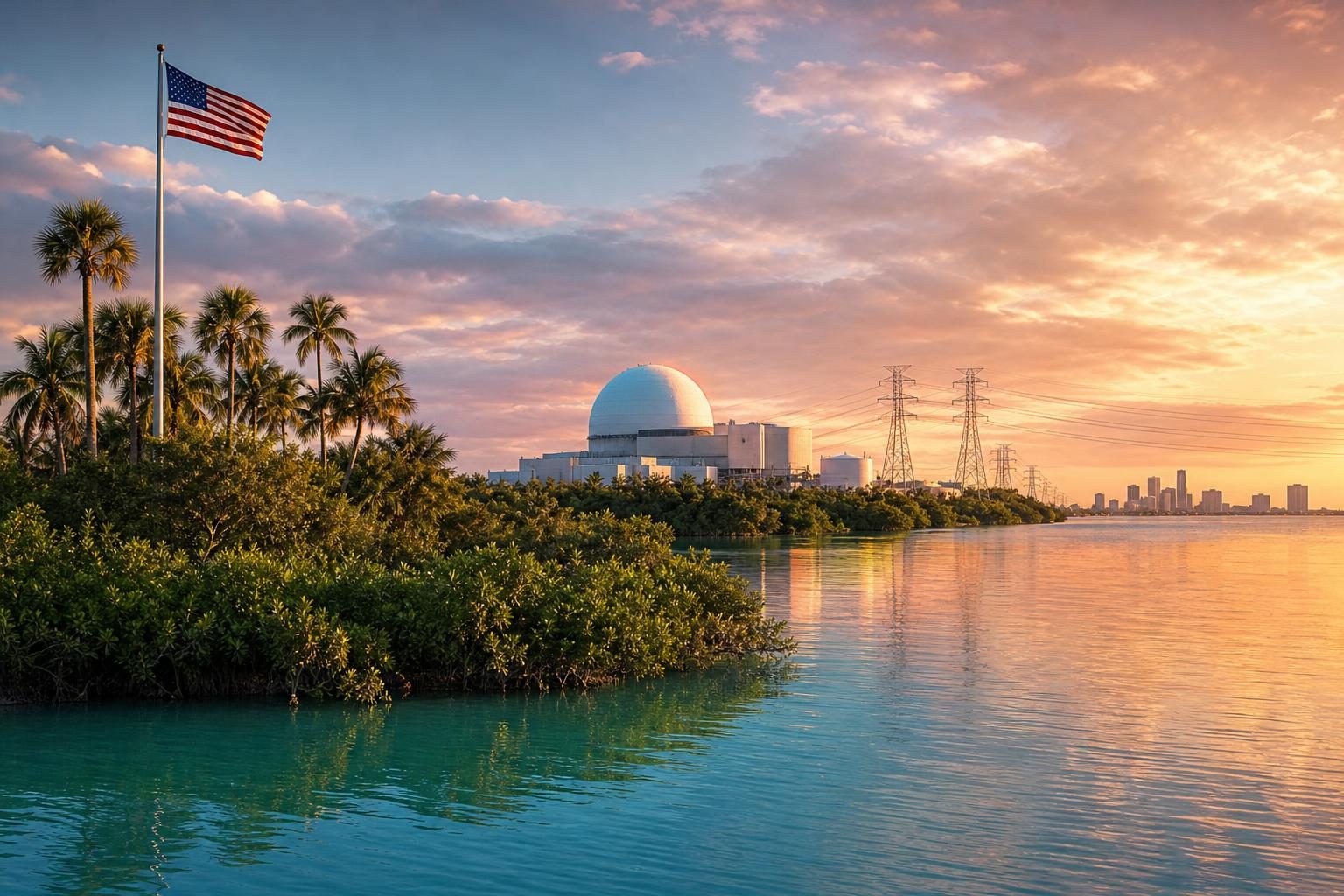
Illustration · Liberty Bell Report
Florida's next governor wants the Sunshine State to go nuclear again. Governor-elect Byron Donalds is pressing to make small modular reactors and microreactors part of Florida's energy future, even as the state's biggest utilities tell regulators that any new reactor is more than a decade away, Volt Grid News reported.
Donalds, a Republican congressman from Southwest Florida, won the governor's race this month by defeating Democrat David Jolly, S&P Global reported. Energy use by data centers and resilience against hurricanes were among the issues in the race, according to the same report. He takes office in January with a clear message on power: Florida is growing fast, and it needs electricity that is reliable, affordable and made at home.
What Donalds Wants
Donalds has been making the case for years. In a May interview with The Floridian, he said he sees the future of the power grid in nuclear energy, including small modular reactors and microreactors. As governor-elect, he has described the state's role as laying the groundwork for those smaller reactors while pressing federal regulators to speed up approvals, Volt Grid News reported.
He has been just as blunt about the alternative. In September, Donalds called solar power a "fad," even as Florida's utilities keep adding solar farms, the Florida Phoenix reported. His argument is not that solar has no place. It is that a state as big and fast-growing as Florida cannot run its hospitals, air conditioners and factories on power that disappears when the sun goes down or a hurricane parks over the coast. Nuclear plants run around the clock, in any weather.
What the Utilities Say
Florida's power companies are more cautious. Florida Power & Light's April site plan begins early permitting work in 2026 and 2027 but puts any new small reactor after 2035, outside its 10-year planning window, according to a Public Service Commission review cited by Volt Grid News. FPL spokesman Andrew Sutton said the company has a team studying the technology so it could move quickly if it becomes cost-effective.
Duke Energy Florida's plan calls for new solar and upgrades to existing plants, not new nuclear units. Tampa Electric has looked at small modular reactors as a possible answer, but a spokeswoman said the technology is not yet commercially viable. Industry watchers point to high costs, regulatory hurdles and long timelines as the reasons the reactors Donalds wants are still years from delivering power on the scale he envisions. Critics have also warned that loosening federal oversight to speed things up could put safety at risk.
Florida's Nuclear Past
Florida knows both the promise and the pain of nuclear power. FPL's Turkey Point plant near Homestead and its St. Lucie plant on Hutchinson Island have produced power since the 1970s, with two reactors each, according to the U.S. Energy Information Administration. The state's last big push for new reactors ended badly. Plans for two large reactors in Levy County stalled amid what WUFT described as a mix of unforeseen setbacks and financing trouble, and the project was shelved. Duke has no concrete plans to build there but has not ruled out revisiting the site, WUFT reported in May.
That history is exactly why the new generation of reactors matters. Small modular reactors are designed to be built in factories and shipped in pieces, with the goal of avoiding the cost overruns that sank big projects. Microreactors are smaller still, sized for a single base, campus or industrial site.
Why It Matters to Florida Families
For families, the debate comes down to the monthly bill and the lights staying on. Florida's population keeps climbing, and the data centers that power the digital economy want huge amounts of electricity. Every new megawatt has to come from somewhere. A governor who wants more of it to come from American nuclear plants, rather than from sources that fade at sunset, is making a long-term bet on energy independence.
What Comes Next
The next moves are practical ones. Donalds will need the Legislature, the Public Service Commission and the state's utilities to line up behind his plans, and he will need federal regulators to move faster on reactor licensing. FPL's early permitting work, already on the books for 2026 and 2027, will be the first real test of whether Florida's nuclear comeback becomes steel and concrete or stays on paper. Either way, the conversation about the state's energy future has changed, and the man who changed it is about to have the governor's office to keep it going.
Sources
- Volt Grid News: Donalds Pushes Florida Nuclear; FPL Plan Puts Any SMR After 2035 (link)
- S&P Global: Republicans retain Florida governorship with Byron Donalds win (link)
- The Floridian: Byron Donalds Throws Support Behind Nuclear Power if Elected Governor (link)
- Florida Phoenix: Byron Donalds says solar power is a 'fad' but Florida utilities are expanding its use (link)
- U.S. Energy Information Administration: Florida Nuclear Profile (link)
- WUFT: Nuclear power appears poised for a comeback. Here's what that means for Florida (link)
— 30 —