Faith & Religion
An Alabama Library Shut Out a Christian Group. Now It Will Pay $45,905 and Close the Room to Everyone
Tuscaloosa's public library settled Eagle Forum of Alabama's religious-discrimination suit, dropping a rule against groups 'demonstrating the beliefs of their members' but barring every outside group from its meeting room.
By TOMÁS ORTEGAStaff Correspondent · WASHINGTON · Nov 25, 3:00 PM · 3 min. read
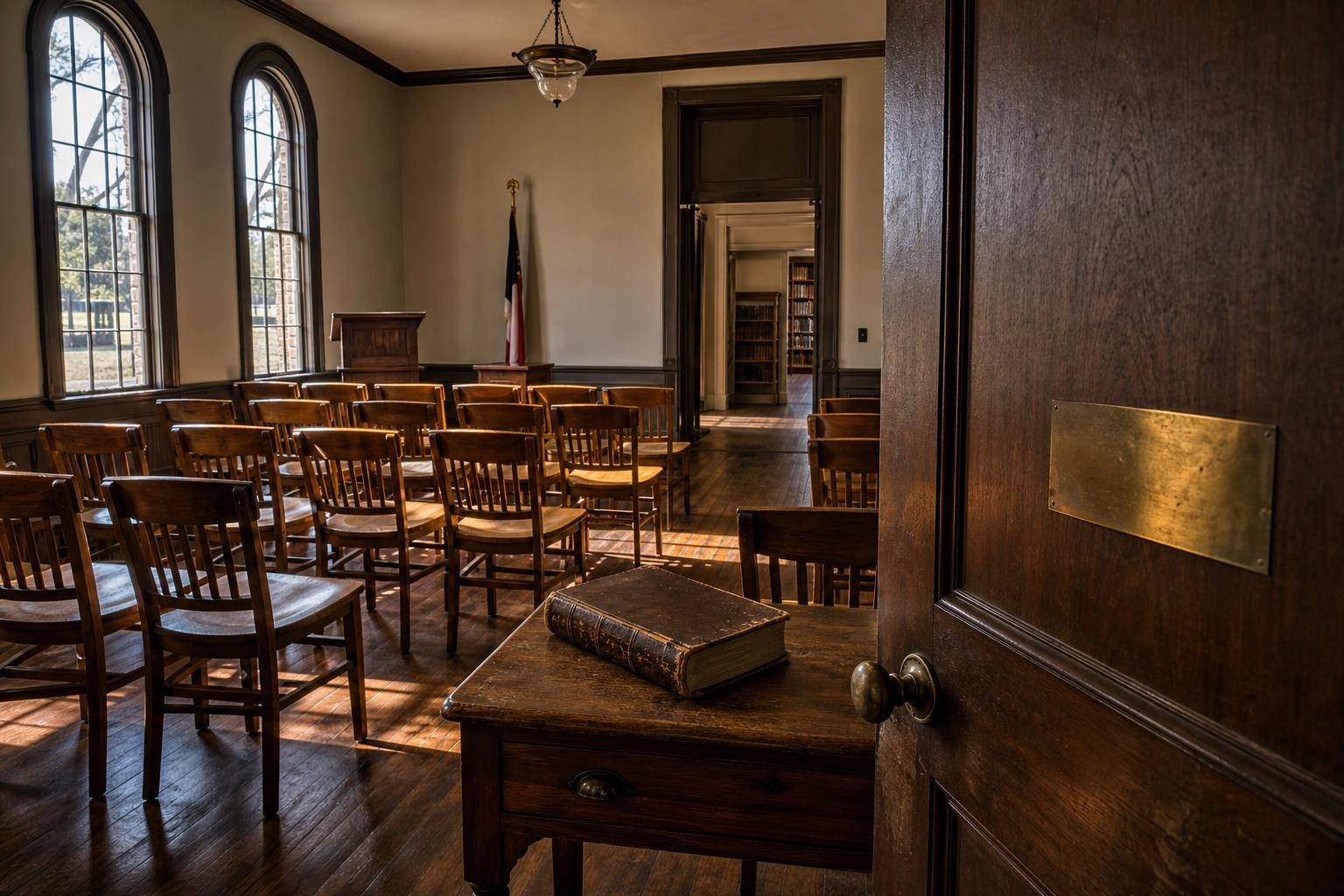
Illustration · Liberty Bell Report
A public library in Tuscaloosa, Alabama, has agreed to pay $45,905 to settle a federal lawsuit brought by a Christian advocacy group that was shut out of the library's community meeting room because of what it believes.
The settlement ends the case brought by Eagle Forum of Alabama, which was represented by Alliance Defending Freedom. The Tuscaloosa Public Library agreed to pay the group's attorney's fees and to drop the policy at the center of the dispute, and the two sides filed a stipulated dismissal. The library admitted no wrongdoing, and no judge ruled on the policy.
There is a twist that tells you a great deal about how some public institutions still think about faith. Rather than open the room to a Christian group on the same terms as everyone else, the library has decided that no outside organization, religious or secular, may use its Rotary Room at all.
How the dispute started
The trouble began when the group's Tuscaloosa chapter tried to hold events in the Rotary Room. A library staff member told the chapter by email that its two scheduled events had been cancelled. The reason was a library rule that barred groups from using the room for "preaching or otherwise demonstrating the beliefs of their members".
Eagle Forum argued that the rule singled out religious speech in a space the library had opened to the community, and that the Constitution guarantees religious groups equal access to such spaces. ADF filed suit in federal court on the group's behalf. By July, faced with that lawsuit, the library had stopped taking reservations for the Rotary Room entirely.
The law the library ran into
The library's policy collided with one of the most settled lines of First Amendment law in the country. When the government opens a public building to community groups, it may set neutral rules about time, place and use. What it may not do is exclude a group because of the religious viewpoint it brings.
The Supreme Court of the United States made that clear in Good News Club v. Milford Central School in 2001. A New York school district had opened its building to community groups after hours but refused a Christian children's club. The justices ruled 6-3 that shutting the club out because of its religious viewpoint violated the club's free speech rights. A rule against groups "demonstrating the beliefs of their members" is hard to square with that ruling, because it targets exactly the kind of speech that religious believers engage in when they gather.
An ADF attorney said the settlement makes sure the library has finally ended a policy the group considers unconstitutional. Eagle Forum's executive director took a sharper view of the library's choice to close the room to everyone, calling the result shameful for the community.
The real cost of closing the door
It is worth pausing on what the library gave up. Meeting rooms in public libraries are some of the last free civic spaces in many American towns. Book clubs, scout troops, tutoring programs, neighborhood associations, retirees and church Bible studies all use them. In Tuscaloosa, every one of those groups has now lost access to the Rotary Room because the library would not let a Christian organization in on equal terms.
Local coverage also reported that events were still held in the room while the lawsuit was pending. If other groups could meet there while a Christian group could not, that is exactly the kind of uneven treatment the equal-access cases were written to prevent.
The policy also came with a price. The $45,905 in attorney's fees is money a public library could have spent on books, computers or longer hours. Instead it went to settle a fight over a rule the library has now abandoned.
A lesson for libraries across the South
The case is one more reminder that the First Amendment protects religious speech, not only speech about religion from a safe distance. Public officials who manage libraries, city halls and school buildings across Alabama and the rest of the Southeast have a simple path to avoid the next lawsuit: write room policies that treat every group the same, whether its members gather to discuss a novel, plan a fundraiser or open the Bible and pray.
For Eagle Forum, the settlement means the policy that kept it out is gone. For the people of Tuscaloosa, the better outcome would be a library board that reopens the Rotary Room to everyone, faith groups included, and trusts its neighbors to share a public space the way Americans always have.
Sources
- The Christian Post: Public library to pay $45K after barring Christian group from meeting space (link)
- 1819 News: Tuscaloosa Public Library settles with Eagle Forum of Alabama, rescinds unconstitutional meeting space policy (link)
- Alabama Gazette: Tuscaloosa Public Library Settles Suit By Barring All Organizations (link)
- ADF Media: Tuscaloosa library closes its doors to Christian nonprofit (link)
- Alabama Gazette: Faced With A Federal Religious Discrimination Lawsuit, The Tuscaloosa Public Library Is No Longer Taking Reservations For Their Rotary Room (link)
- Oyez: Good News Club v. Milford Central School (link)
— 30 —