Energy & Environment
From Drilling Platform to Fishing Hot Spot: Washington Moves to Let About 300 Retired Offshore Rigs Stay Put as Reefs
A new federal plan would let companies leave the underwater sections of decommissioned platforms in place as artificial reefs instead of hauling them ashore. Anglers and the Gulf's long experience say it works; environmental groups worry about who pays later.
By PRIYA DESAIStaff Correspondent · WASHINGTON · Nov 19, 9:30 AM · 3 min. read
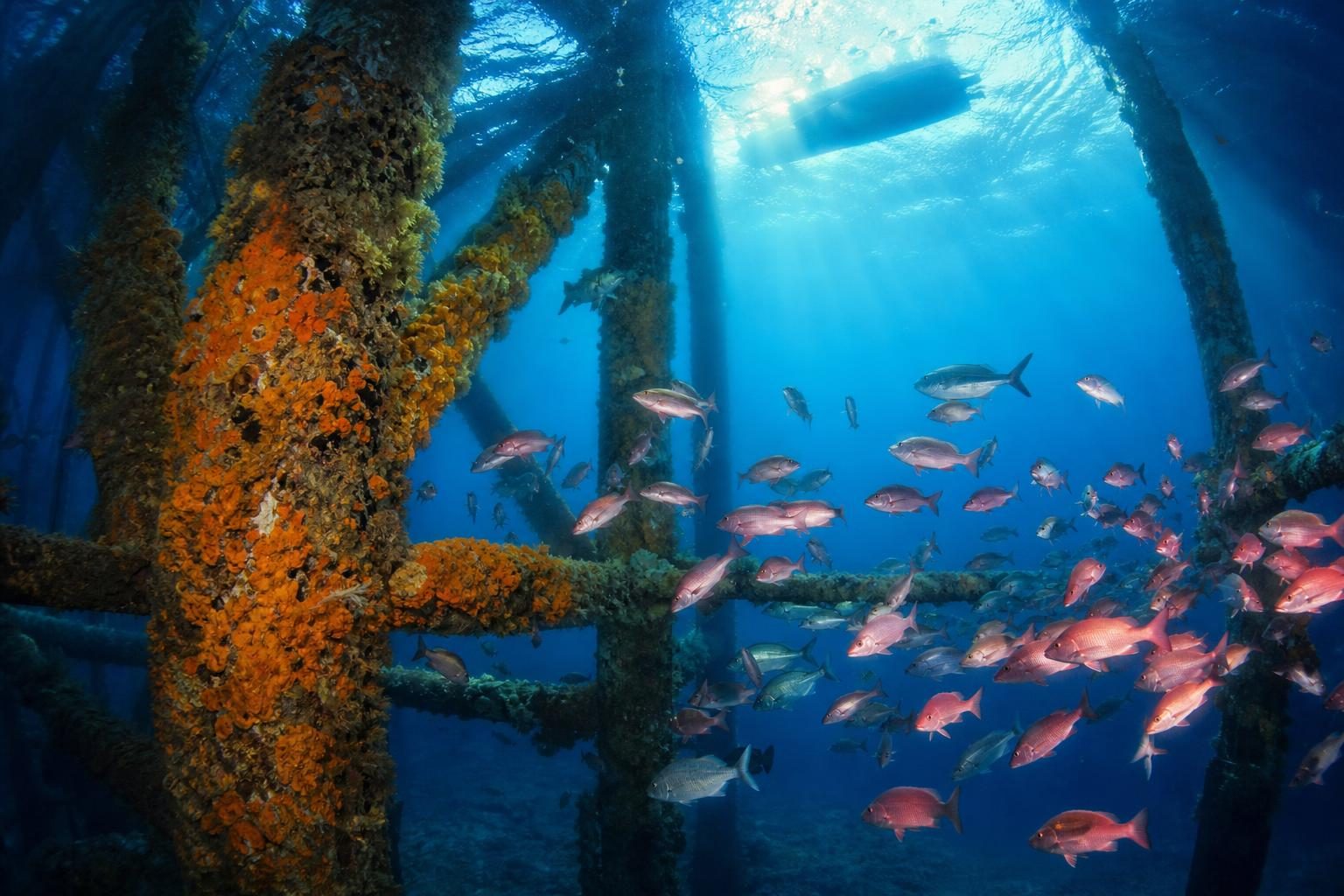
Illustration · Liberty Bell Report
Federal regulators announced a plan Monday that would let oil and gas companies leave the underwater sections of about 300 decommissioned offshore drilling platforms in place as artificial reefs, rather than hauling the massive steel structures back to shore, The Center Square reported.
The program grows out of a Sept. 17 executive order on saltwater angling and recreation, which directed the Interior Department, through its Marine Minerals Administration, to build a federal program for turning retired offshore structures into permanent reefs, according to reporting on the plan. Mike Olsen, the agency's acting director, said eligible structures can keep serving coastal communities as reefs and invited comment from states, tribes and others.
Why Old Rigs Make Good Reefs
Anyone who has fished the Gulf knows the secret. A steel platform standing in open water becomes, within a few years, a living city: coral and sponges on the legs, small fish sheltering in the crossbeams, and the snapper, amberjack and grouper that follow them. Removing the whole structure destroys that habitat at great cost, and often moves the problem to a scrapyard.
The Gulf states figured this out long ago. They already run rigs-to-reefs programs, and hundreds of retired platforms in the Gulf have been converted into artificial reefs, according to the Congressional Research Service. The federal safety regulator has studied the same approach for the Pacific, where platforms stand in deeper water and full removal is far more expensive.
The Money Question
The price of tearing everything out is enormous. Full removal of the 23 platforms in federal waters off California would cost more than $1.6 billion, according to Bureau of Safety and Environmental Enforcement estimates cited in coverage of the plan. As of October, California had not decommissioned any platforms for reefing, the Congressional Research Service noted.
The reefing option applies to platforms that are being decommissioned anyway, so the question is not whether they keep pumping but what happens to the steel left beneath the surface. Supporters of reefing argue that leaving the lower structure in place saves money, keeps fishing grounds productive and avoids the air pollution and vessel traffic of a full teardown. The energy industry, which has spent decades producing the oil and gas that powers American homes, would be able to retire old assets responsibly without paying to destroy habitat that fishermen and divers value.
The Critics' Concern
Environmental groups see it differently. Offshore California, a publication that tracks the state's platforms, argued that reefing lets companies avoid cleanup bills and shifts long-term liability for the structures onto the public. That is a fair question, and the program should answer it directly: who owns a reefed structure, who is responsible if it fails, and how much of the removal savings goes toward long-term monitoring.
The Guardian reported this week on a similar effect around offshore wind turbines, which also attract marine life to their foundations. Whatever one thinks about the energy those structures produce, the science of steel in the sea creating habitat is not much in dispute.
Why It Matters
This is the kind of practical energy policy that gets lost in louder fights. It respects the workers and companies who built America's offshore oil and gas industry, it serves the millions of recreational anglers who spend money in coastal towns, and it treats God's creation as something to steward rather than a museum to be sealed off. Wise stewardship means using what we have well, and a reef that already teems with life is worth keeping.
What Comes Next
The agency is now taking input from states, tribes and the public on how the program should work. Watch for which platforms qualify, how liability is assigned, and whether states like California opt in. A House bill, H.R. 5745, would write a federal pathway for reefing platforms and pipelines into law, so the program would not change with each administration. For Gulf anglers, the answer may be simple: more places to fish, at less cost to everyone.
Sources
- The Center Square: Feds consider plan converting old oil rigs into artificial reefs (link)
- Congressional Research Service: Decommissioning Offshore Oil and Gas Infrastructure: Issues for Congress (link)
- Bureau of Safety and Environmental Enforcement: Decommissioning and Rigs to Reefs in the Pacific Region (link)
- Offshore California: Washington's Quiet Plan to Dump Offshore Oil Platforms on the Seafloor (link)
- The Guardian: 'Huge experiment in biogeography': US offshore windfarms are creating artificial reefs (link)
- Legisletter: H.R. 5745: Old Oil Rigs Become Fish Habitat (link)
— 30 —