Elections
Inside the 2026 Wave: Who Stayed Home, Who Switched, and What It Means for Republicans in 2028
New precinct and survey analyses suggest discouraged Republicans skipping the polls did more damage than voters changing sides, while independents, young voters and Latinos swung toward Democrats. Here is what the numbers say, and the lessons for the road ahead.
By SOPHIA REYESStaff Correspondent · WASHINGTON · Nov 24, 9:30 AM · 5 min. read
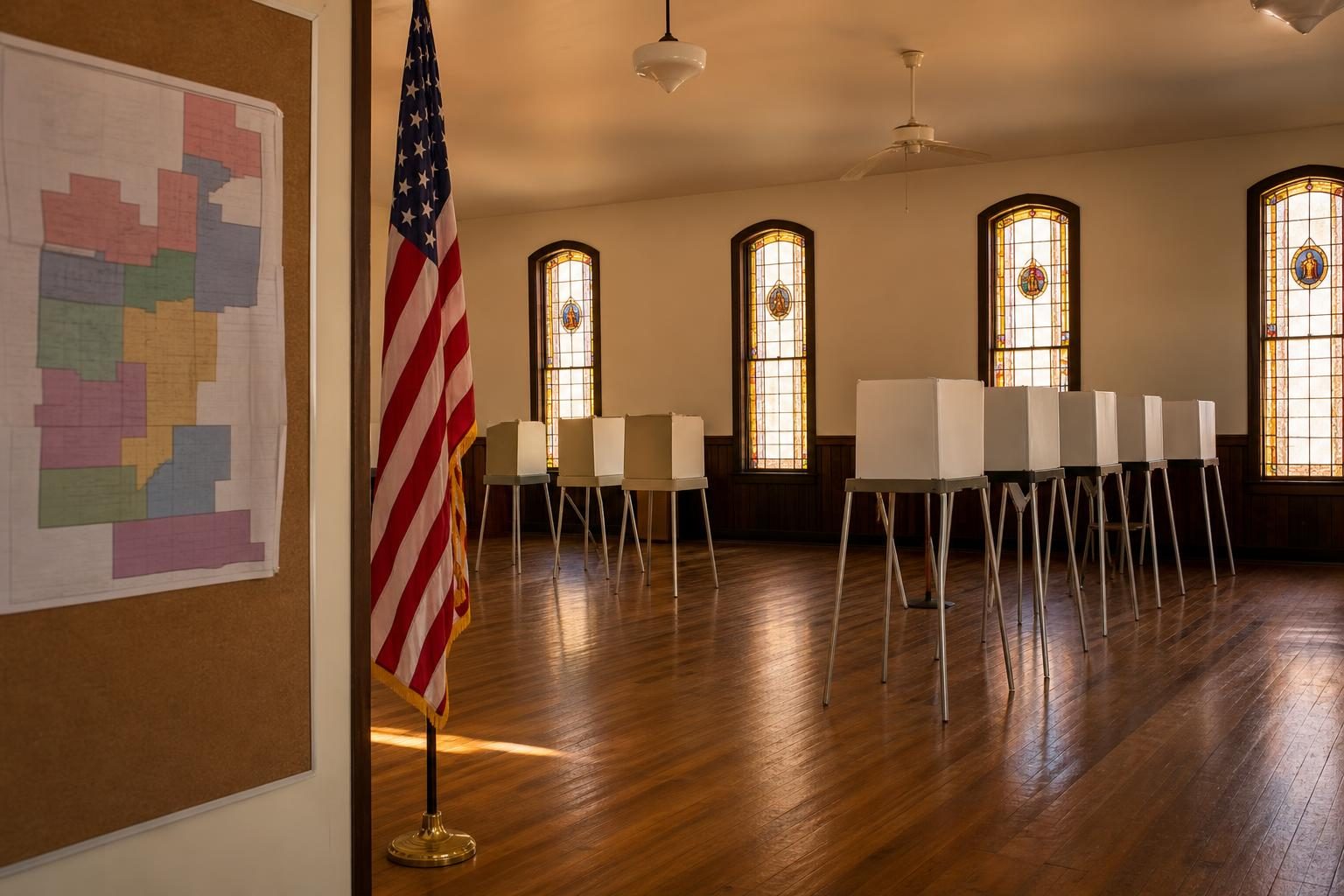
Illustration · Liberty Bell Report
Three weeks after Democrats swept to control of both chambers of Congress, the autopsies are arriving, and they tell a story Republicans need to hear clearly. A new Washington Post analysis of thousands of precincts across 13 states set out to answer the central question of any wave election: who showed up, who stayed home and who switched sides. Other studies from Brookings scholars, NORC survey data and political scientists writing in The Conversation are filling in the picture.
The short version is that turnout, more than conversion, drove the result, though conversion mattered too. That distinction matters enormously for how the GOP rebuilds.
The Turnout Story
Brookings scholars Elaine Kamarck and William Galston argue that Republican abstention, voters who simply did not cast a ballot, mattered more nationally than large-scale crossover voting. In Galston's telling, discontented Republicans stayed home and highly motivated Democrats took advantage.
The crossover numbers back that up. Only about 6% of self-identified Republicans voted for Democratic House candidates, according to Brookings. That is not a party breaking apart. It is a party whose voters did not feel a reason to show up in a year without the President on the ballot.
The Post's analysis wrestles with the same question, and its framing acknowledges a competing view: that the bigger problem was not turnout at all but the many people who backed the Trump-Vance ticket in 2024 and then voted for Democrats in 2026. One account of an earlier precinct model by the Post's election analyst, Lenny Bronner, estimated that turnout explained roughly three-quarters of the Democratic gains across the states studied and switching about a fifth, with Texas the one state where switching mattered more. Those are estimates, and the final 13-state study may differ, but they point in the same direction as Brookings.
Where Republicans Did Lose Votes
Switching was not zero, and in some places it was real. NORC found that roughly 1 in 10 voters who backed Trump in 2024 supported Democratic Senate candidates in Iowa, Kansas, North Carolina and Texas, according to post-election survey analyses. Among young people who voted for Trump in 2024 and turned out again in 2026, 16% supported a Democratic House candidate, according to Brookings.
Latino voters, who moved sharply toward Republicans in 2024, moved back. More than 6 in 10 Latino voters supported Democratic House candidates in 2026, according to NORC survey data cited in post-election analyses. Political scientists writing in The Conversation concluded that independents, Generation Z and Latino voters helped deliver the wave, but that their shift does not yet amount to a lasting realignment.
That last point deserves emphasis. The gains Republicans made with working-class, Hispanic and younger voters in 2024 were historic, and one bad midterm does not erase them. Midterms are often brutal for the party in the White House. The question is whether 2026 was a protest or a turn.
Why Voters Stayed Home
The analyses do not settle why Republican voters sat this one out, but the campaign gave plenty of clues. Prices for groceries, rent and insurance stayed high for many families, the war with Iran weighed on public opinion, and a string of tech outages and airport chaos in the weeks before and after the vote fed a sense that things were not working. When voters feel unsettled and the President is not on the ballot, the less committed among them often stay home.
There is also a structural lesson. Democrats built a turnout machine fueled by intense opposition to the President, and anger is a powerful motivator in a midterm. Republicans, by contrast, depended on voters who turn out reliably when Donald Trump's name is on the ballot but are harder to reach when it is not.
The Map Fight That Comes Next
The wave also reshaped the next battlefield: redistricting. Republicans' mid-decade push to redraw House maps in several states largely failed to pay off in the midterms, Newsweek reported. Democrats now control more governorships and legislatures, which gives them more room to draw lines before 2028.
Maryland voters approved a constitutional amendment that could allow a new map, and Democrats in states such as Wisconsin, New York and Virginia are weighing their options, according to coverage of the post-election landscape. Republicans in states like South Carolina and Indiana, where earlier redraws fell short, could revisit the issue, but their losses in governors' races and legislatures make that harder. Not every Democrat is eager to redraw; some newly elected governors have said they have no plans to change their states' lines.
The bottom line is that both parties are signaling the fight over maps will continue into 2028 and through the next census.
Lessons for Republicans
If turnout was the main problem, the solution is not to abandon the coalition that won in 2024. It is to give those voters a reason to show up when the President is not on the ballot. That means candidates who can speak directly to working families about costs, safety and faith, and a party that builds year-round turnout operations rather than relying on one man's name.
It also means taking the switchers seriously. A tenth of Trump voters crossing over in key Senate races is enough to decide close states. Those voters, many of them younger and Hispanic, were persuadable once and can be persuaded again, with a message about opportunity, family and freedom.
For conservatives, there is encouragement in the details. Self-identified Republicans overwhelmingly stuck with their party. The coalition did not collapse; it got discouraged. That is a problem of energy and organization, and those can be fixed.
What Democrats Will Do With It
Wave elections tempt the winning party to overreach, and Democrats will face that temptation quickly. With the gavels in both chambers come subpoenas, hearings and a push for an agenda that many of the voters who sent them to Washington may not share. Voters who stayed home in protest or crossed over once did not necessarily sign up for higher taxes, looser borders or endless investigations of the President's family. If Democrats treat a turnout surge as a mandate for the left's full program, they could hand Republicans the energy the GOP lacked this fall.
Republicans, meanwhile, have something they did not have before Nov. 3: a clear map of what went wrong. The precinct data and surveys show where the coalition held, where it slipped and which voters can be won back. A party willing to learn from defeat is a party that can win again, and American politics has a long history of comebacks two years after a wave.
What Comes Next
The 2028 race is already taking shape, with Democrats planning their primary debates and Republicans weighing a field of successors. Brookings scholars argue that 2028 remains an open question despite the scale of the Democratic win. The coming months of redistricting fights, special elections and state legislative sessions will show whether the 2026 wave was the start of a new era or a midterm correction. Liberty Bell Report will keep tracking the numbers as more final results and precinct data come in.
Sources
- The Washington Post: Inside the Democratic wave: Who showed up, who stayed home and who switched sides (link)
- Brookings: How Democrats won big, and why 2028 remains an open question (link)
- The Conversation: Independent, Gen Z and Latino voters helped deliver a Democratic wave in 2026, but that doesn't mean a lasting realignment (link)
- Jason B. Corley (Substack): Turnout, Not Switching, Decided the 2026 Midterms (link)
- Newsweek: Four States May Redraw Their Congressional Maps After Midterm Blue Tsunami (link)
- Roll Call: Redistricting battle could spill into 2028 (link)
— 30 —