Crime & Justice
Mexico Will Try 'El Chapo Isidro' at Home, Putting U.S. Extradition Request on Hold
Mexico's attorney general says the alleged cartel boss and former FBI Top Ten fugitive will face weapons and drug charges in a Mexican court first, as officials confirm a U.S. surveillance drone helped track him.
By COLE BRENNANStaff Correspondent · WASHINGTON · Nov 24, 1:15 AM · 3 min. read
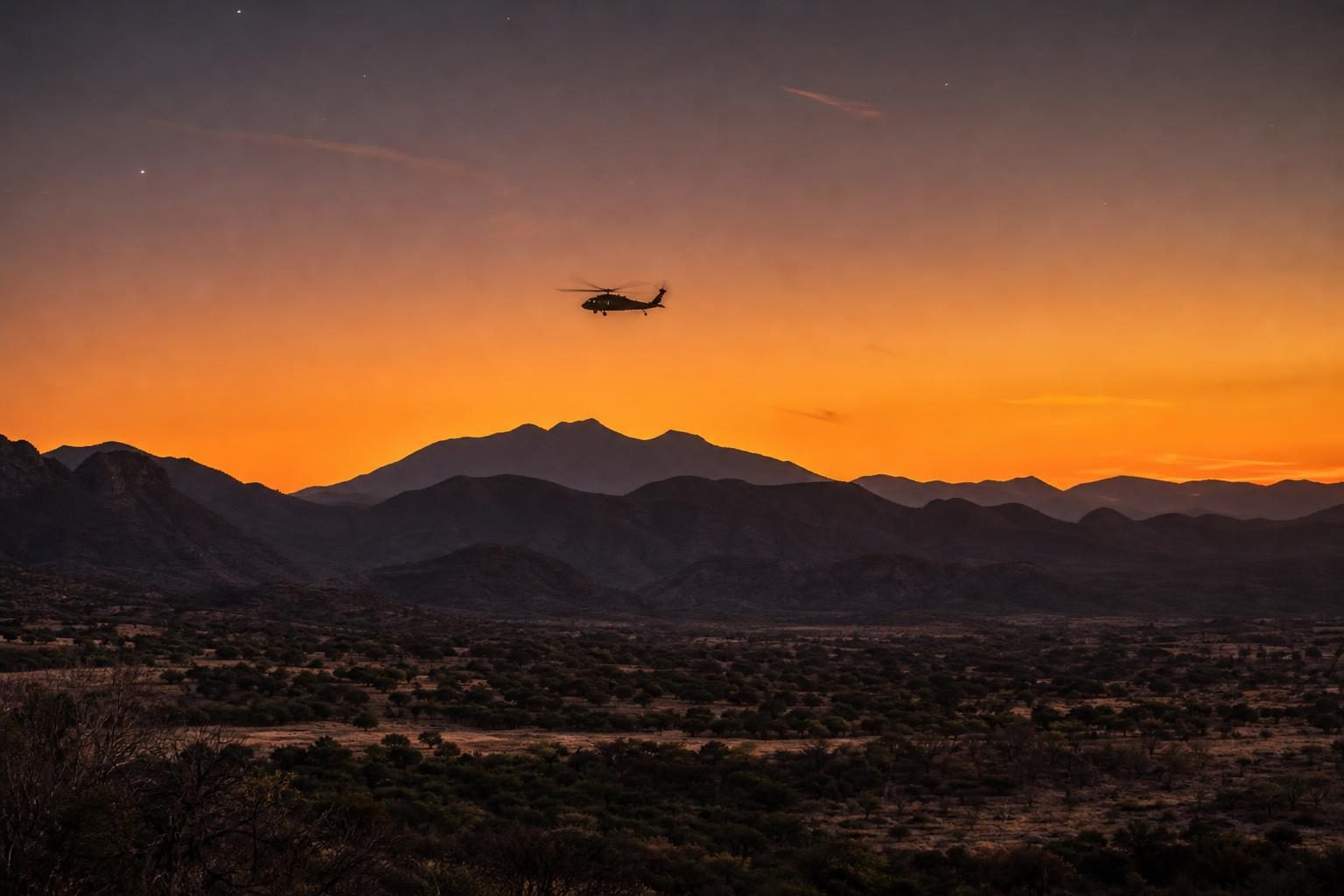
Illustration · Liberty Bell Report
Mexico will put Fausto Isidro Meza Flores, the alleged cartel boss known as "El Chapo Isidro," on trial in its own courts instead of sending him straight to the United States, Attorney General Ernestina Godoy said, even though Washington has asked for his extradition. Mexican troops captured him on Friday, Nov. 20, in the city of Guasave in Sinaloa state.
Security Minister Omar García Harfuch confirmed that the United States has requested Meza Flores' extradition. For now, however, Mexican prosecutors are pressing their own case, charging him with weapons offenses and with possessing methamphetamine with intent to sell.
A federal judge ordered him held in preventive detention along with two alleged operatives, and he was moved to the maximum-security Altiplano prison, according to UnoTV. The judge also doubled the constitutional deadline for deciding whether to formally bind the case over for trial, pushing that decision to a hearing on Saturday.
A Drone Overhead and Attacks on Troops
Mexican security officials said Monday that a U.S. surveillance drone flew over Mexican territory to help track Meza Flores. President Claudia Sheinbaum said her government authorized American intelligence drones to operate in the days before the raid, while stressing that U.S. forces were not allowed to operate on the ground and that the two countries were only sharing intelligence. Defense Secretary Ricardo Trevilla Trejo credited roughly three months of intelligence sharing with U.S. authorities for the result. When the Associated Press asked about the drone on Monday, the U.S. government did not immediately provide details.
The arrest came at a heavy price. Reinforcements sent into the area were ambushed in the attacks that followed, and clashes surrounding the operation left about 20 people dead, including four Mexican soldiers, the AP reported. CBS News reported that the capture set off a wave of violence across Sinaloa.
What Washington Wants
In the United States, Meza Flores faces a far broader case. A federal grand jury in the District of Columbia returned a second superseding indictment on Sept. 25 charging him with conspiracy to provide material support to a terrorist organization, narcoterrorism, running a continuing criminal enterprise, money laundering and firearms offenses, according to the Justice Department, which described him as a senior leader of the Sinaloa Cartel. Prosecutors allege his organization kidnapped, tortured and killed rivals as well as Mexican police officers. The department said the same operation also captured Germán Rolando Gálvez Meza, known as "El Serafín".
The FBI placed Meza Flores on its Ten Most Wanted Fugitives list in February 2025, and the State Department offered a reward of up to $5 million for information leading to his arrest. U.S. and Mexican authorities say he rose through the Beltrán Leyva organization before leading his own trafficking group, which U.S. officials accuse of moving heroin, cocaine, methamphetamine, marijuana and fentanyl across the border.
His capture is the latest in a series of major blows against cartel leadership in Mexico, including the February killing of Nemesio "El Mencho" Oseguera, as President Donald Trump presses Sheinbaum's government to act against organized crime.
Why It Matters and What Comes Next
For American families, this case is personal. Fentanyl and methamphetamine, two of the drugs U.S. officials tie to his network, are the same poisons that have filled too many funeral homes in this country. Washington's indictment treats his operation as a terrorism threat, not merely a smuggling ring. A Mexican prosecution on weapons and drug-possession counts, however serious, does not reach the full scope of what American prosecutors allege, including the killing of police officers.
The cooperation that brought him in deserves credit. The drone mission, approved by Mexico and limited to intelligence, shows what the two governments can achieve when they work together against the cartels. The real test is whether that partnership carries from the hunt to the courtroom, so that a man accused of terrorizing communities on both sides of the border answers for the full set of charges brought against him.
The next step is Saturday's hearing, when a Mexican judge is expected to rule on whether Meza Flores will formally stand trial. Godoy has said Mexico intends to prosecute him at home, while the U.S. extradition request remains on the table. How long the Mexican case runs, and whether he is ultimately sent north, will be watched closely in both capitals.
Sources
- Al Jazeera: Mexico to try 'El Chapo Isidro' despite US extradition request (link)
- The Washington Times (AP): U.S. flew drone over Mexican territory to help capture drug lord in Sinaloa (link)
- The Korea Herald (Reuters): Alleged drug lord 'El Chapo Isidro' will be tried in Mexico despite US extradition request (link)
- UnoTV: El "Chapo Isidro" recibe prisión preventiva; definirán su vinculación el sábado y lo trasladan al Altiplano (link)
- U.S. Department of Justice: Senior Leader of Sinaloa Cartel and One of FBI's Ten Most Wanted Fugitives Arrested in Mexico (link)
- CBS News: Mexico arrests drug kingpin on FBI's 10 Most Wanted, sparking violence in Sinaloa (link)
— 30 —