Crime & Justice
FBI Played Hacker and Victim to Snare a Ransomware 'Rescuer'
Prosecutors say a Florida recovery firm promised to unlock files without paying criminals, then secretly bought the keys from them. The 'criminals' in the sting were federal agents.
By KEVIN NAKAMURAStaff Correspondent · FLORIDA · Nov 20, 2:40 AM · 2 min. read
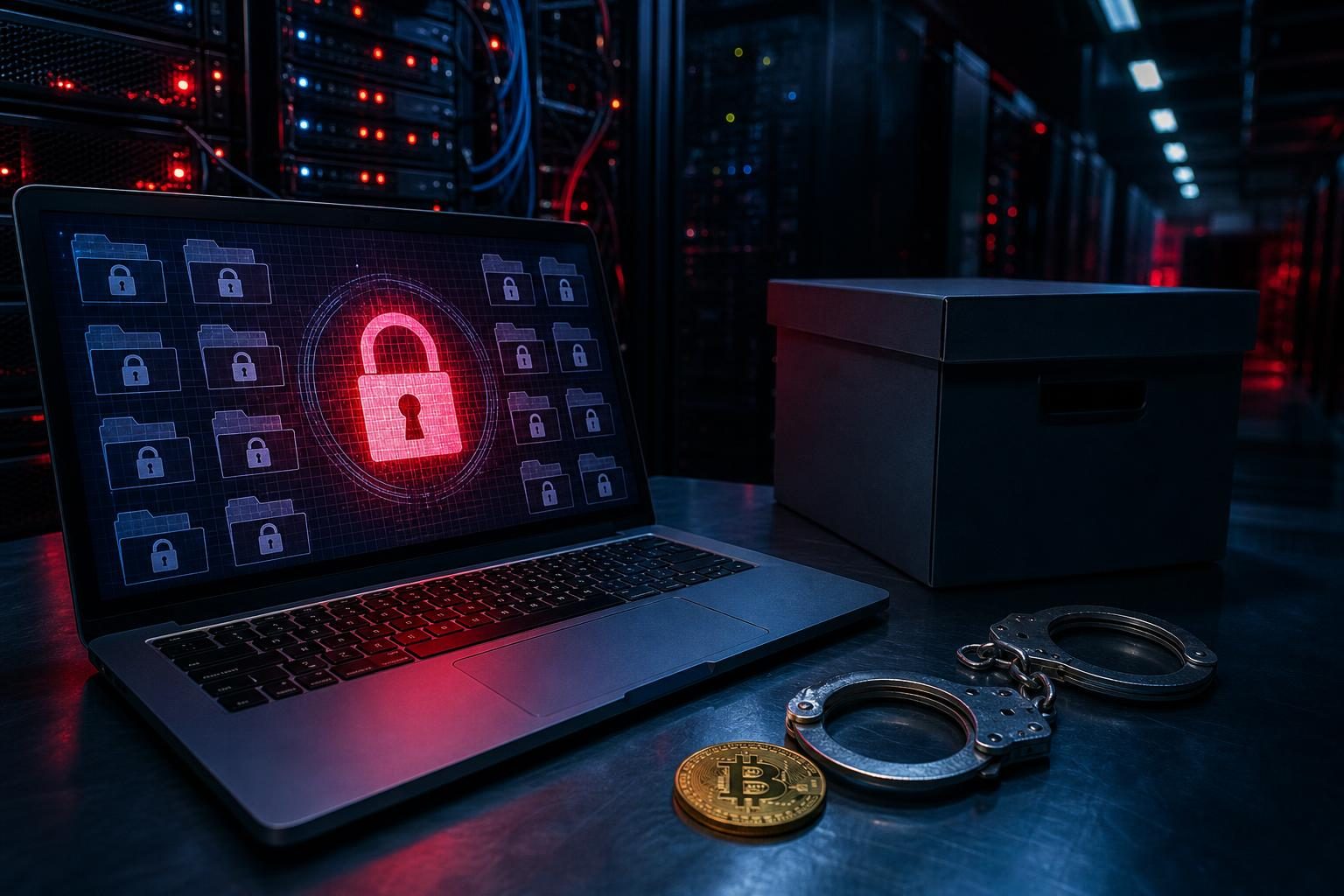
Illustration · Liberty Bell Report
The FBI went undercover on both sides of a ransomware attack to test a Florida company that promised to rescue victims' files, and prosecutors now say the company was quietly paying the hackers all along, 404 Media and RuntimeWire reported.
Federal prosecutors have charged Juan Ricardo Palacio Escobar, who ran the Florida data-recovery business, with three counts of wire fraud, according to both outlets. His company advertised that it could restore encrypted files without paying the criminals who locked them. Prosecutors allege he had no such capability and instead negotiated with ransomware gangs for the keys himself, then billed his clients for the recovery.
How the sting worked
According to 404 Media's account of the court filings, an undercover agent posed as a representative of a made-up Rhode Island business that said it had been hit by ransomware. A second FBI employee played the part of the gang and encrypted several of the fake company's files.
The recovery firm charged the pretend victim $2,750 for an initial assessment and then quoted $13,260 to get the files back, which the FBI paid, the reports said. Behind the scenes, prosecutors say, the firm reached out to the "attackers," who were in fact federal agents, and paid about $6,003 in bitcoin for the decryption key. All told, the firm kept roughly $10,000 of the FBI's money while presenting itself as the alternative to paying a ransom, 404 Media reported.
The indictment also describes a real victim, a Kansas business that Palacio allegedly charged $720,000, 404 Media reported. The charges are allegations, and Palacio is presumed innocent unless the government proves its case in court.
Not the first case like it
It is not the first Florida ransomware-recovery case this fall. In October, prosecutors charged Zohar Pinhasi, owner of MonsterCloud, with wire fraud and wire fraud conspiracy, alleging his firm billed clients more than $19 million while sending more than $8 million to attackers, The Washington Times and Help Net Security reported.
Why it matters
Ransomware gangs live on payments. The FBI does not support paying a ransom, warning that it encourages more attacks and does not guarantee that files come back. A middleman who secretly pays the gang while promising victims he will not is feeding the same criminals, and charging a markup on top.
The case is also a reminder that honest work and honest dealing matter in every trade, including the newer ones. Businesses hit by an attack are frightened and in a hurry, which is exactly when a slick promise is most tempting.
What businesses should do
Before hiring a recovery firm, ask directly whether it ever pays attackers, get that answer in writing, and check references. Report any attack to the FBI, which urges victims to come forward through its Internet Crime Complaint Center. Good backups kept offline remain the best protection of all.
Sources
- 404 Media: To Catch a Ransomware Scammer, FBI Posed as Both Victim and Attacker (link)
- RuntimeWire: FBI posed as ransomware victim and attacker in sting on Florida recovery firm (link)
- The Washington Times: Ransomware recovery firm owner charged with secretly paying hackers, pocketing millions (link)
- Help Net Security: Ransomware recovery firm boss charged with secretly paying attackers and overcharging victims (link)
- FBI: Ransomware (link)
— 30 —