Business & Economy
U.S. and China Extend Port Fee Pause to January as Bessent Urges 'More Balanced' Trade Ahead of Summit
Both nations kept their shipbuilding-related port fees on hold into January as Treasury Secretary Bessent called for a more balanced relationship before Trump meets Xi in Shenzhen.
By MARCUS HALEStaff Correspondent · WASHINGTON · Nov 11, 4:15 PM · 4 min. read
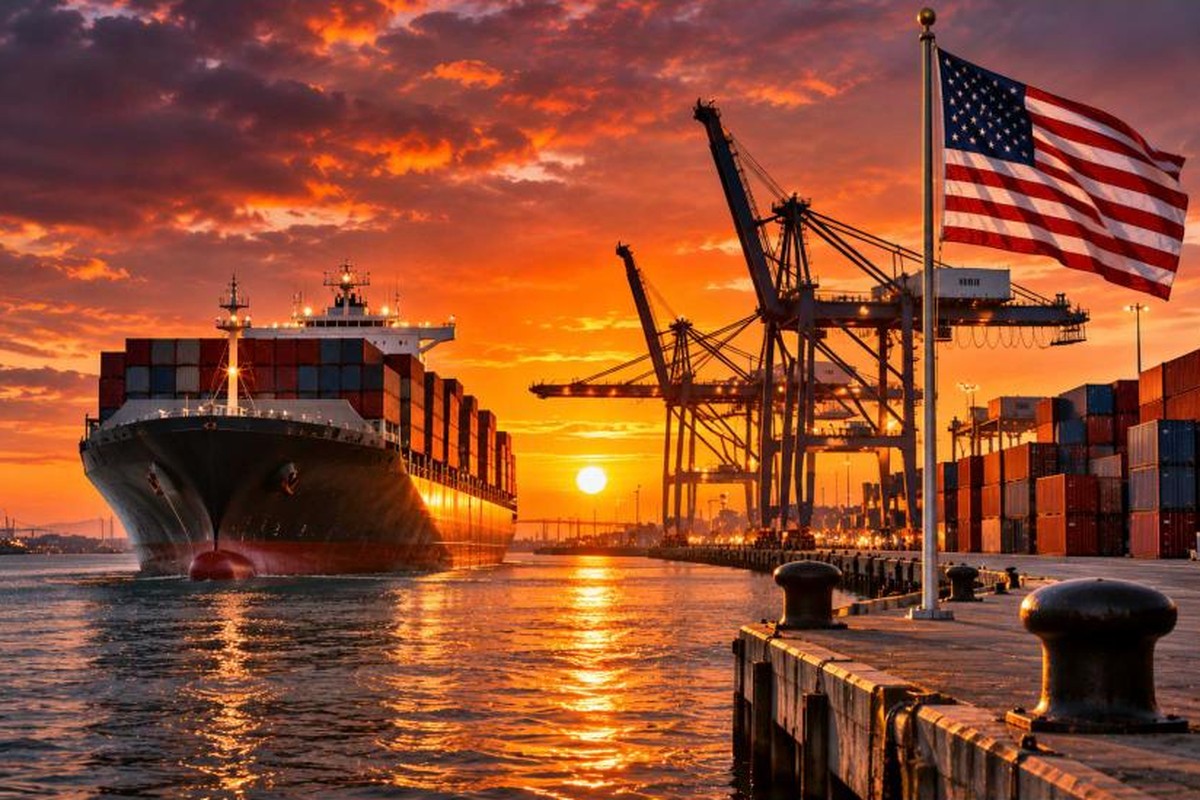
Illustration · Liberty Bell Report
Washington and Beijing have bought two more months of calm on the high seas. The United States and China extended their suspension of tit-for-tat fees on each other's ships, keeping the charges on hold into January as President Trump prepares to meet Chinese leader Xi Jinping at the Asia-Pacific Economic Cooperation summit in Shenzhen, China.
On the American side, the pause now runs through 11:59 p.m. Eastern on Jan. 9, 2027, The Epoch Times reported. Beijing suspended its own special port fees on U.S.-linked vessels until Jan. 10, 2027, according to Reuters, and The Epoch Times reported that China's Ministry of Transport also froze for two months its investigation into related U.S. industries.
The move came as Treasury Secretary Scott Bessent laid out where the administration wants the relationship to go. Speaking Tuesday at a New York gala hosted by the National Committee on U.S.-China Relations, Bessent called for a "more balanced relationship" between the two powers, the Associated Press reported. He argued that the American economy leans too heavily on foreign supply while China's leans too heavily on foreign demand, and said the U.S. should produce more of what it consumes while China consumes more of what it produces. He said the stance does not reflect hostility but an effort to restore reciprocity.
What the Port Fees Were
The fees grew out of a Section 301 trade investigation opened under the Biden administration after a 2024 petition from the United Steelworkers and other labor groups, gCaptain reported. The probe concluded that China's industrial policies and subsidies had distorted global competition. In April 2025, the U.S. Trade Representative's office set charges of $50 per net ton per U.S. voyage for Chinese-owned or Chinese-operated ships, and $18 per net ton or $120 per container, whichever is higher, for Chinese-built ships, with rates scheduled to rise each year through 2028.
Collection began Oct. 14, 2025, and lasted less than four weeks. After Trump and Xi struck a trade deal in South Korea, the fees were suspended for a year starting Nov. 10, 2025. Beijing had retaliated with fees of 400 yuan, about $56, per net ton on U.S.-linked ships and with sanctions on five U.S. subsidiaries of South Korea's Hanwha Ocean, including Hanwha Philly Shipyard in Pennsylvania. Those sanctions stay suspended for two more months as well.
The fees have defenders in Washington. Sens. Mark Kelly and Elizabeth Warren wrote to U.S. Trade Representative Jamieson Greer that the fees are "critical to revitalizing U.S. shipbuilding," gCaptain reported. Shipping lines welcomed the breathing room; the chief executive of carrier ACL told gCaptain the extension lets his company keep serving the U.S. market.
A Wider Truce Rolled Forward
The port fee pause is one piece of a larger standstill. China kept its additional 24% tariff on U.S. goods suspended for two months while leaving a 10% tariff in place, and extended its pause on export controls covering certain critical minerals and rare earths to Jan. 10, 2027. A separate Chinese licensing requirement on seven medium and heavy rare earths, imposed in April 2025, remains in effect. On the U.S. side, the Commerce Department's Affiliates Rule is on hold until Jan. 10, and USTR renewed 178 Section 301 tariff exclusions for two months.
Reuters reported that after a September summit in Washington, the two sides proposed a $60 billion package of reciprocal tariff cuts, including about $17 billion worth of U.S. farm goods China imported in 2024, but the plan has not been finalized.
What Is on the Table in Shenzhen
For American farm families, the stakes are concrete. U.S. officials say China is behind schedule on promised farm purchases, while China's Commerce Ministry has said further buying depends on the reciprocal tariff-cut deal taking effect. Greer pressed Chinese Vice Premier He Lifeng on a video call last week to fully carry out past commitments, including farm purchases and rare earths and other critical minerals, the AP reported. After a Nov. 6 meeting with He, Bessent wrote on X, "I emphasized the importance of China fully and immediately honoring its commitments". Under the trade deal reached in Busan, South Korea, last year, Beijing also agreed to curb the flow of fentanyl precursors.
China hawks in Congress remain wary. Rep. John Moolenaar, R-Mich., has called Beijing's rare earth controls "a loaded gun pointed at our economy". China struck a softer tone: Ambassador Xie Feng said both nations stand to gain from cooperation and lose from confrontation.
For readers who want more made in America, Bessent's call to produce more at home echoes the case labor groups made when they sought the shipbuilding fees: that Chinese subsidies had distorted the playing field.
The 33rd APEC Economic Leaders' Meeting is set for Nov. 18-19 in Shenzhen, according to a Shenzhen district government notice, and Trump and Xi are expected to meet there for the third time this year. The extended pauses then expire Jan. 9 and Jan. 10, 2027, setting up a fresh deadline just weeks after the summit.
Sources
- The Epoch Times: US, China Extend Port Fee Pause Ahead of Trump–Xi Talks (link)
- Associated Press (via WRAL): Treasury Secretary Scott Bessent calls for more balanced US-China trade ties ahead of Trump-Xi talks (link)
- Reuters (via TimesLIVE): China extends US trade truce by two months (link)
- gCaptain: USTR Proposes Extending China Ship Port Fee Suspension Through January 2027 (link)
- The Epoch Times: China Extends Pause on Retaliatory Tariffs on US Goods, Rare-Earth Export Curbs by 2 Months (link)
- Longgang District Government, Shenzhen: The 33rd Asia-Pacific Economic Cooperation (APEC) Economic Leaders' Meeting to occur in Shenzhen (11.18-19, 2026) (link)
— 30 —