Business & Economy
Brussels Opens a Formal Antitrust Case Against Coca-Cola's Biggest European Bottler Over Prices That Stop at the Border
The European Commission says Coca-Cola Europacific Partners may have kept supermarkets from shopping across national lines. The company says it will cooperate fully.
By MARCUS HALEStaff Correspondent · GEORGIA · Nov 23, 9:30 AM · 3 min. read
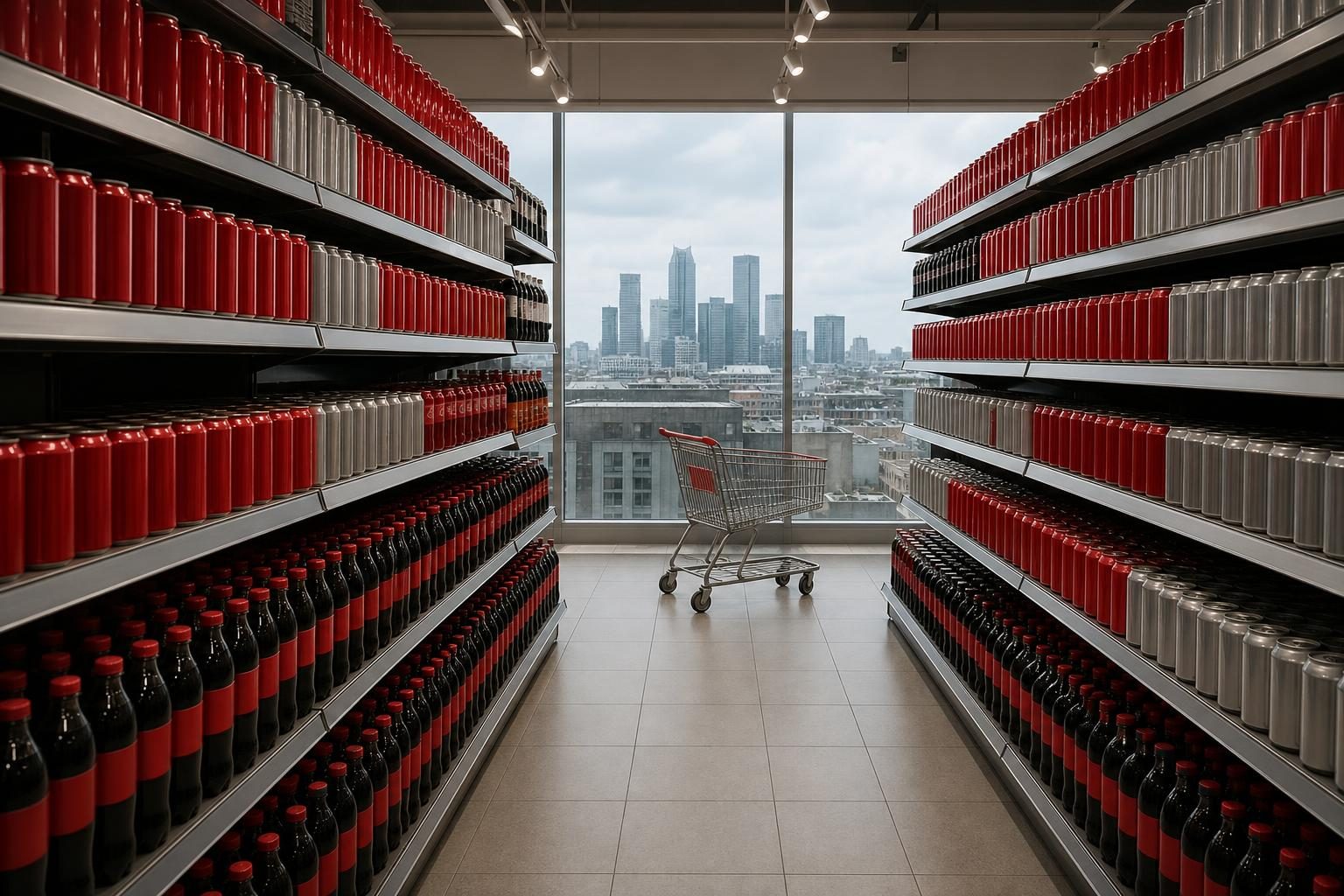
Illustration · Liberty Bell Report
European regulators on Monday opened a formal antitrust investigation into Coca-Cola Europacific Partners, the bottler that makes and sells Coca-Cola drinks across much of Western Europe, over concerns that it kept prices high by blocking stores from buying soft drinks across national borders.
The European Commission said it is examining whether the company abused a dominant position in the wholesale supply of carbonated soft drinks and sports drinks to supermarkets and other retailers, Euronews reported. Restaurants, hotels and cafes are not part of the case.
What regulators are looking at
According to reporting on the Commission's announcement, investigators are examining several practices: conditioning wholesale price cuts on drinks not being exported to other countries, selling different pack sizes in different markets so products are harder to compare and resell, offering incentives to limit imports of fizzy drinks into Spain, and refusing to let retailers negotiate deals covering several countries at once. The investigation covers Belgium, France, Germany, Luxembourg, the Netherlands, Portugal, Spain and Sweden.
Bloomberg described the probe as rooted in fears that the bottler may have illegally carved up European markets. The case is being handled under Article 102 of the Treaty on the Functioning of the European Union, the bloc's rule against abuse of dominance. The Commission set no deadline, though it said it would treat the matter as a priority.
Teresa Ribera, the Commission's executive vice president for competition, argued that shoppers should not pay more simply because of the country they live in, according to reports on the announcement. The company said it would continue to engage fully with the Commission's inquiries.
How it got here
The formal case follows unannounced inspections at the bottler's sites in March 2025. At the time, Reuters reported that the raids involved concerns about possible curbs on cross-border trade and the carving up of markets, both of which EU rules prohibit. In 2023, the Commission dropped a separate preliminary investigation into Coca-Cola and its bottlers over conditional rebates to retailers, a closure that did not amount to a finding that the conduct was lawful.
Opening a formal investigation is not a verdict. If the Commission ultimately concludes that the rules were broken, it can order changes and impose fines of up to 10% of a company's worldwide annual revenue.
Why it matters
Coca-Cola Europacific Partners is an independent company, separate from the Atlanta-based Coca-Cola Company, which owns the brands and sells the concentrate. The bottler's shares trade in New York as well as in Europe, so American investors have a stake in how the case unfolds.
The case also highlights a contradiction Europe has struggled with for decades. The European Union promises a single market where goods move freely, yet the same can of soda often costs noticeably more in one member country than in the one next door. Retailers in high-price countries have long complained that suppliers use territorial restrictions to keep them from buying where it is cheapest.
Free-market conservatives can see both sides of a case like this. Companies should be free to set prices and build their businesses without bureaucrats second-guessing every contract. But a company that uses market power to stop customers from shopping elsewhere is not competing; it is fencing in its buyers. Whether that is what happened here is exactly what the investigation will have to prove, with evidence, rather than assume.
What comes next
The Commission will gather documents and responses from the company, retailers and competitors. If it finds enough evidence, it can issue a formal statement of objections, which the company would have the right to answer before any decision. Cases of this kind often take a year or more, and some end with companies offering commitments to change their practices rather than with fines.
Sources
- Bloomberg: Coca-Cola Bottler Hit by EU Probe Into Abuse of Market Power (link)
- Euronews: EU opens antitrust probe into Coca-Cola's European bottler (link)
- Eunews: Coca-Cola Europacific Partners may have breached competition rules, the Commission launches a formal probe (link)
- Le Monde: EU launches antitrust probe into Coca-Cola's European bottler (link)
- PYMNTS: Coca-Cola Among Firms Targeted in EU Antitrust Raids (link)
— 30 —