Autos & Transportation
Honda and Toyota Recall About 1.6 Million Vehicles Over a New Takata Airbag Risk: The Models, the States and What Owners Should Do
No ruptures or injuries have been tied to these inflators, the automakers say. They are acting on early signs of wear in a design that was supposed to be the safer one.
By FRANK KOWALSKIStaff Correspondent · ALABAMA · Nov 21, 6:39 PM · 3 min. read
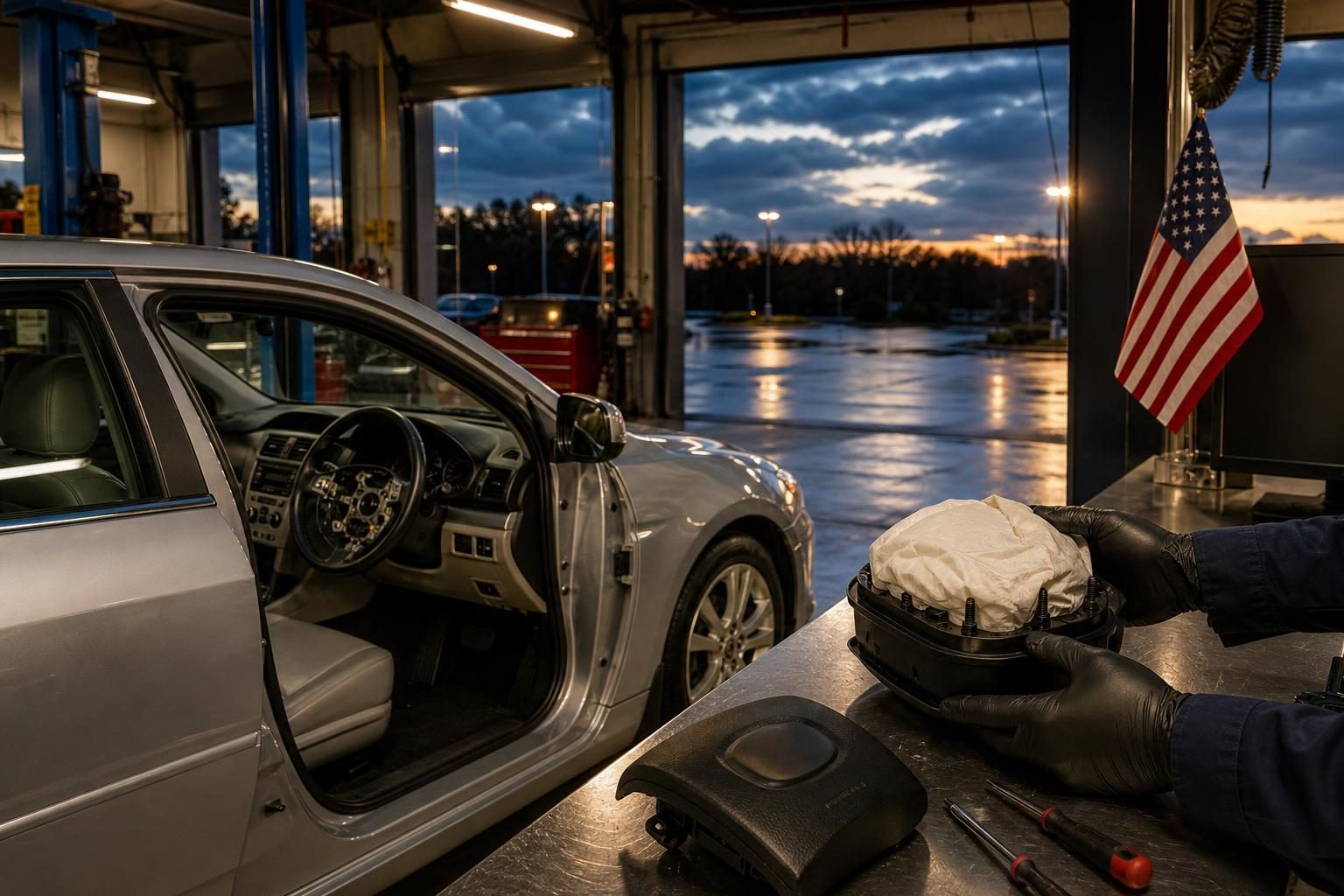
Illustration · Liberty Bell Report
Two of the most trusted names on American roads are calling owners back to the dealership. Honda and Toyota said they are recalling about 1.6 million vehicles in the United States and abroad because Takata airbag inflators in those cars and trucks could rupture, NBC News reported. The good news matters: both automakers said no ruptures, crashes or injuries have been tied to the vehicles in this recall.
Which Vehicles Are Covered
Honda's share is 810,592 older vehicles in the U.S., according to reports on the filing. The list includes some 2013 Honda Accords, 2012 and 2013 Honda Civics, 2012 and 2013 Honda CR-Vs, and 2013 Acura ILX and RDX models. Honda's recall applies to vehicles sold or registered in hot, humid places: Alabama, California, Florida, Georgia, Hawaii, Louisiana, Mississippi, South Carolina and Texas, along with Puerto Rico, the U.S. Virgin Islands, Guam, American Samoa and the Northern Mariana Islands.
Toyota's recall covers about 790,000 vehicles worldwide, including roughly 314,000 in the U.S.. Models named include the 2002-2010 Lexus SC430, 2011 Lexus IS250, 2017 Lexus GX460, 2003-2008 Toyota Corolla, 2005-2006 Tundra, 2005-2007 Sequoia and 2016-2017 4Runner. Toyota did not say which U.S. states are included, and it expects replacement inflators to be ready by early 2027. The company said degraded propellant could cause an inflator to rupture if the airbag deploys, and that dealers will replace the inflator or the airbag assembly at no cost.
Add the two U.S. counts together and roughly 1.1 million American vehicles are affected.
Why These Inflators Are Different
The Takata name still carries weight for a reason. The National Highway Traffic Safety Administration says 28 people in the United States have been killed when defective Takata inflators exploded, and at least 400 more have allegedly been injured. About 67 million Takata air bags have been placed under recall in tens of millions of vehicles.
What sets this new recall apart is the hardware. The inflators involved contain a moisture-absorbing material, unlike the millions recalled earlier, according to the reports. That drying agent was supposed to keep the propellant stable. NHTSA said the automakers saw early evidence of degradation risk in certain vehicles anyway.
Consumer Reports, which has tracked the older campaign, reported that about 91 percent of recalled Takata air bags have been repaired or replaced, which still leaves about 6 million at-risk units on the road.
The Right Way to Run a Recall
Here is the part worth applauding. For years, the Takata story was one of delay, denial and grieving families. This time, two automakers moved on early warning signs before a single reported rupture. That is how a recall ought to work: catch the problem in the data, not in the emergency room.
It also puts a responsibility on the rest of us. A recall only protects the family that answers the letter. Many of these vehicles are more than a decade old and have passed through several owners, so the person driving one today may never have heard from the dealer that sold it new.
What Owners Should Do Now
First, look up your vehicle identification number on NHTSA's recall site, which lists open recalls for your specific vehicle. The 17-character VIN is printed on your registration, your insurance card and the lower corner of the windshield on the driver's side.
Second, call your dealer even if the parts are not ready yet. Toyota has said replacement inflators should arrive by early 2027, and getting on the list now means a quicker appointment later. The repair is free.
Third, if you bought a used Honda, Acura, Toyota or Lexus from the model years above, especially in Florida, the Gulf states or California, make sure the automaker has your current address. Recall letters are only as good as the last registration update.
Finally, pass the word to parents and grandparents. Older family members are often the ones still driving a paid-off car from the 2000s or early 2010s, and they are less likely to search a federal database on their own. A five-minute VIN check over Thanksgiving dinner could be the best gift at the table.
Sources
- NBC News: Honda and Toyota recall 1.6 million vehicles over Takata airbag rupture risk (link)
- The Japan Times: Honda and Toyota recall 1.6 million vehicles over Takata airbag rupture risk (link)
- The Epoch Times: Toyota Recalls 314,000 Vehicles for Possible Air Bag Inflator Ruptures (link)
- NHTSA: Takata Recall Spotlight (link)
- SRN News: Honda, Toyota recall 1.6 million vehicles over Takata airbag rupture risk (link)
- Consumer Reports: Takata Airbag Recall: Everything You Need to Know (link)
— 30 —