
 This morning on Deep Dive with Kevin Nakamura
Records Show PLA-Linked Chinese University Bought Nvidia's Restricted H200 Chips
A blacklisted university tied to China's military obtained advanced AI chips despite U.S. export controls, as scrutiny of Nvidia intensifies.
Filed November 11, 2026 · 📍 NY 12207
Were you there? Share your story
Part of our continuing coverage: Nvidia Board Hires Former Top Federal Prosecutor to Probe CEO's Ties to Alleged Chinese Spy
Key points
- Records show a blacklisted, PLA-linked university bought Nvidia H200 chips.
- The chips are restricted under U.S. export controls.
- The report adds to scrutiny of Nvidia CEO Jensen Huang.
- It's not reported that Nvidia sold the chips directly.
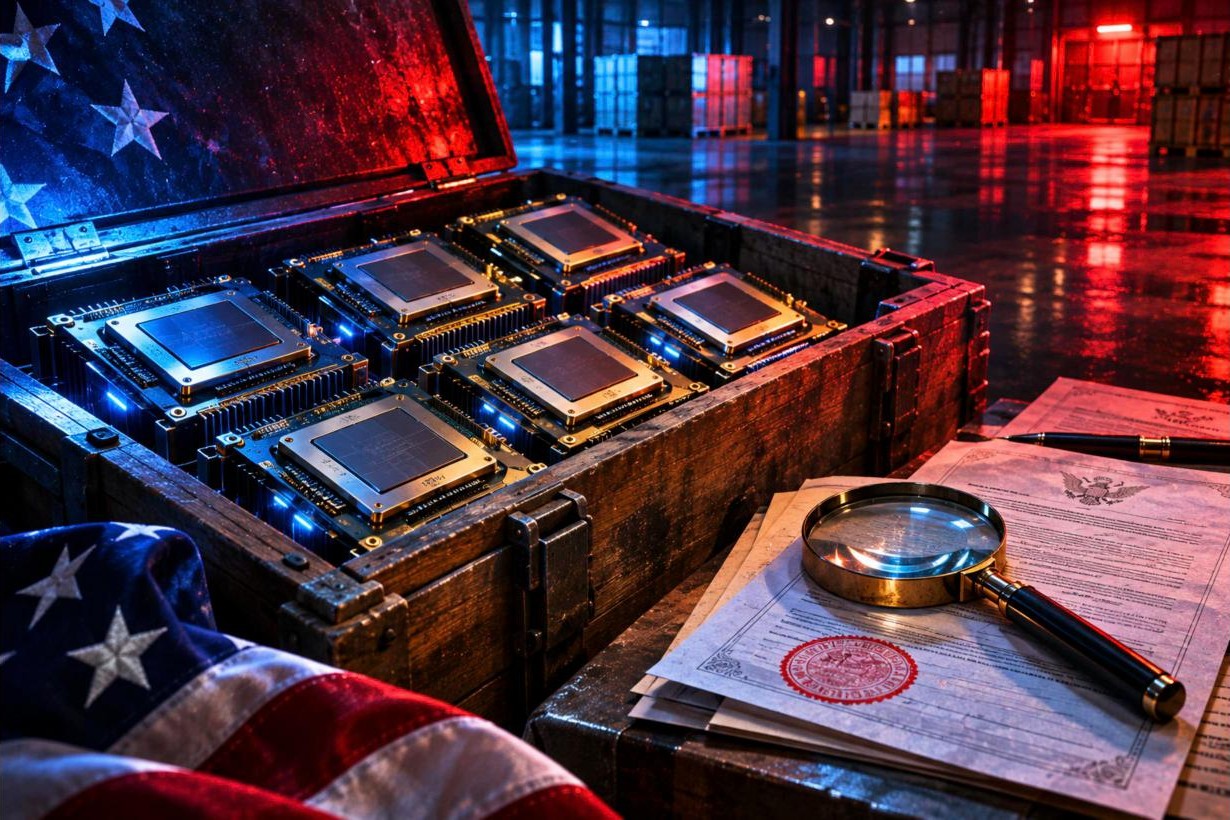
A Chinese university tied to the People's Liberation Army bought Nvidia's advanced H200 artificial intelligence chips despite being on a U.S. blacklist, according to procurement records reported Wednesday [1][2].
The New York Post reported that Northwestern Polytechnical University, which Washington has blacklisted, purchased the H200 chips, citing procurement records [1]. Al Jazeera reported that the records were part of a Reuters review of 26 Chinese procurement and corporate records from this year showing universities and research institutions buying restricted Nvidia chips or renting access to computing powered by them [2].
Who bought, and how
Northwestern Polytechnical University, in the city of Xi'an, is one of China's elite defense-focused universities known as the "Seven Sons of National Defense," and it does research on military aircraft, missiles and satellites, Al Jazeera reported [2]. The U.S. Entity List has covered the school since 2001, and the restrictions were tightened in 2019 [2].
According to the report, the university bought two H200 chips last month for about 874,700 yuan, roughly $123,000, listed in an October 21 procurement notice on its website [2]. The chips were bought from a reseller, Shaanxi Bosuan Network Technology, not directly from Nvidia, and were meant for the school's management school [2]. The university also signed five contracts this year to rent computing power from Chinese companies, giving it access to H200s and other Nvidia processors [2].
The rules that were supposed to stop it
The H200 needs a U.S. export license, which is normally denied to institutions on the Entity List, Al Jazeera reported [2]. The Trump administration began allowing some H200 exports to China case by case in January, but that did not lift the separate Entity List restrictions [2]. Lawmakers from both parties have called for tighter controls, including tracking requirements for chips and more oversight from Congress [2].
Pressure on Nvidia's chief
The findings come as Nvidia and its chief executive, Jensen Huang, face mounting scrutiny in Washington over his lobbying for looser limits on AI chip sales to China, the Hindustan Times reported [3]. Huang has argued that continued sales keep America in the lead and keep Chinese customers dependent on Nvidia, while some lawmakers say top chips can speed China's work on weapons design and military intelligence [2]. Nvidia's board is investigating whether Huang was targeted by a foreign intelligence operation, and Nvidia has said it has no reason to believe national security was compromised [2]. Three Republican committee chairmen have asked Huang for a briefing on November 18 [2].
The hard question
Two chips are not an army. But if America's most advanced processors can reach a missile-research university on the blacklist through a reseller, and the same school can rent the rest, then the export rules have a hole big enough to drive a truck through. Congress and the Commerce Department need to close it.
Sources
Should Florida investigate foreign money in American political groups?
- Yes, every state should
- Only with hard evidence
- Leave it to federal authorities
More in Investigations & Special Reports
Taiwan Confirms Woman Tied to Nvidia Spy Probe Entered on a Hong Kong Passport
Overnight on Cross-Examination with Dominic Kane
House GOP's Final Epstein Report Clears Trump, Says Feds Could Have Stopped the Abuse
Overnight on Deep Dive with Kevin Nakamura
Three Charged in Iran-Linked Terror Plots Targeting Sites in the U.S. and Europe
Last night on Deep Dive with Kevin Nakamura
Were you there?
If you were at the scene, or this story touched your life, tell us what you saw and what it was like.
Discussion 0
Sign in or create a free account to join the discussion.
No comments yet. Start the discussion.