
 Today on The Verdict Room with Natalie Sinclair
Searching a Congresswoman's Home: What the Omar Records Reveal
Newly unsealed records show a federal magistrate judge pressed prosecutors on the Constitution's Speech or Debate Clause before approving the search of Rep. Ilhan Omar's home, and what that protection means for every lawmaker.
Filed November 24, 2026 · 📍 Capitol Hill, DC 20515
Were you there? Share your story
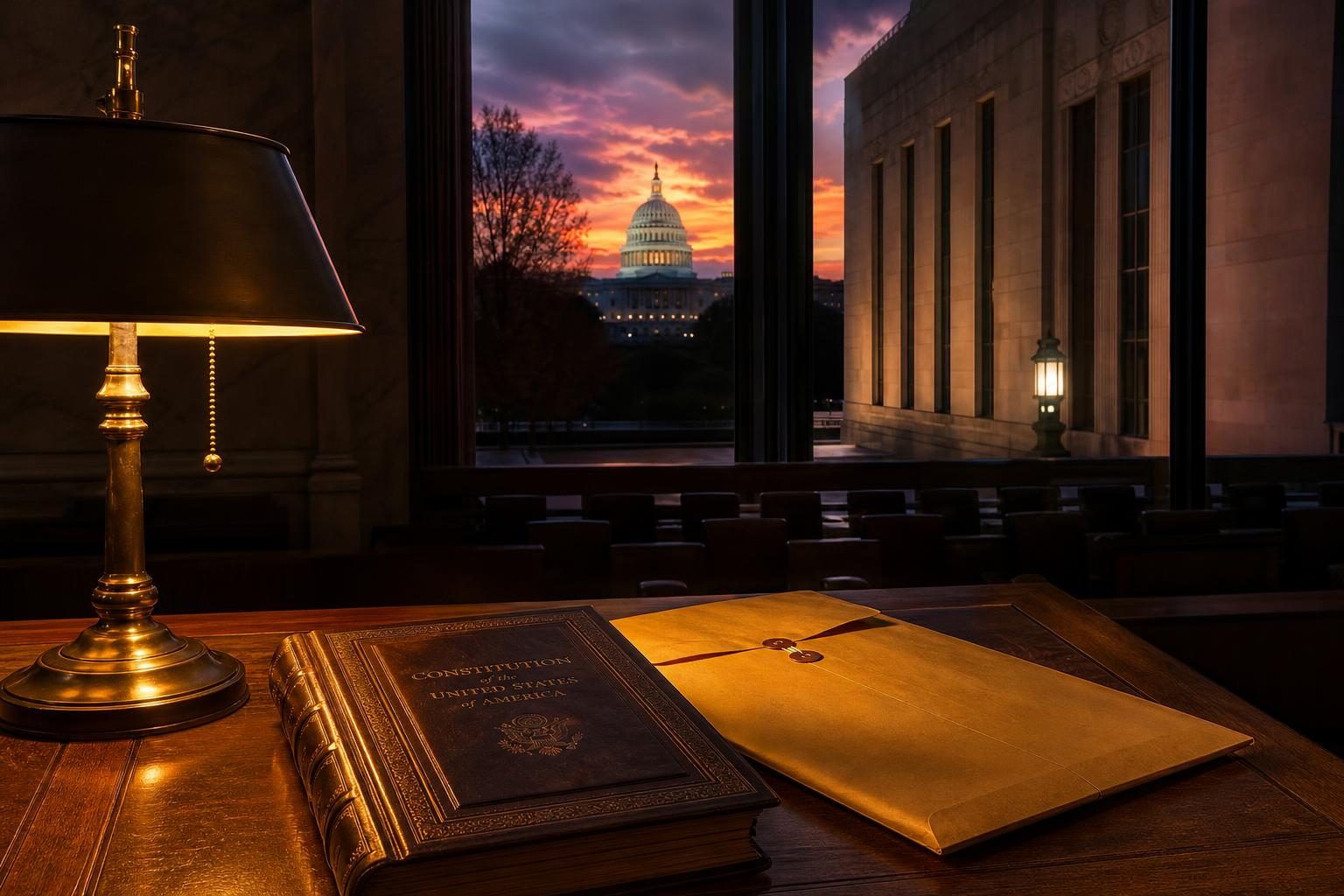
Part of our continuing coverage: Omar Warrant Unsealed: Probe Reaches Back to 1980
Key points
- Unsealed records show Magistrate Judge Matthew Sharbaugh rejected DOJ's view that a home search posed little risk to Omar's legislative privilege.
- The resulting protocol let Omar claim Speech or Debate protection over materials before agents searched them.
- DOJ filings say the House general counsel declined to take part in the search; he disputes that account.
- Omar has not been charged and denies wrongdoing; the 67-page affidavit remains sealed.
Before federal agents could search Rep. Ilhan Omar's Washington home in October, a judge had to answer a question the Constitution has posed since 1789: how do you investigate a member of Congress without trampling the protection the Founders gave lawmakers for their legislative work? Court records unsealed this week show how that question was argued behind closed doors, and how it was settled [1][2].
The records, released Monday under an order from Chief Judge James Boasberg of the federal district court in Washington, show that Magistrate Judge Matthew Sharbaugh pressed prosecutors on the Constitution's Speech or Debate Clause before he approved the warrant [1][2]. The result was a search protocol that let Omar claim the clause's protection over her materials before agents went through them [2][3].
Omar, a Minnesota Democrat, has not been charged with any crime, has denied wrongdoing and has called the search an attempt to target political enemies, the Associated Press reported [2]. Here is what the new records show, what the clause protects, and why the answer matters for every member of Congress, from either party.
What the Newly Released Records Show
The filings center on a disagreement between the judge and the Justice Department. Prosecutors argued that Omar was unlikely to keep legislative work at her home, because printed work product is rare and her Capitol Hill office was close by, according to the AP [2]. Sharbaugh did not accept that argument. He found the clause was at least partly relevant because agents were searching her home, and he pointed to the warrant's request to search her cellphone, observing that most adults now carry some of their work home with them [2].
NBC News reported that the government planned to seize cellphones and other digital devices, and that the special procedures built into the warrant were meant to deal with exactly that problem [1]. Roll Call reported that the warrant allowed Omar to assert her Speech or Debate immunity before the government could search what it seized [3]. The AP reported that special search procedures were carried out at the home, though the full protocol itself remains under seal [2].
Boasberg agreed with the Justice Department that most of the case file should stay sealed, the AP reported, but he ruled that the back-and-forth over Omar's Speech or Debate rights should be made public [2]. The 67-page affidavit laying out the government's evidence remains sealed at the government's request, the Washington Examiner reported [4].
What is public about the investigation itself is its reach. Roll Call reported that the government's filings indicate it is seeking evidence of crimes dating to about 1980, around the time Omar was born [3]. The specific offenses remain redacted [3].
The Constitutional Shield Lawmakers Carry
The Speech or Debate Clause, found in Article I, Section 6 of the Constitution, says members of Congress may not be questioned anywhere else for speech or debate in either chamber. Its roots run back to the English Parliament's long struggle against kings who jailed lawmakers for what they said. The Founders wrote it in so that a president could never use prosecutors to punish legislators for their votes, speeches and committee work.
The clause is not a license to break the law. It protects legislative acts, not private conduct. A lawmaker can be investigated, searched, charged and convicted like any other American for crimes that have nothing to do with lawmaking. The hard part comes when agents seize a phone or a file cabinet that holds both kinds of material, the private and the legislative, mixed together.
That is why the location of the search mattered so much here. Prosecutors argued, in effect, that a home is not where congressional work happens [2]. The judge's answer reflected how people actually live and work in 2026: a phone in a lawmaker's pocket travels between the Capitol and the kitchen table, and it carries both [2].
A Dispute Over the House's Own Lawyer
The records also opened a new dispute between the Justice Department and the House. According to the government's filings, House General Counsel Matthew Berry declined to take part in the search and agreed with prosecutors that Speech or Debate protections do not cover a member's private home, the Washington Examiner reported [4]. The filings came from the office of the U.S. attorney for the District of Columbia, Jeanine Pirro [4].
Berry has strongly disputed the department's account, the Examiner reported [4]. The disagreement matters because the House counsel's office often acts to protect the institution's privileges when members face searches or subpoenas. For now, only the government's version of those contacts is on paper [4].
Lessons From the Jefferson and Perry Cases
The Omar search is not the first time courts have had to draw this line, and the precedents cut across party lines.
In May 2006, FBI agents searched the Rayburn House Office Building office of Rep. William Jefferson, a Louisiana Democrat under investigation for bribery [5]. In August 2007, a federal appeals court in Washington ruled that the search violated the Speech or Debate Clause because agents were exposed to privileged legislative material without giving the congressman a chance to identify it first, Jurist reported [5]. The court ordered privileged documents returned, but it did not hold that searching a congressional office is unconstitutional, and it let prosecutors keep the non-privileged records [5].
More recently, the FBI seized the cellphone of Rep. Scott Perry, a Pennsylvania Republican, during the Justice Department's investigation of the 2020 election [6]. In September 2023, the same appeals court ruled that the clause limits what investigators may review on a lawmaker's phone, Roll Call reported [6]. The court rejected the government's position that a member's informal fact-finding is never protected, while also rejecting Perry's position that such fact-finding is always protected [6].
The protocol in the Omar case reflects the lesson of both cases: let the member flag protected material at the outset, before investigators look [2][3][5][6].
Why It Matters
For Americans who believe in equal justice under law, the new records offer something reassuring. A sitting member of Congress was not exempt from a criminal investigation, and a federal judge found the government's request strong enough to authorize a search of her home [1][2]. At the same time, the judge insisted on constitutional safeguards, and the government accepted them [2]. That is how the system is supposed to work.
Conservatives have a particular stake in getting this right. The same clause that protected a Democrat in Louisiana and a Republican in Pennsylvania protects every lawmaker who challenges whichever administration holds power [5][6]. A rule that bends for one side will be used against the other. Holding the line on the Constitution is how citizens make sure the law means the same thing for everyone.
The records also leave Omar's critics and defenders with less than either side might want. They confirm the breadth of the inquiry, but they do not show what the government believes it can prove [3][4]. Under American law, the burden stays on prosecutors to make their case in court, and Omar is presumed innocent unless they do.
What Comes Next
The central evidence remains sealed, and the Justice Department has not said whether or when it will seek an indictment [1][4]. Any future fight over the seized phones and devices will likely turn on the Speech or Debate protocol described in this week's records, and on whether agents and prosecutors honored it [2][3].
The dispute over the House general counsel's role could also draw scrutiny from House leaders, who have an institutional interest in how the chamber's privileges are defended [4]. Liberty Bell Report will continue to follow the case as more of the record is opened.
Sources
- [1]Opens in a new tab ↗
- [2]MPR News (Associated Press)Records: Government, judge debated constitutional implications of searching Rep. Ilhan Omar's homeOpens in a new tab ↗
- [3]Opens in a new tab ↗
- [4]Washington ExaminerHouse general counsel 'refused to be involved' in Ilhan Omar raidOpens in a new tab ↗
- [5]Opens in a new tab ↗
- [6]Opens in a new tab ↗
Should the death penalty stay on the books for the worst crimes?
- Yes, for the worst murders
- Only with absolute proof like DNA
- No, life without parole is enough
More in Crime & Justice
Judge Won't Block Trump's Sanctions on ICC Judges
Today on Rule of Law with Lauren Pierce

Mother-Son Bosses of Nashville Motel Trafficking Ring Get 17 Years
Today on Street Watch with Elijah Carter
RECORD SCAM CRACKDOWN: 800 CHARGED, $8 BILLION RECOVERED
Today on Rule of Law with Lauren Pierce
Were you there?
If you were at the scene, or this story touched your life, tell us what you saw and what it was like.
Discussion 0
Sign in or create a free account to join the discussion.
No comments yet. Start the discussion.