
 Tonight on Rule of Law with Lauren Pierce
Appeals Court Keeps Virginia From Unmasking ICE Officers, but Lets the State Limit Its Own Help
A split Fourth Circuit panel ruled Virginia's mask and ID rules for federal officers likely violate the Constitution, while siding with the state on how far its own police must cooperate.
Filed November 23, 2026 · 📍 Supreme Court, DC 20543
Were you there? Share your story
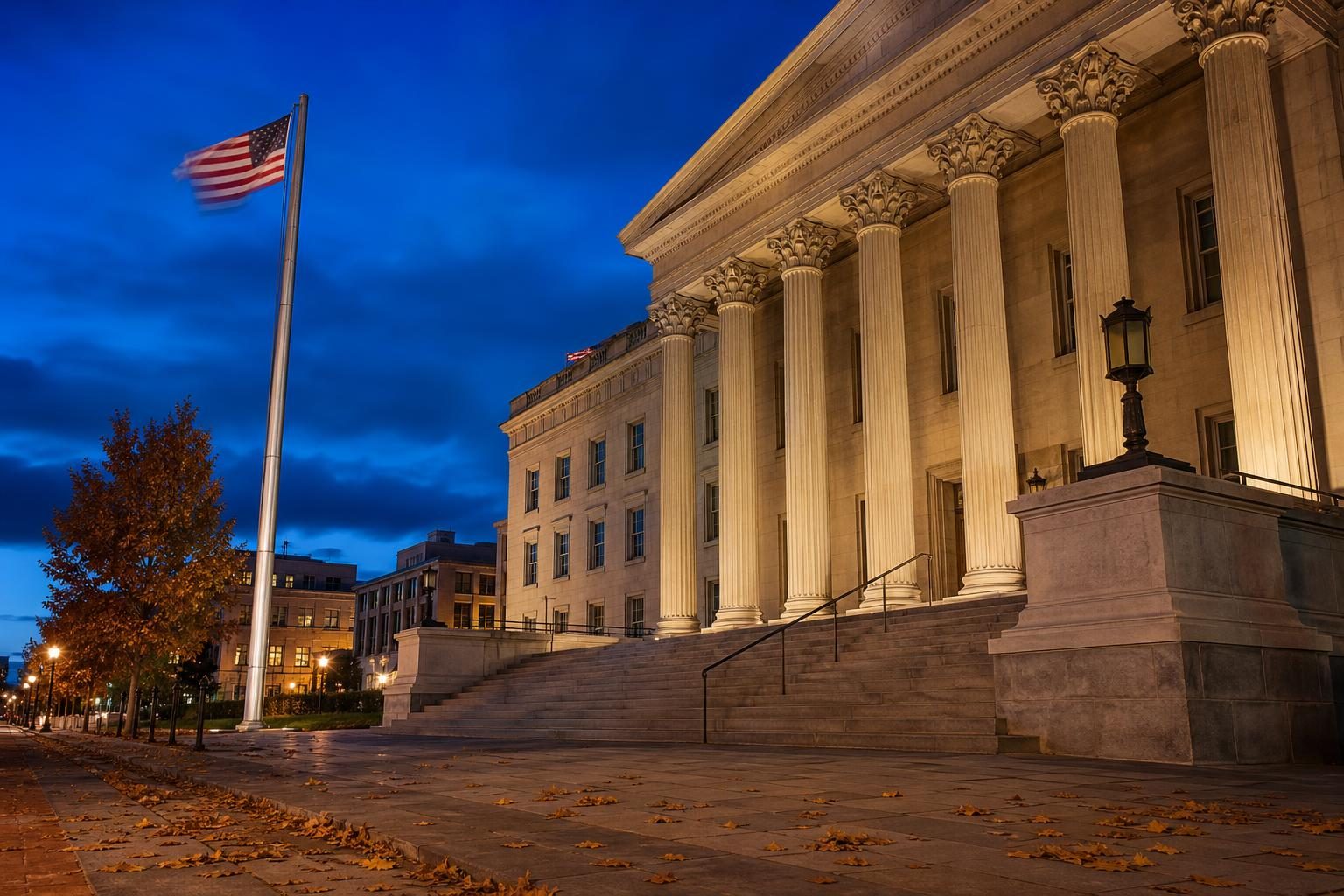
Key points
- The Fourth Circuit kept blocking Virginia's law requiring federal immigration officers to go unmasked and identify themselves.
- The majority said those rules likely violate the Constitution; one judge dissented on the face-covering part.
- The court sided with Virginia on its limits on local cooperation, saying Washington cannot command state police to help.
- The ruling does not stop ICE from enforcing federal immigration law on its own.
Federal immigration officers working in Virginia will not have to remove their masks or follow the state's new identification rules, at least for now. A federal appeals court ruled Monday that those requirements likely violate the Constitution and kept them on hold, handing the Trump administration a significant win in its fight with states trying to regulate ICE [1][2][3].
But the same panel of the U.S. Court of Appeals for the Fourth Circuit gave Virginia a victory on a second question, ruling that the state may limit how much its own police and agencies help with federal immigration enforcement [1][4].
The mask and ID rules
Virginia's law would have barred federal officers from covering their faces during enforcement operations and required them to identify themselves. A lower court had blocked those provisions, and the Fourth Circuit left that injunction in place [1][2].
Judge Toby Heytens wrote the majority opinion. Judge Robert King dissented on the face-covering portion of the ruling [1].
Supporters of the masks say they protect officers and their families from harassment and threats at a time when immigration agents have been targeted online and in the streets. The court's ruling means Virginia cannot force those officers to expose their identities while the case continues [2][3].
Monday's decision came as a federal judge also blocked a similar mask ban in Connecticut, part of a broader pattern of courts stopping states from dictating how federal officers do federal jobs [5]. Our site reported on the Connecticut ruling earlier Monday.
Where Virginia won
On the second question, the panel lifted the injunction against Virginia's limits on local cooperation with ICE [1]. The court concluded that the federal government cannot command Virginia's law enforcement to assist with immigration enforcement, and that the state may decide when its own agencies take part [1][4].
That reasoning rests on a principle conservatives have long defended. In Printz v. United States in 1997, the Supreme Court held that Washington may not commandeer state officers to carry out federal programs [6]. The same rule that protects states from federal overreach on gun background checks also protects them when they decline to help with immigration enforcement.
Importantly, the ruling does not stop ICE from carrying out its own operations in Virginia [1]. Federal agents remain free to enforce federal law. What Virginia can do is refuse to lend its own officers and jails to the effort, a choice critics argue pushes more arrests out of secure jails and into neighborhoods.
Why it matters
The ruling draws a clear constitutional line. States cannot regulate federal officers out of doing their jobs, and Washington cannot draft state officers into doing its job. Both halves of that line come from the Constitution's structure, which divides power between the national government and the states to protect liberty.
For conservatives, the outcome is a mixed but instructive result. The mask ruling protects the safety of officers who enforce laws Congress passed. The cooperation ruling is a reminder that the best way to ensure local help with immigration enforcement is through state law, as Florida and Texas have done, rather than through federal orders.
What comes next
The decision resolves the appeals over the preliminary injunctions, but the underlying lawsuit continues in the lower court [1][2]. Either side could ask the full Fourth Circuit to rehear the case or seek review at the Supreme Court. With more states considering similar laws, the question of whether a state can unmask federal agents may soon reach the justices.
Sources
- [1]Courthouse News ServiceFourth Circuit rejects Virginia ICE mask ban but OKs local cooperationOpens in a new tab ↗
- [2]Opens in a new tab ↗
- [3]Opens in a new tab ↗
- [4]The Western JournalFederal Appeals Court Slaps Down Virginia's Attempt to Exercise Control Over ICE OfficersOpens in a new tab ↗
- [5]Opens in a new tab ↗
- [6]Cornell Law School Legal Information InstitutePrintz v. United States, 521 U.S. 898 (1997)Opens in a new tab ↗
Should the death penalty stay on the books for the worst crimes?
- Yes, for the worst murders
- Only with absolute proof like DNA
- No, life without parole is enough
More in Crime & Justice
Survivor Wins $98 Million From Doctor Who Admitted 1989 Rape
Tonight on The Verdict Room with Natalie Sinclair
FBI's No. 2, Career Agent Christopher Raia, to Retire
Tonight on Rule of Law with Lauren Pierce
London Fraud Trial Hears Andrew Received £750,000 Tied to Heiress's Passport; He Testifies Dec. 14
Tonight on The Verdict Room with Natalie Sinclair
Were you there?
If you were at the scene, or this story touched your life, tell us what you saw and what it was like.
Discussion 0
Sign in or create a free account to join the discussion.
No comments yet. Start the discussion.