
 Today on Open Road with Frank Kowalski
Uber, Nuro Pull Safety Drivers From Lucid Robotaxis in Bay Area Tests
Uber and Nuro have begun driverless testing of Lucid Gravity robotaxis in four Silicon Valley cities ahead of a commercial launch planned for early 2027.
Filed November 24, 2026 · 📍 Silicon Valley, CA 95113
Were you there? Share your story
Key points
- Driverless Lucid Gravity robotaxis are now testing in Palo Alto, Mountain View, Los Altos and Sunnyvale.
- The public can't ride yet; Uber employees are expected to go first, with a commercial launch planned for early 2027.
- Nuro still needs a DMV deployment permit and a CPUC permit before charging for driverless rides.
- The tests come weeks after California barred Waymo's robotaxis from state freeways.
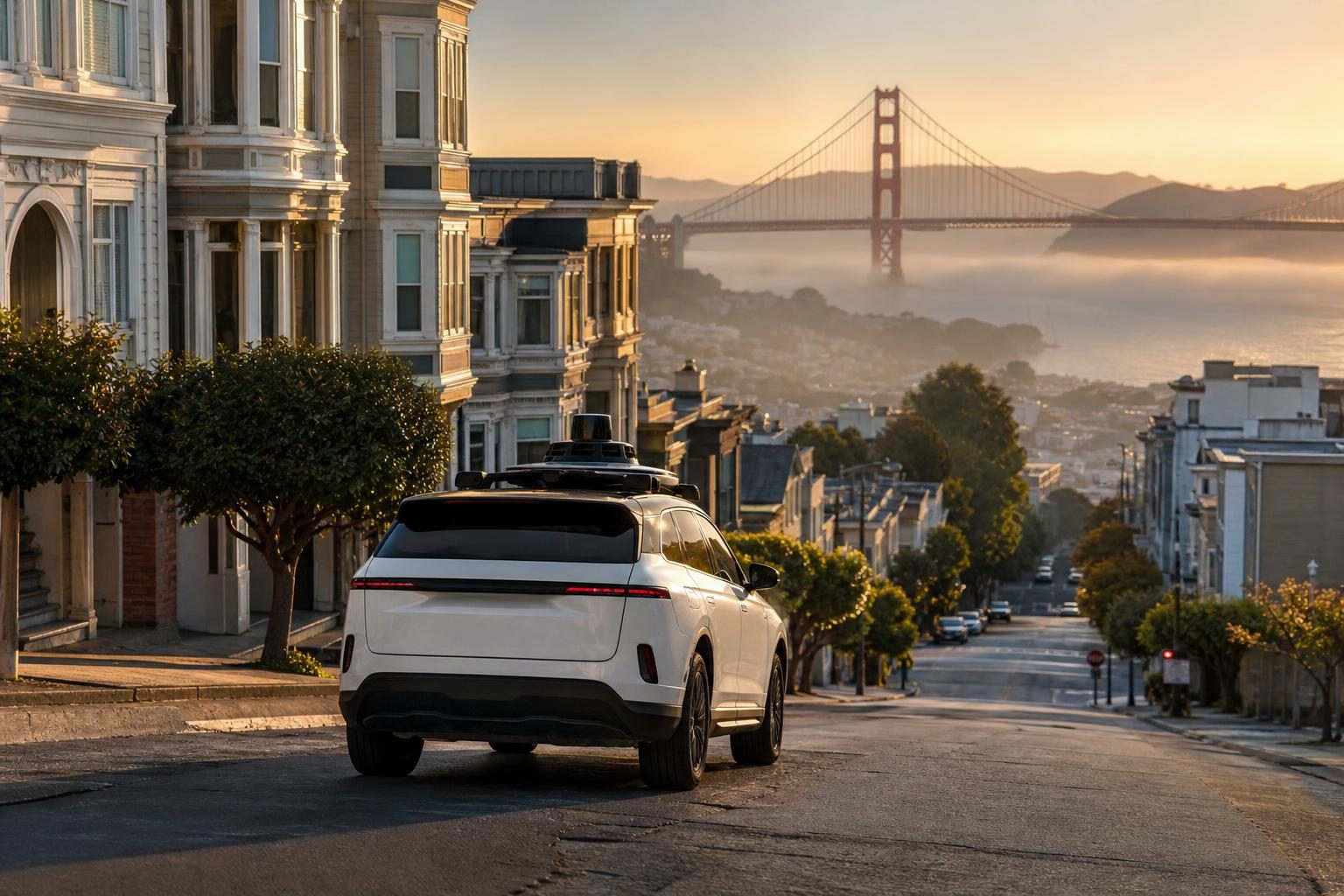
Robotaxis with no one behind the wheel are now driving the streets of four Silicon Valley cities as Uber prepares to take on Waymo in its own backyard.
Uber and Nuro have begun driverless testing of Lucid Gravity robotaxis on public roads in Palo Alto, Mountain View, Los Altos and Sunnyvale, TechCrunch reported [1]. Electrek reported that Nuro has pulled the safety drivers from the electric SUVs in the Bay Area program [2]. The companies plan to expand testing to more Bay Area cities next year [1].
Members of the public cannot hail one of the cars yet. This is still a testing phase, and the companies expect to start offering driverless rides to Uber employees soon, ahead of a commercial robotaxi service planned for the first quarter of 2027, according to TechCrunch [1].
From a 2025 Deal to Driverless Streets
The partnership dates to July 2025, when Uber agreed to invest $300 million in Lucid as part of a robotaxi deal, Al Jazeera reported [4]. Under that agreement, Uber set a goal of putting 20,000 or more Lucid vehicles running Nuro's self-driving software on the road over six years [4].
The launch has slipped. The public service was originally promised for 2026 and is now expected in the first quarter of 2027, Electrek reported [2]. Lucid has delivered a fleet of roughly 100 Gravity SUVs for the program, according to Electrek [2]. Until now, the companies had been testing the vehicles with a human safety operator behind the wheel [1][2].
Nuro is also using closed-course testing and computer simulation alongside its on-road work to check the system before it opens rides to the public, TechCrunch reported [1].
What California Requires
California regulates robotaxis in stages, and Uber and Nuro have cleared only the first ones. The state Department of Motor Vehicles granted Nuro a driverless testing permit in May, TechCrunch reported at the time [3]. That permit lets the company run cars without a safety driver, but it does not let Uber charge passengers for driverless rides. Before that can happen, Nuro still needs a deployment permit from the DMV and a separate driverless ride-hailing permit from the California Public Utilities Commission, according to TechCrunch [3].
Those steps matter, because state regulators have shown they will act when robotaxis misbehave. California recently barred Waymo's driverless cars from the state's freeways after a string of close calls in highway construction zones, and Waymo paused freeway service across all of its markets, Breitbart News reported [5]. The new Uber and Nuro tests are taking place on the streets of four suburban communities [1].
Safety Questions
The basic question for any robotaxi is simple: can it handle the surprises that human drivers handle every day? A child chasing a ball, a police officer waving traffic through a broken signal, a delivery truck double-parked on a narrow street. The Waymo freeway order showed that even the industry leader can struggle with work zones and other unusual situations [5].
Uber and Nuro are starting in quiet suburban cities rather than downtown San Francisco, and they are beginning with employees rather than the paying public [1]. That is a sensible order of operations. Families in Palo Alto and Sunnyvale did not ask to be part of a test, and they deserve to know the companies are moving carefully, sharing what they learn with regulators and putting safety ahead of the race to launch.
What It Means for Drivers
The bigger long-term question is what happens to the people who drive for a living. For now, the change is gradual. A test fleet of roughly 100 vehicles in four cities is a small slice of Bay Area traffic [1][2], and the commercial launch is still months away [1]. But drivers who have built a living around ride-share apps are right to pay attention. Work is about more than a paycheck. It gives a man or woman dignity and a way to provide for a family, and any company that profits from replacing drivers owes them honesty about the timeline.
American innovation built the car, the highway and the ride-hailing app. Self-driving cars could make roads safer and travel cheaper if they live up to their promise. The test now underway in the Bay Area will show whether Uber, Nuro and Lucid can earn the public's trust one quiet suburban street at a time.
Sources
Would you buy an electric vehicle?
- Yes
- Maybe a hybrid
- No
- Only if prices come way down
More in Autos & Transportation
Grenadier Heads to USA as China's BYD Eyes French Plant
This morning on Open Road with Frank Kowalski
Tiger Team Stands Watch Over Thanksgiving Skies
This morning on Open Road with Frank Kowalski
EU Caps Hybrid Imports, Hitting China and America
This morning on Open Road with Frank Kowalski
Were you there?
If you were at the scene, or this story touched your life, tell us what you saw and what it was like.
Discussion 0
Sign in or create a free account to join the discussion.
No comments yet. Start the discussion.